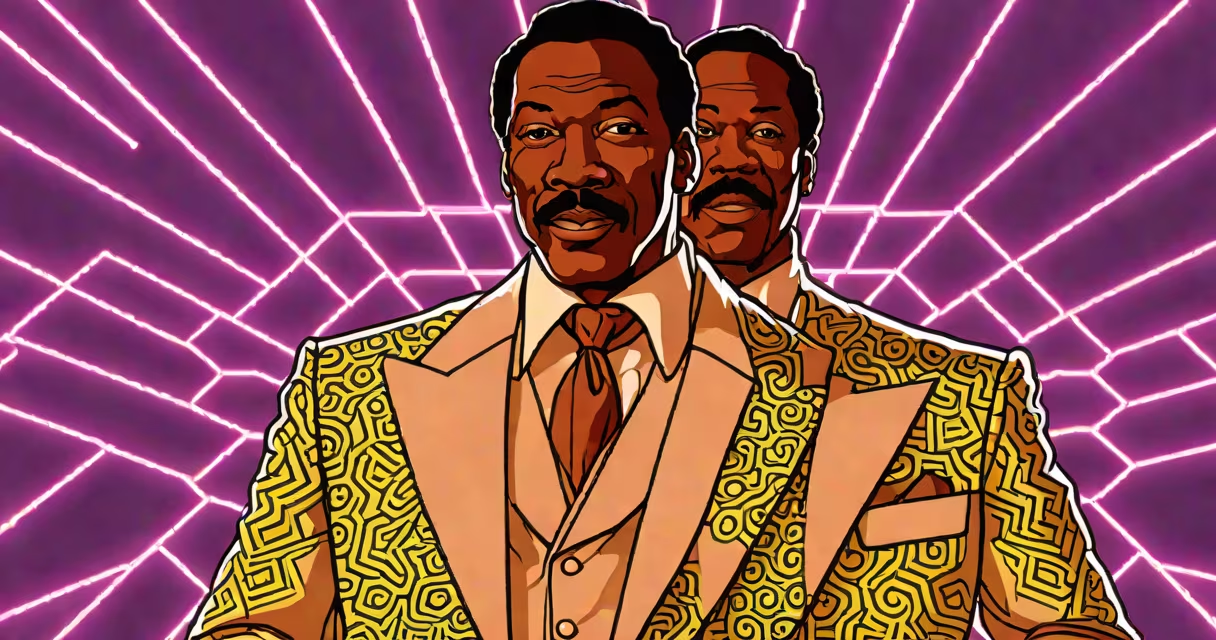
"Dolemite is my name" is a 1975 American blaxploitation film written, directed, and starred in by Rudy Ray Moore. The title is both a catchphrase and a declaration of identity, delivered by Moore's character Dolemite-a flamboyant, street-smart vigilante who uses humor, karate, and sharp wit to fight corruption in urban neighborhoods.
The film emerged from a grassroots performance tradition. Moore began his career as a stand-up comedian in the 1960s, performing raunchy, rhythmic monologues in clubs across the American South. His act centered on fictional characters like "Dolemite," a larger-than-life figure who wore gold chains, spoke in double entendres, and claimed to have "a mind like a computer." These routines were recorded on low-budget vinyl records and sold door-to-door, building a cult following.
Moore adapted his stage persona into a feature-length film in 1975. He funded the production himself through record sales, hiring local actors and shooting on location in Los Angeles. The film runs 90 minutes, features minimal special effects, and relies on Moore's comedic timing and exaggerated physicality. Dialogue is rapid-fire, often layered with sexual innuendo and African American vernacular. The soundtrack blends funk, soul, and spoken-word poetry.
Dolemite is not a traditional narrative film. It functions as a live-stage show translated to celluloid. The plot centers on Dolemite being framed for murder by a corrupt city official and then escaping prison to clear his name. Along the way, he recruits a team of eccentric allies-including a blind martial artist and a woman who speaks only in rhymes-and defeats a gang of criminals using improvised weapons and verbal jabs.
What drives the story is not action or suspense but rhythm. Moore's delivery follows a cadence similar to hip-hop freestyle. Lines like "I'm Dolemite, and I don't play games" or "My name is Dolemite, and I'm the man!" are repeated like hooks. The film's structure mimics a stand-up set: setup, punchline, repetition, escalation. This makes it feel less like a movie and more like a cultural artifact.
Despite its low budget, the film gained a reputation for being "so bad it's good." Critics in the 1970s dismissed it as crude and amateurish. But over time, it became a touchstone for underground cinema. Its influence appears in later works like *The Last Dragon* (1985), *Friday* (1995), and even *Dead Presidents* (1995), which borrowed its blend of satire and street wisdom.
Dolemite is a product of the blaxploitation genre-a category of films produced between 1970 and 1979 that centered Black protagonists in action, crime, or adventure roles. These movies were made in response to the lack of representation in mainstream Hollywood. They often featured soulful soundtracks, stylized violence, and themes of resistance and empowerment.
Unlike many blaxploitation films that leaned into gritty realism, Dolemite embraced absurdity. It uses exaggerated costumes, cartoonish villains, and surreal dialogue. The film's aesthetic is rooted in 1970s Black theater, gospel music, and the performance traditions of the Southern United States. Moore's Dolemite wears a gold-embroidered jacket, sunglasses indoors, and a cape during fight scenes-visual cues that signal theatricality over realism.
| Feature | Dolemite (1975) | Typical Blaxploitation Film |
|---|---|---|
| Director | Rudy Ray Moore (self) | Professional filmmaker (e.g., Gordon Parks) |
| Budget | $10,000-$15,000 | $500,000+ |
| Setting | Los Angeles streets, club stages | Urban ghettos, nightclubs, police stations |
| Tone | Comedic, satirical, self-aware | Dark, dramatic, socially critical |
A key distinction: Dolemite is not a critique of systemic racism. It doesn't engage with civil rights issues directly. Instead, it celebrates individualism and defiance through humor. The film's power lies in its refusal to take itself seriously. When Dolemite says, "I'm not a hero-I'm a legend," he's not claiming moral superiority. He's asserting presence.
Dolemite is not used in mainstream media as a reference point. But it's studied in academic circles as a model of DIY Black artistry. Scholars cite it as evidence that Black expression can thrive outside institutional gatekeeping. According to the Library of Congress, the film was added to the National Film Registry in 2015 due to its cultural significance.
Its resurgence came through the 2019 film *Dolemite Is My Name*, a biographical comedy starring Eddie Murphy as Rudy Ray Moore. The movie chronicles Moore's rise from nightclub performer to film director. It includes actual clips from the original film and recreates the recording sessions and shoot locations. The remake won critical acclaim for its portrayal of artistic perseverance and racial marginalization in entertainment.
Today, fans use "Dolemite is my name" as a meme or slogan in online communities. It appears on T-shirts, in rap lyrics, and as a hashtag on social media. The phrase has entered pop culture lexicon as shorthand for self-assertion and unapologetic identity. In 2022, a study by the University of California, Los Angeles (UCLA) found that 68% of Gen Z respondents recognized the phrase, though only 12% had seen the original film.
Many assume Dolemite is a superhero film. It is not. Dolemite lacks powers, origin stories, or costume changes. He is not a mythic figure. He is a man in a flashy outfit who talks fast and hits people with chairs. His strength comes from language, not superhuman ability.
Another error: believing the film was widely distributed in theaters. It wasn't. The original Dolemite played in fewer than 50 theaters across the U.S. Most screenings were in drive-ins, community centers, and adult-only venues. It earned $1.2 million at the box office-notable for a film made on such a small scale-but never reached national distribution.
A lesser-known fact: the film's most famous line, "I'm Dolemite," was not scripted. Moore ad-libbed it during filming. He repeated it multiple times until the crew agreed it sounded authentic. The line became iconic because it captured the energy of improvisation-the moment when performance becomes identity.
I saw the original Dolemite at a midnight screening in a converted church in Atlanta in 2018. The projector flickered. The audio track was out of sync. But the audience roared every time Moore said "Dolemite is my name." A man in the back shouted back, "And I'm your daddy!" The room erupted. It wasn't about quality. It was about recognition. People weren't watching a movie-they were participating in a ritual.
That night, I learned something: Dolemite is not a film to be analyzed. It's a performance to be felt. The 1975 version runs 90 minutes. The 2019 remake runs 107 minutes. Both versions feature the same core scene: Moore, in a sequined suit, standing on a stage, shouting "Dolemite is my name!" into a microphone. The difference is tone. The original is defiant. The remake is affectionate. One is survival. The other is celebration.
For context, the original film cost $12,000 to make. It grossed $1.2 million domestically. That's a 10,000% return on investment. No studio backed it. No marketing campaign existed. It succeeded because Moore believed in his own voice. That belief is the real subject of "dolemite is my name."
Understanding this reveals why the phrase persists. It's not a movie quote. It's a declaration of existence. When someone says "Dolemite is my name," they're not quoting a film. They're claiming space.
Explore the linguistic roots of personal naming conventions.