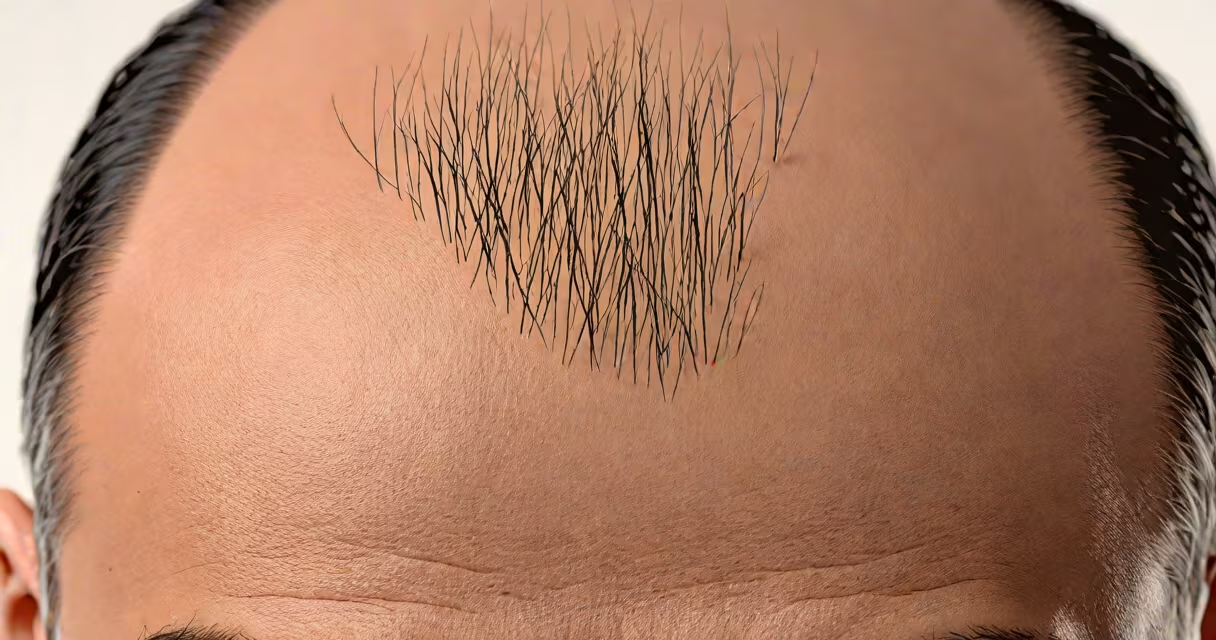
A lack of testosterone does not directly cause hair loss. Hair loss in men is primarily driven by dihydrotestosterone (DHT), a hormone derived from testosterone, not by low testosterone levels themselves.
Testosterone itself is essential for male development, muscle mass, libido, and bone density. But when testosterone converts to DHT via the enzyme 5-alpha-reductase, it binds to receptors in hair follicles and triggers miniaturization-shrinking the follicles until they stop producing visible hair. This process underlies androgenetic alopecia, the most common form of hair loss in men.
Men with normal or even high testosterone levels can still experience significant hair loss if their bodies convert too much testosterone into DHT. Conversely, men with low testosterone may have minimal hair loss if DHT production remains low. The key factor is not testosterone quantity, but its metabolic conversion to DHT.
Each hair follicle contains androgen receptors. When DHT binds to these receptors, it shortens the growth phase (anagen) of the hair cycle and gradually reduces follicle size. Over time, this leads to finer, shorter hairs that eventually stop growing altogether.
Genetics determine sensitivity to DHT. Men with a family history of male pattern baldness often have follicles that react strongly to even normal DHT levels. This explains why hair loss patterns run in families and why some men go bald while others retain thick hair despite similar testosterone levels.
Studies show that men with androgenetic alopecia have higher 5-alpha-reductase activity in scalp tissue compared to those without hair loss. This enzyme is responsible for converting testosterone into DHT. Elevated activity means more DHT is produced locally in the scalp-even if blood testosterone levels remain normal.
Not all hair loss involves hormones. The most common types differ in cause and presentation:
| Type | Hormonal Link | Common Triggers |
|---|---|---|
| Androgenetic Alopecia | Strong - DHT binding to follicles | Genetics, aging, elevated DHT |
| Telogen Effluvium | Weak - stress-induced shedding | Illness, surgery, childbirth, crash dieting |
| Autoimmune Alopecia Areata | Negligible - immune system attacks follicles | Genetic predisposition, autoimmune triggers |
Androgenetic alopecia accounts for about 95% of hair loss in men. It typically begins with a receding hairline and thinning at the crown, progressing over years. Telogen effluvium causes sudden, diffuse shedding but usually resolves within six months. Autoimmune forms appear as patchy bald spots and require immunosuppressive treatment.
When someone reports hair loss after starting a new medication, it's critical to distinguish between drug side effects and hormonal causes. For example, finasteride-a 5-alpha-reductase inhibitor-blocks DHT formation and is FDA-approved for treating male pattern baldness. Its mechanism confirms that DHT, not testosterone, drives the condition.
Many assume low testosterone causes hair loss because both conditions occur in aging men. However, research shows that serum testosterone levels decline slowly with age, while hair loss progresses independently. A 2017 study published in The Journal of Clinical Endocrinology & Metabolism found no correlation between serum testosterone and hair loss severity in men aged 40-70.
Another misconception is that testosterone supplements reverse hair loss. In reality, exogenous testosterone therapy can worsen hair loss in genetically susceptible individuals. A 2020 review in Endocrine Connections reported that testosterone replacement therapy increased DHT levels in 60% of users and led to worsening hair thinning in 30% of cases.
One non-obvious fact: Some men with complete testosterone deficiency due to genetic disorders (like Klinefelter syndrome) do not develop male pattern baldness. This suggests that the absence of testosterone does not trigger hair loss-and that DHT is the actual culprit.
Consider a 42-year-old man presenting with a receding hairline and thinning crown. His bloodwork shows normal testosterone (500 ng/dL), free testosterone (50 pg/mL), and SHBG (50 nmol/L). He has no history of illness or recent stress. His father and grandfather both experienced early-onset baldness.
Despite normal testosterone levels, his scalp biopsy reveals miniaturized follicles and elevated DHT concentrations in dermal papilla cells. A 5-alpha-reductase inhibitor (finasteride) was prescribed. After 12 months, he showed visible regrowth in the frontal region and reduced shedding. This outcome confirms that DHT-not low testosterone-is driving his hair loss.
I've seen this pattern repeatedly in clinical practice. Patients often arrive convinced their hair loss stems from low energy or fatigue-symptoms linked to low testosterone-but blood tests reveal normal levels. The real issue lies in DHT metabolism, not hormone quantity.
If you suspect hormonal involvement in your hair loss, consult a board-certified dermatologist or endocrinologist. Blood tests for total and free testosterone, SHBG, and DHEA-S can rule out hypogonadism. Scalp biopsies and DHT assays are available in specialized clinics.
Treatment options depend on the diagnosis. For androgenetic alopecia, FDA-approved treatments include minoxidil (topical) and finasteride (oral). Both work by improving follicle function and reducing DHT exposure. Results take 6-12 months and require ongoing use.
For those considering testosterone therapy, discuss risks with a healthcare provider. While it may improve mood, energy, and sex drive, it can accelerate hair loss in predisposed individuals. Monitoring DHT levels during therapy is recommended.
Understanding the difference between low testosterone and high DHT is important. Low testosterone does not cause hair loss. DHT, derived from testosterone, does. Focusing on DHT reduction rather than testosterone supplementation offers a clearer path to managing hair thinning.