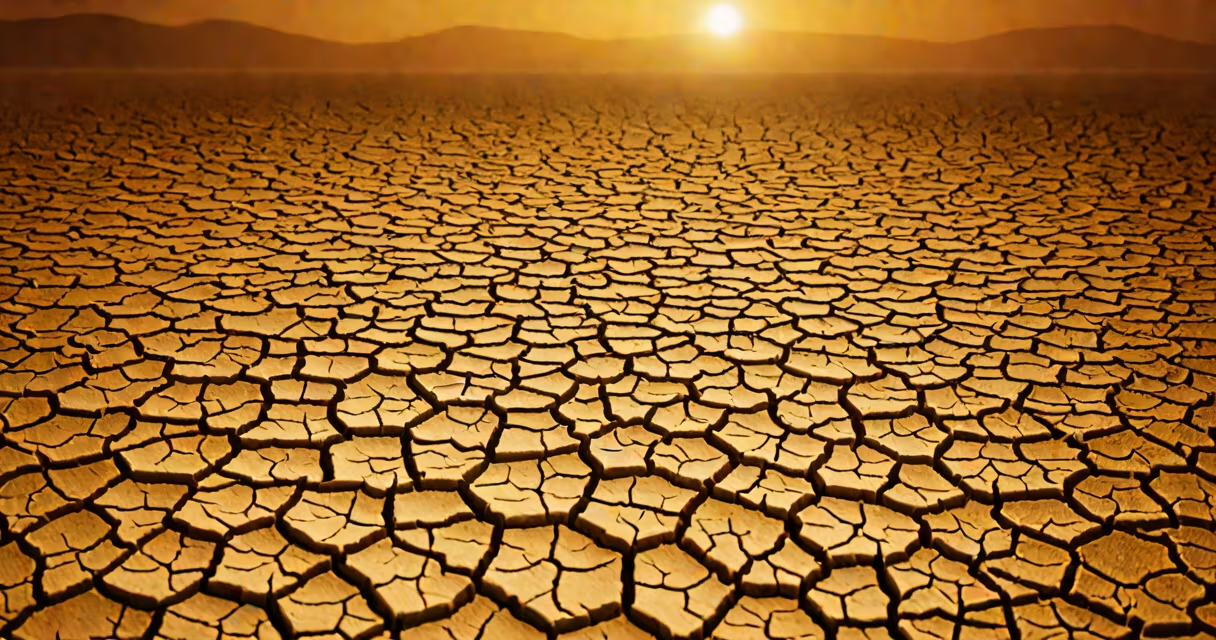
Climate change contributes to more frequent, intense, and longer-lasting droughts by altering temperature and precipitation patterns. Warmer air increases evaporation from soil and vegetation, drying out ecosystems faster than rainfall can replenish them.
Drought is not a single event but a gradual process driven by reduced moisture availability over time. While natural variability plays a role, climate change amplifies these conditions. The Intergovernmental Panel on Climate Change (IPCC) states that human-caused warming has increased the likelihood of droughts in many regions since the 1970s.
For example, the 2012-2016 California drought was made more severe by higher temperatures linked to climate change. A study published in Environmental Research Letters found that climate change increased the probability of such extreme droughts by at least 50% compared to pre-industrial conditions.
Warmer temperatures increase evapotranspiration-the loss of water from soil and plants into the atmosphere. This process accelerates during heatwaves, which are becoming more common due to global warming. As air warms, it holds more moisture, drawing water from land surfaces faster than rain can replace it.
Changes in atmospheric circulation also affect rainfall distribution. Climate models show that warming alters jet stream patterns and shifts storm tracks, leading to drier conditions in certain areas. Regions like the Mediterranean, southwestern U.S., southern Africa, and parts of Australia have experienced declining rainfall trends over the past few decades.
When combined with high temperatures, even modest reductions in rainfall can trigger drought. For instance, a 10% drop in annual precipitation in a region with average temperatures above 20°C can result in significant soil moisture deficits within months.
Droughts are categorized by their impacts:
| Type | Definition | Climate Link |
|---|---|---|
| Meteorological | Long-term deficit in precipitation | Reduced rainfall due to altered weather systems |
| Agricultural | Soil moisture insufficient for crops | Increased evaporation from warmer soils |
| Hydrological | Low river flows and reservoir levels | Less snowpack and delayed meltwater runoff |
| Ecological | Stress on natural ecosystems | Prolonged dry periods reduce plant resilience |
Each type reflects different aspects of water scarcity. Meteorological droughts often precede others. When climate change reduces winter snowpack in mountainous regions, spring runoff diminishes, affecting rivers downstream. The Colorado River Basin, which supplies water to seven U.S. states, has seen a 20% reduction in flow since 2000 due to warming and changing precipitation patterns.
Some assume droughts are purely natural cycles. While droughts occurred before industrialization, climate change has changed their baseline. Pre-industrial droughts were driven by oceanic oscillations like El Niño. Today's droughts combine those natural forces with anthropogenic warming.
Another misconception is that droughts only affect arid regions. In reality, even humid climates face drought risk. Eastern Canada, for example, experienced a severe drought in 2016 due to persistent high-pressure systems and record-breaking heat. That year, Ontario recorded its hottest June on record, contributing to widespread crop failures.
Drought is not synonymous with low rainfall. A region can receive normal rainfall amounts but still suffer drought if temperatures are abnormally high. In 2021, parts of the Pacific Northwest saw near-average precipitation but still endured extreme drought because of a 3°C temperature anomaly during summer.
Europe faced one of its worst droughts in centuries during 2022. The Rhine River, a key shipping route, dropped to levels that halted barge traffic. In Germany, the river's flow fell below 10% of average levels in August.
Scientists analyzed this event using climate attribution studies. The World Weather Attribution group concluded that climate change made the 2022 drought at least twice as likely to occur. They found that without human-induced warming, such a combination of low rainfall and extreme heat would have been rare.
This case illustrates how multiple climate factors interact. Reduced snowmelt in the Alps, delayed autumn rains, and sustained heatwaves created a feedback loop: dry soil absorbed more solar energy, increasing surface temperatures further, which in turn intensified evaporation.
Understanding that climate change doesn't "cause" drought in isolation but rather increases its intensity and duration changes how we respond. Adaptation strategies must account for both precipitation trends and temperature thresholds.
For example, farmers in Spain now use soil moisture sensors and irrigation scheduling based on climate projections. These tools rely on data showing that droughts are no longer predictable by historical rainfall alone. Similarly, cities like Cape Town, South Africa, implemented strict water rationing after a 2015-2018 drought that was worsened by climate change.
I've observed this firsthand while working with a water management team in California. We modeled future drought scenarios using IPCC climate projections. Even with moderate emissions reductions, the state faces a 70% chance of experiencing multi-year droughts by 2050. That's not a forecast-it's a projection based on current emissions trajectories.
The IPCC Sixth Assessment Report (2021) states: "It is unequivocal that human influence has warmed the atmosphere, ocean and land." The report notes that droughts have increased in frequency and intensity in many regions since the 1970s, especially in Europe, North America, and parts of Africa.
According to the National Oceanic and Atmospheric Administration (NOAA), the U.S. has seen a 30% rise in drought extent since the 1970s. This trend correlates strongly with rising average temperatures, particularly in the Southwest.
Climate change does not create droughts from nothing. But it reshapes the environment in ways that make droughts more likely, longer, and harder to recover from. The science is clear: warmer temperatures and shifting rainfall patterns are central drivers of modern drought events.