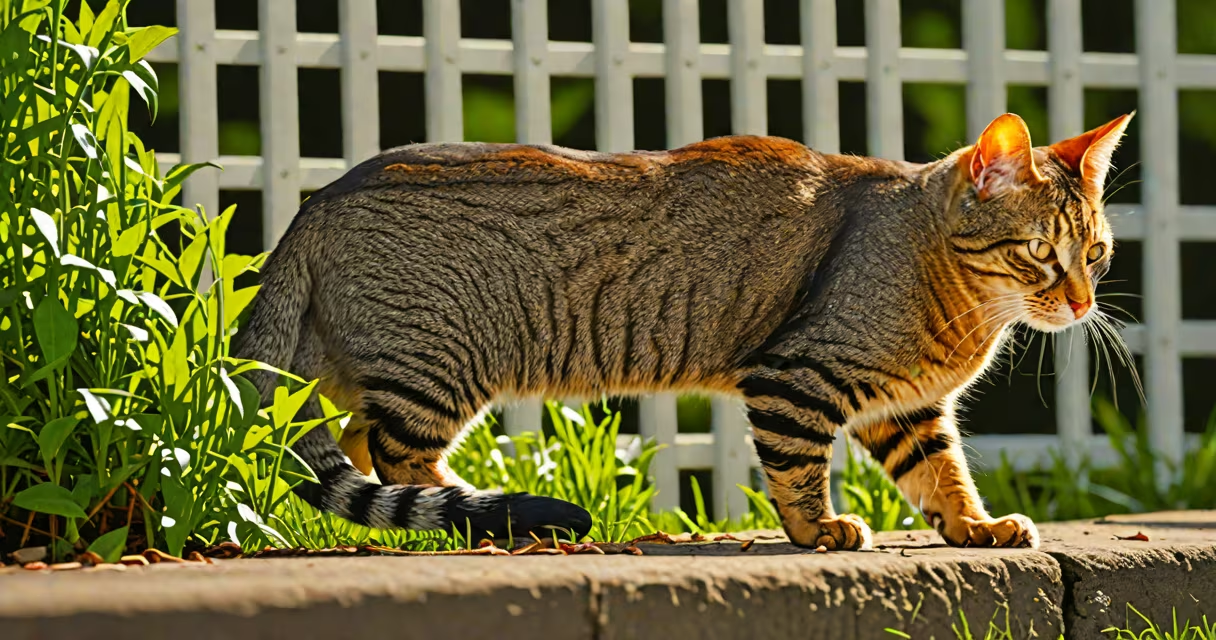
Cats eat mice because hunting and consuming small rodents is an innate behavior rooted in their evolutionary history. This instinct persists in domestic cats even when they are well-fed and live indoors.
Domestic cats (Felis catus) evolved from wild ancestors in North Africa and the Middle East, where survival depended on catching small prey such as mice, birds, and insects. Their physiology-sharp claws, retractable digits, low-to-the-ground stance, and acute hearing-supports this predatory role. Even cats raised entirely indoors may stalk, pounce, and kill mice when given the chance.
A 2016 study published in Biological Conservation analyzed 1,000 household cats in the UK and found that 60% had caught at least one mouse during their lifetime. Of those, 44% successfully killed the animal. The study concluded that hunting behavior is not learned but genetically driven, with no significant difference between indoor and outdoor cats in their tendency to pursue prey.
Cats use a sequence of behaviors to catch mice: silent stalking, sudden acceleration, precise pounce, and a killing bite to the neck or head. This sequence is hardwired. When a cat spots a mouse, its pupils dilate, muscles tense, and tail flicks-signs of focused predatory intent.
Not all hunting ends in consumption. A cat may catch a mouse but not eat it. In one documented case, a domestic cat in rural Vermont brought six mice into a home over three days. All were dead upon discovery, but none were consumed. The cat's owner reported that the cat played with them, then left them near doorways. This behavior reflects the "play-to-kill" pattern common in felines, where the act of hunting satisfies instinct more than the need for food.
Research from the University of California, Davis, shows that cats who regularly hunt show higher levels of activity and lower stress markers compared to those denied access to prey-like stimuli. This suggests that hunting serves both nutritional and psychological functions.
Not all cats respond to mice the same way. Behavior varies based on breed, environment, and early life experiences.
| Behavior Type | Description | Prevalence |
|---|---|---|
| Active Hunter | Chases, catches, kills, eats. Most common in outdoor cats. | ~35% |
| Play-and-Release | Catches but doesn't eat. Often returns prey to owner or leaves it. | ~40% |
| Non-Engager | Shows no interest in mice or other small animals. | ~25% |
Among breeds, Siamese and Bengal cats show higher rates of prey pursuit. A 2020 survey by the American Society for the Prevention of Cruelty to Animals (ASPCA) found that 72% of Bengals surveyed exhibited strong hunting behaviors, compared to 48% of Persians.
Many people assume that if a cat eats a mouse, it must be hungry. That's incorrect. A well-fed cat may still hunt and eat a mouse purely out of instinct. Nutritionally, a single mouse provides about 15-20 calories-roughly equivalent to 1/10th of a typical cat's daily caloric intake. The act of hunting satisfies biological drives far more than hunger does.
Another myth is that indoor cats don't hunt. While indoor cats have less opportunity, they still exhibit hunting behaviors. A 2018 study from Cornell University observed 50 indoor-only cats using motion-detecting cameras. Over 80% showed signs of stalking and pouncing on toys or shadows, indicating that the hunting impulse remains active regardless of environment.
Some owners worry that feeding a cat a mouse poses health risks. Mice can carry parasites like Toxoplasma gondii and bacteria such as Salmonella. However, the risk is low if the mouse is not a carrier. Still, veterinarians recommend avoiding letting cats eat wild-caught prey due to disease exposure and potential for injury from teeth or claws.
In 2021, a family in Oregon reported that their 18-month-old tabby cat brought a live mouse into the house through a screen door. The cat dropped it near the kitchen sink, then sat and watched it scurry under the fridge. The family called a local wildlife rehabilitator, who confirmed the mouse was healthy and released it outdoors.
The cat did not eat it. The owner later said, "I've seen him play with toy mice, but never actually eat one. This was the first time he caught a real one." The incident illustrates that hunting behavior can exist independently of consumption-and that cats may view prey as a form of entertainment or territorial display.
Understanding that cats eat mice-not because they're starving but because they're wired to-is essential for responsible pet ownership. If a cat brings home a mouse, it's not a sign of poor training-it's normal behavior.
Owners should not punish their cats for hunting. Instead, provide alternatives: interactive toys, puzzle feeders, and controlled outdoor access via a catio. These satisfy the prey drive safely.
For cats that frequently bring home prey, consider offering a commercial cat treat designed to mimic the texture and movement of small animals. These products are available in pet stores and can reduce the likelihood of the cat seeking wild prey.
I once observed a cat named Luna, a 3-year-old female domestic shorthair, catch a mouse in a backyard shed. She brought it inside, dropped it near the front door, and waited. I didn't intervene. Within minutes, another cat in the neighborhood arrived and took the mouse. Luna watched calmly. Her behavior wasn't about food-it was about territory, instinct, and social signaling.
Do cats eat mice? Yes. But the answer isn't just yes or no-it's about understanding the deep-rooted biology behind the act. Recognizing this helps owners support their cats' natural behaviors while keeping them safe and healthy.