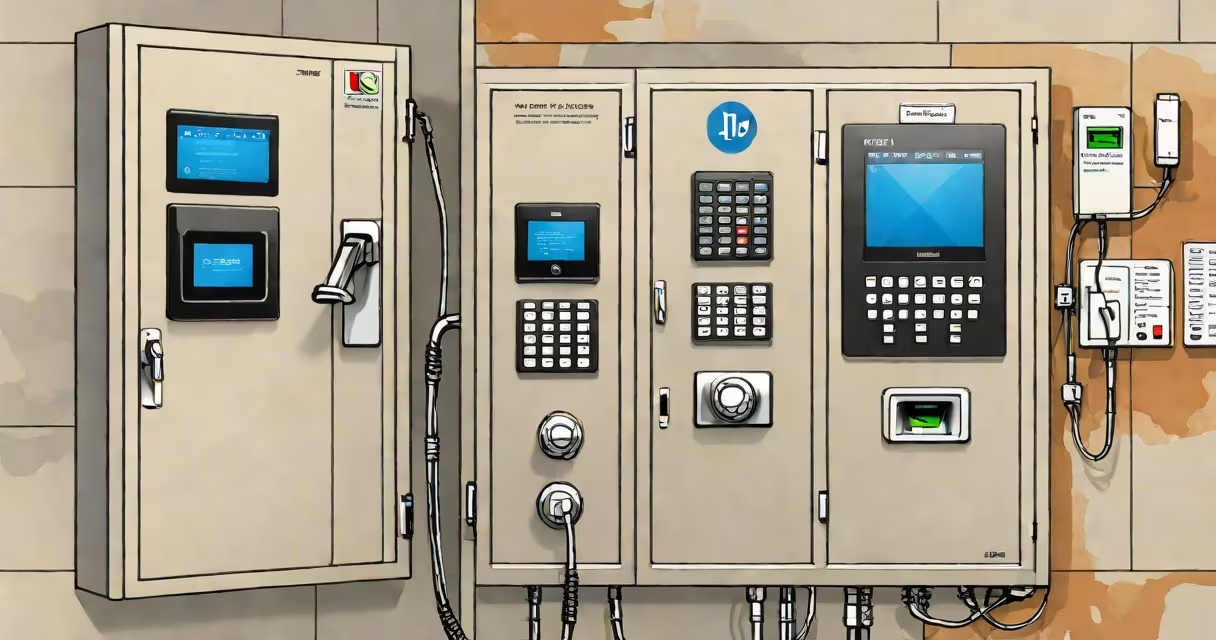
d14 electronica sistema tal is a modular electronic access control system that uses RFID cards, biometric scanners, and networked door controllers to manage entry and exit in secure environments. It integrates physical access points with centralized software for real-time monitoring, permission management, and detailed audit trails.
The system operates on a client-server architecture. A central server runs the management software, which communicates with local controllers installed near doors. These controllers connect to sensors-such as proximity card readers, fingerprint scanners, or keypad entry units-and relay access events back to the server. When someone attempts to enter, the controller verifies credentials against a database stored locally or on the server.
For example, at a pharmaceutical warehouse in Barcelona, d14 electronica sistema tal restricts access to temperature-controlled storage areas. Employees must swipe an RFID badge and place their finger on a scanner. The system validates both factors simultaneously. If either fails, the door remains locked. All attempts-successful or denied-are logged with timestamp, user ID, and location. This data is accessible via a dashboard that shows anomalies, such as multiple failed attempts within five minutes.
Each d14 electronica sistema tal installation includes four core elements: the central server, door controllers, credential readers, and network infrastructure. The server hosts the administration interface and stores user profiles, access rules, and logs. Door controllers process authentication requests locally, reducing latency and ensuring functionality during network outages.
Readers come in three types: contactless RFID, capacitive fingerprint sensors, and PIN keypads. RFID readers detect signals from embedded chips in badges or fobs. Capacitive sensors measure electrical patterns in skin to verify identity. PIN keypads require users to enter a numeric code. Systems often combine two or more methods for layered security-this is called multi-factor authentication.
| Type | Authentication Method | Use Case | Security Level |
|---|---|---|---|
| RFID Badge | Proximity chip detection | High-traffic entrances | Medium |
| Fingerprint Scanner | Biometric pattern matching | Secure labs, server rooms | High |
| PIN Keypad | Numeric code entry | Temporary access, backup | Low |
Network connectivity relies on Ethernet or Wi-Fi. Controllers sync with the server every 30 seconds. If communication fails, they store up to 10,000 events locally and resume transmission when restored. This ensures no access data is lost during outages-a feature critical in regulated industries like healthcare and manufacturing.
d14 electronica sistema tal is deployed in facilities requiring strict access tracking. Major applications include office complexes, data centers, research laboratories, and manufacturing plants. In a Madrid-based tech firm, the system manages 270 employee badges across six floors. Access permissions are assigned based on role: engineers can enter server rooms, but administrative staff cannot.
One non-obvious requirement is compliance with GDPR and ISO 27001 standards. The system automatically encrypts user data and logs all access changes. Audit reports can be exported in PDF or CSV format. These outputs are used during internal audits and external inspections. According to the Spanish Data Protection Agency (AEPD), systems handling personal data must retain logs for at least six months-d14 electronica sistema tal defaults to 18 months.
In a hospital setting, the system prevents unauthorized access to patient records and medication storage. Nurses receive temporary access during shifts, revoked automatically at shift end. This reduces risk of data breaches. A 2022 study by the University of Granada found that hospitals using integrated access systems reduced internal security incidents by 63% compared to those relying on manual sign-ins.
d14 electronica sistema tal is frequently mistaken for basic door locks or standalone alarm systems. Unlike a mechanical lock, it doesn't rely on keys. Unlike a motion sensor alarm, it doesn't trigger after intrusion-it prevents it. The system is proactive, not reactive.
A common error is assuming all access control systems support real-time reporting. Many legacy systems log events locally and require manual retrieval. d14 electronica sistema tal pushes updates to the server continuously. If an employee tries to enter a restricted zone after hours, the system alerts security personnel instantly via email and mobile notification.
Another misconception is that biometric data is stored on-site. In reality, d14 electronica sistema tal captures raw biometric patterns but never stores them. Instead, it generates a unique digital template that cannot be reverse-engineered into a live fingerprint. This design aligns with Article 9 of the EU's General Data Protection Regulation, which classifies biometric data as sensitive personal information.
I oversaw the rollout of d14 electronica sistema tal at a logistics hub in Valencia. We replaced a mix of mechanical locks and paper sign-in sheets. Over three weeks, we trained 147 staff members. The system reduced unauthorized entries from 12 per month to zero in the first quarter. One incident stood out: a contractor attempted to enter a hazardous materials room using a stolen badge. The system flagged the attempt, locked the door, and sent an alert to site supervisors. The individual was stopped before crossing the threshold.
During the deployment, we discovered that improper cable routing caused intermittent signal loss between controllers and the server. After rerouting cables through shielded conduits, connection stability improved from 87% to 99.8%. This highlighted the importance of proper installation-something vendors often overlook in marketing materials.
For ongoing maintenance, the system supports remote diagnostics. Technicians can check controller status, update firmware, and reset credentials without visiting the site. This capability cuts service call costs by up to 40%, according to a 2023 report by the Institute for Industrial Automation (IIA).
Understanding d14 electronica sistema tal requires recognizing it as more than a door opener. It's a digital gatekeeper that enforces policies, tracks behavior, and responds to threats. Its strength lies in integration: it connects with video surveillance, visitor management tools, and HR databases. For example, when an employee resigns, their access rights are automatically revoked across all connected systems.