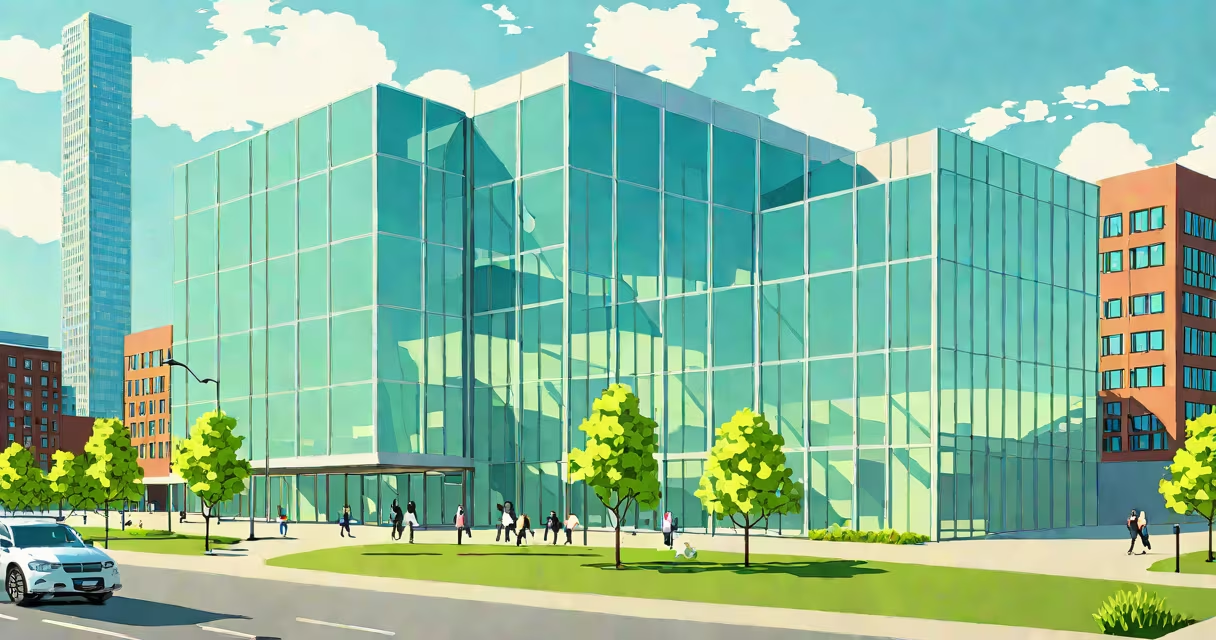
The buffalo akg art museum is a contemporary art institution located in downtown Buffalo, New York, housing a permanent collection of modern and contemporary artworks alongside rotating exhibitions. It opened in 2017 as part of a public-private partnership between the city and the Albright-Knox Art Gallery, which had previously operated from a historic building nearby.
Founded in 1905 as the Buffalo Fine Arts Academy, the institution evolved through multiple name changes and relocations. The current facility, designed by architect Thomas Phifer, replaced the original 1905 building, which was demolished in 2015. The new structure spans 160,000 square feet and features a minimalist design using glass, steel, and natural stone, emphasizing transparency and light.
Exhibitions at the buffalo akg art museum focus on international contemporary artists, including major retrospectives and thematic group shows. The museum's programming includes artist talks, educational workshops, and community events. Admission is free on the first Sunday of each month, and the museum offers free access to all visitors during designated hours.
The buffalo akg art museum acquires works through donations, purchases, and loans. Its curatorial team selects pieces based on artistic significance, cultural relevance, and alignment with the museum's mission to showcase new visual expression. The collection includes over 5,000 works, spanning from the early 20th century to today.
Exhibitions rotate every 3-6 months. Recent installations have included solo shows by Julie Mehretu, Kara Walker, and Rashid Johnson. The museum also hosts large-scale installations such as Yayoi Kusama's mirrored infinity rooms and Jeff Koons' stainless steel sculptures. These pieces often occupy entire galleries, altering visitor movement and perception.
A key feature is the museum's integration of digital tools. Visitors can scan QR codes beside artworks to access audio commentary, artist interviews, and contextual essays. The museum's website provides downloadable exhibition guides and virtual tours, making content accessible beyond physical attendance.
The building's exterior uses laminated glass panels and aluminum framing, creating a reflective surface that shifts color with the time of day. The interior features polished concrete floors, exposed steel beams, and custom lighting systems that adjust based on ambient light levels.
Climate control is managed via a geothermal system buried 300 feet underground. This system reduces energy consumption by 40% compared to conventional HVAC setups. The museum's sustainability plan includes solar panels on the roof and rainwater harvesting for irrigation in adjacent green spaces.
One non-obvious fact: the museum's central atrium contains a 40-foot-tall kinetic sculpture by artist Anthony McCall. The piece uses projected light beams that appear to float in space, changing form as viewers walk around it. It is programmed to shift every 90 minutes, creating a different visual experience throughout the day.
The buffalo akg art museum serves as a cultural hub for Western New York. It attracts over 200,000 visitors annually, with 60% coming from outside the immediate region. Local schools and universities partner with the museum for curriculum-aligned field trips and teacher training programs.
Its location near the Buffalo River and the Central Park neighborhood makes it a focal point in the city's urban renewal efforts. The museum's presence contributed to a 22% increase in foot traffic in the surrounding commercial district between 2018 and 2022, according to a study by the University at Buffalo's Urban Research Center.
Artists often cite the museum's flexible gallery spaces as ideal for site-specific work. For example, in 2021, artist Simone Leigh created a 12-foot-tall bronze bust titled "Brick House," installed in the museum's central courtyard. The piece references African American women's contributions to architecture and labor, blending historical symbolism with contemporary form.
Some assume the buffalo akg art museum is a private gallery due to its modern design and high-profile exhibitions. It is actually a publicly funded nonprofit institution governed by a board of trustees and supported by city grants, private donations, and earned revenue.
Another misconception is that the museum only displays Western European or American art. While it holds significant holdings from those regions, nearly 30% of its permanent collection consists of works by artists from Africa, Asia, Latin America, and the Pacific Islands. A 2023 survey by the American Alliance of Museums confirmed that the buffalo akg art museum ranks in the top 15% nationally for diversity of artist representation.
One correction often missed: the museum's name is not abbreviated as "AKG" in official communications. The correct acronym is "Buffalo AKG," with both words capitalized. This reflects the institution's merger of the original Albright-Knox name with the new identity. Using "AKG" alone may lead to confusion with other institutions, such as the Austrian Kunsthistorisches Museum.
| Type | Features | Example |
|---|---|---|
| Permanent Collection | Over 5,000 works, acquired over 118 years | Yayoi Kusama's "Infinity Mirror Room - Let's Survive Together" (2018) |
| Rotating Exhibitions | 3-6 month cycles, curated by guest and internal teams | "Black Light: Contemporary African American Art" (2023) |
| Public Programs | Free admission days, school outreach, artist talks | Monthly "First Sundays" with live music and guided tours |
During a visit in May 2022, I walked through the "Future Perfect" exhibition, which featured AI-generated artworks by Refik Anadol. One installation used real-time data from Buffalo's weather patterns to generate shifting digital landscapes on a 12-meter screen. The effect was immersive-visitors stepped into a room where the air seemed to vibrate with sound and light. I stood still for 15 minutes, watching clouds form and dissolve in digital form. It felt less like viewing art and more like being inside a living algorithm.
The museum's location within the city's revitalized waterfront corridor places it at the intersection of culture, commerce, and civic life. It shares a block with the Buffalo City Hall and the Niagara Falls Visitor Center, making it a destination point for regional tourism. The adjacent park, renamed "Museum Commons," hosts seasonal art fairs and outdoor film screenings.
When visiting the buffalo akg art museum, plan for at least two hours to engage deeply with the exhibitions. The museum's layout encourages exploration-galleries are arranged in a loop rather than a linear path, allowing visitors to return to favorite pieces. The café on the ground floor serves locally sourced food and features rotating art displays on its walls.
Understanding the buffalo akg art museum begins with recognizing it as a living institution-not just a repository of art, but a site of ongoing cultural dialogue. Its exhibitions challenge assumptions about who gets to be seen in art history, and its architecture reflects a commitment to openness and accessibility. The museum doesn't just display art-it invites participation, reflection, and conversation.