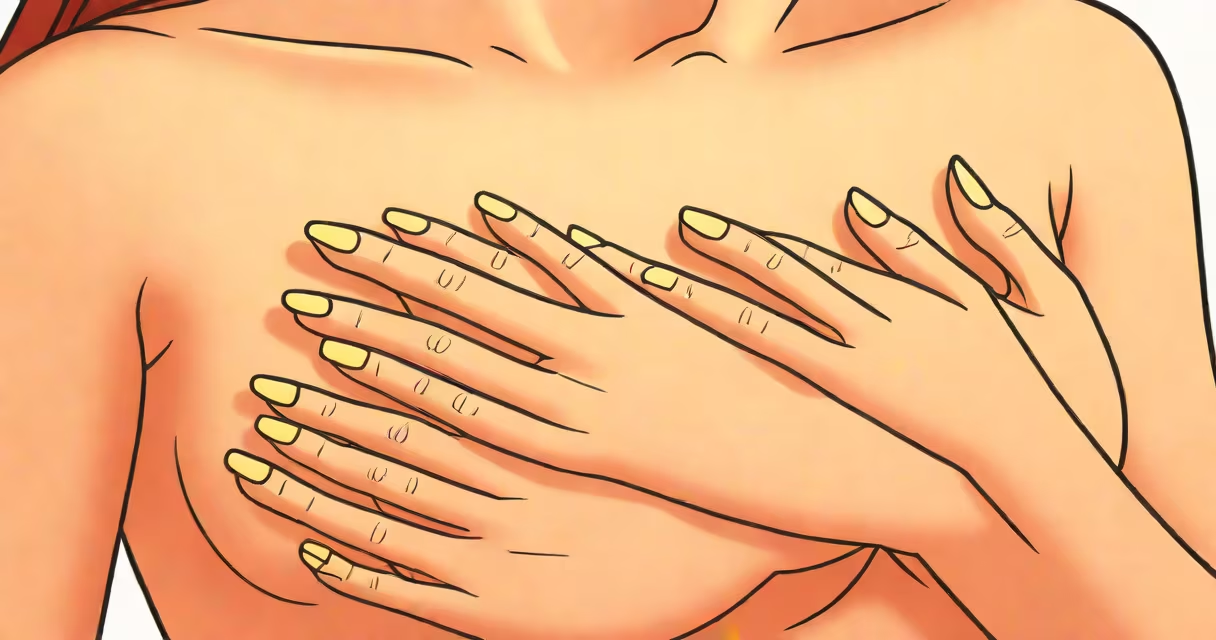
Tender breasts are not a direct sign of ovulation. They typically occur after ovulation due to rising progesterone levels, not during the release of the egg. This timing difference is key to understanding whether breast soreness signals fertility or early pregnancy.
Ovulation happens around day 14 of a typical 28-day menstrual cycle, triggered by a surge in luteinizing hormone (LH). At this moment, the ovary releases a mature egg. The body doesn't produce significant amounts of progesterone until after the follicle collapses and forms the corpus luteum. That's why breast tenderness usually appears in the days following ovulation, not during it.
The American College of Obstetricians and Gynecologists (ACOG) notes that breast changes are common during the luteal phase, the time between ovulation and menstruation. These changes are caused by rising progesterone and estrogen levels, which prepare the uterus for potential implantation. If pregnancy doesn't occur, hormone levels drop, and tenderness fades with the onset of menstruation.
After ovulation, progesterone rises sharply. This hormone increases blood flow to the breasts and causes breast tissue to swell slightly. The combination leads to sensitivity, fullness, or sharp pain in one or both breasts. These sensations often begin 2-5 days after ovulation and peak around day 21 in a 28-day cycle.
Estrogen also plays a role. It peaks just before ovulation and supports the thickening of the uterine lining. While estrogen contributes to breast development, it's progesterone that drives the post-ovulatory tenderness. A 2018 study published in Human Reproduction found that women reporting breast tenderness had higher progesterone levels in the luteal phase compared to those without symptoms.
Women tracking ovulation using basal body temperature (BBT) charts often notice a rise in temperature after ovulation-typically by 0.5°F to 1.0°F. This rise coincides with the increase in progesterone and is when breast tenderness begins. If you're charting your cycle, this pattern can help confirm that tenderness is linked to post-ovulatory hormones, not ovulation itself.
Not all breast tenderness is the same. Some women feel a dull ache, others report sharp pain or increased sensitivity to touch. The timing and quality of discomfort can help differentiate between ovulation-related changes and early pregnancy symptoms.
| Timing | Hormone Driver | Symptom Pattern | Common Cause |
|---|---|---|---|
| Day 14-16 (cycle) | LH surge (ovulation) | Minimal or no tenderness | Not associated with breast changes |
| Day 18-22 (cycle) | Progesterone rise | Fullness, heaviness, mild pain | Post-ovulatory luteal phase |
| Day 25-28 (cycle) | Progesterone drop | Decreasing tenderness, may return before period | Pre-menstrual phase |
For example, a woman with a regular 28-day cycle who notices breast fullness on day 19 is likely experiencing post-ovulatory changes. Her LH surge occurred on day 14, ovulation happened on day 15, and progesterone rose on day 16. By day 19, the hormone level peaks, causing noticeable sensitivity. This pattern repeats monthly unless conception occurs.
Many people assume breast tenderness signals ovulation because it's a physical symptom tied to fertility. But the timing is off. Ovulation itself is silent-there's no visible or tactile sign. The most accurate indicators are cervical mucus changes, BBT shifts, and ovulation predictor kits (OPKs).
Another misconception is that breast soreness always means pregnancy. While early pregnancy can cause breast tenderness due to rising human chorionic gonadotropin (hCG) and progesterone, the sensation usually appears earlier in pregnancy-around week 4-before a missed period. In contrast, ovulation-related tenderness appears 1-2 weeks after ovulation, not before.
A 2020 review in Reproductive Biology and Endocrinology found that only 15% of women reported breast tenderness as a reliable predictor of ovulation. Most women misattribute the symptom to ovulation when it actually reflects post-ovulatory hormonal activity. This confusion leads to inaccurate fertility tracking and unnecessary stress.
When breast tenderness occurs before a missed period, it's more likely due to pregnancy than ovulation. For example, a woman who ovulates on day 15 and experiences tenderness on day 18 is likely feeling post-ovulatory changes. But if she notices tenderness on day 12-before ovulation-it suggests early pregnancy hormones are already active.
Consider this scenario: A woman with a 30-day cycle uses an OPK on day 16. It turns positive, confirming ovulation. She has intercourse on day 16 and 17. On day 19, she feels breast fullness. This is normal luteal-phase tenderness. However, if she checks a urine pregnancy test on day 21 and gets a positive result, the tenderness is likely due to rising hCG and progesterone from a developing pregnancy.
Key differentiator: Timing. Breast tenderness from ovulation appears 2-5 days after ovulation. From early pregnancy, it can appear as early as 5-7 days after conception. If tenderness starts before ovulation or within 48 hours of it, pregnancy is more likely than ovulation.
Tracking symptoms alongside cycle markers improves accuracy. Apps like Clue or Natural Cycles allow users to log breast tenderness, mood, and cervical mucus. Over time, patterns emerge. One user reported noticing breast soreness consistently on day 19 of her cycle for six months-then stopped when she became pregnant. The change in timing helped confirm conception.
While breast tenderness is common and usually benign, persistent or severe pain warrants evaluation. According to the National Breast Cancer Foundation, new or worsening breast pain unrelated to the cycle should be assessed by a healthcare provider. This includes lumps, nipple discharge, or asymmetry.
If breast tenderness persists beyond the luteal phase or continues through menstruation, it may indicate hormonal imbalance. Conditions like polycystic ovary syndrome (PCOS) or thyroid dysfunction can disrupt progesterone levels and lead to prolonged sensitivity. A blood test for progesterone, thyroid-stimulating hormone (TSH), and prolactin can help identify underlying issues.
For women trying to conceive, monitoring ovulation with multiple methods-OPKs, BBT, and cervical mucus-is more effective than relying on symptoms alone. Breast tenderness is not a standalone indicator. It's one piece of a larger puzzle.