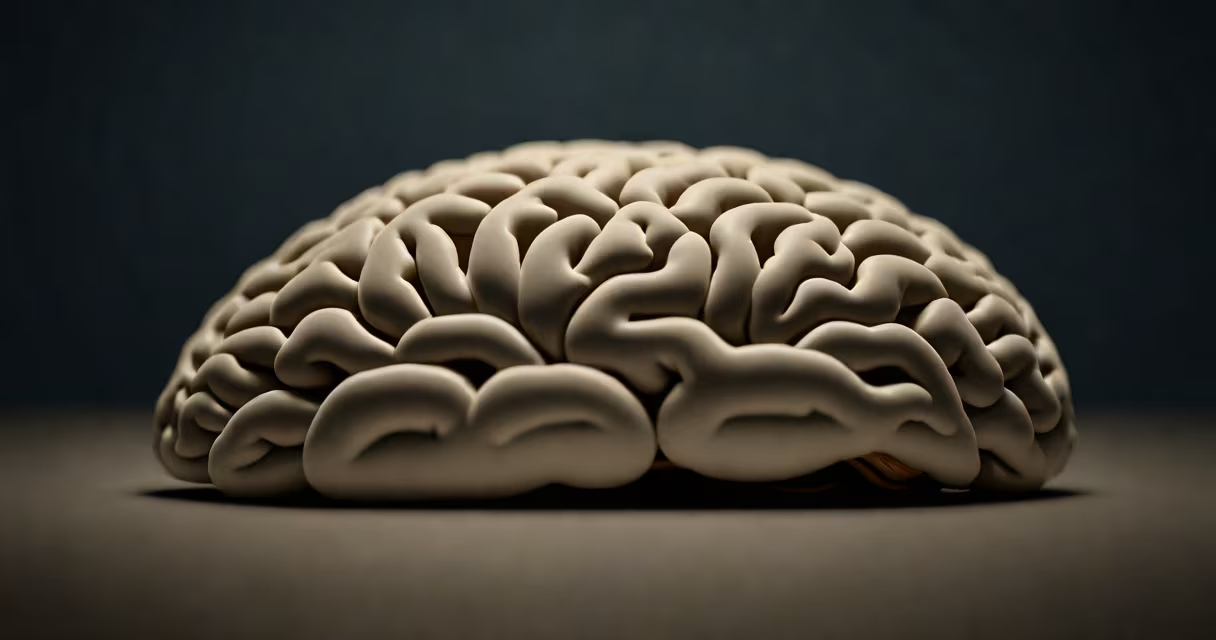
Dreams feel realistic because the brain's sensory and emotional centers activate during REM sleep, simulating real-world experiences even though the body is at rest. This neural mimicry creates immersive, lifelike scenarios that can trigger physical responses like increased heart rate or sweating.
During rapid eye movement (REM) sleep, the brainstem sends signals to the cerebral cortex, activating areas responsible for vision, emotion, and memory. These regions fire in patterns similar to those seen during waking perception. The visual cortex generates images, the amygdala processes fear or joy, and the hippocampus retrieves memories-all without external input. As a result, dreams can replicate sights, sounds, emotions, and even bodily sensations with startling accuracy.
Research using functional MRI scans shows that during REM sleep, brain activity closely resembles wakeful states. A 2013 study published in Nature Neuroscience found that when people dreamed about walking through a familiar environment, the same parietal and occipital regions lit up as when they were actually going through that space. This neural overlap explains why dreams often feel like memories of actual events-even when no such event occurred.
The brain doesn't simulate reality by copying sensory data-it reconstructs it from stored fragments. During REM sleep, the prefrontal cortex-the area governing logic and self-awareness-becomes less active. Without executive oversight, the brain freely combines memories, emotions, and random neural noise into coherent narratives. This lack of critical thinking allows absurd or impossible scenes to feel normal within the dream context.
For example, a person might dream of flying over a city skyline. The visual cortex draws on past images of cities and flight experiences, while the vestibular system (responsible for balance) generates the sensation of wind and motion. The result is a smooth simulation that feels authentic despite being physically impossible.
A 2021 study from the University of Wisconsin-Madison tracked brain activity in participants during lucid dreaming. When subjects became aware they were dreaming, activity in the dorsolateral prefrontal cortex spiked-but only after the dream had already begun. This confirms that realism emerges before awareness, meaning the brain constructs the illusion of reality before questioning it.
Dream realism varies based on which brain systems are engaged. Not all dreams feel equally real. The table below outlines key categories:
| Type | Brain Regions Involved | Common Sensory Features | Frequency |
|---|---|---|---|
| Sensory Realism | Visual cortex, auditory cortex | Clear images, voices, environmental sounds | High (60-70% of REM dreams) |
| Emotional Realism | Amgydala, insula | Fear, joy, anxiety; physical reactions like breathlessness | Very high (over 80%) |
| Body Realism | Motor cortex, somatosensory cortex | Feeling touch, movement, pain, weight | Moderate (30-40%) |
| Temporal Realism | Hippocampus, entorhinal cortex | Time passing normally, logical sequences | Low (10-20%) |
Realism is strongest when multiple sensory systems are activated simultaneously. A dream involving a conversation in a crowded room-complete with faces, voices, ambient noise, and emotional tension-is more convincing than a dream of floating in silence.
Many assume dreams are purely symbolic or random. But neuroscience shows they're grounded in biological mechanisms. A common error is believing that vivid dreams always reflect unconscious desires. While Freudian theory once claimed dreams reveal hidden truths, modern research shows most dream content stems from recent experiences, emotional states, and neural noise-not symbolic messages.
Another misconception is that only REM sleep produces realistic dreams. Non-REM dreams-especially in stage 2 and slow-wave sleep-can be detailed and emotionally intense. However, they typically lack narrative structure and sensory richness compared to REM dreams. A 2017 study in Current Biology found that 90% of dreams reported upon awakening from REM sleep contained complex storylines, while only 30% did so after non-REM awakenings.
Even the idea that "dreams are just imagination" misses a key point: imagination during wakefulness involves conscious control. Dreaming happens unconsciously. The brain doesn't choose what to include-it generates content automatically. That's why people often dream of being chased, failing exams, or losing loved ones-common stress triggers encoded in neural pathways.
Despite their realism, most dreams vanish within minutes of waking. The same brain regions that create dream detail-especially the prefrontal cortex-remain suppressed during REM sleep. Without active retrieval mechanisms, dream memories fade quickly.
One study from Harvard Medical School showed that people who wake up during REM sleep report dreams 80% of the time. But only 10% remember them five minutes later. The hippocampus, important for forming long-term memories, is less effective during sleep. Without deliberate attention-like writing down dreams upon waking-details dissolve.
I once kept a dream journal for three weeks. On the 17th night, I dreamed of a childhood friend I hadn't seen since age 10. The scene was vivid: we sat on a porch swing under a twilight sky. I remembered the smell of pine trees and the sound of crickets. I wrote it down immediately. Two days later, I still recalled the dream in full. But when I tried to relive it months later, only fragments remained. This illustrates how fragile dream memory is-even when the dream felt real at the time.
Improving dream recall requires consistent practice. Waking slowly, staying still for 30 seconds, and mentally replaying the dream can strengthen memory encoding. Research suggests that keeping a notebook by the bed increases recall by up to 60% over four weeks.
Just because a dream feels real doesn't mean it reflects actual events. The brain can generate fully formed, emotionally charged scenarios based on fragmented memories and current emotional states. A dream of being in a car accident may feel terrifying and lifelike-but it doesn't mean the person is at risk.
This distinction matters. People often misinterpret dreams as omens or warnings. But the realism arises from neural architecture, not prophecy. The brain evolved to simulate threats during sleep as a survival mechanism-this is why nightmares are so common. A 2019 review in Sleep Medicine Reviews found that 70% of adults report recurring nightmares, often involving falling, being chased, or losing control-patterns linked to threat simulation theory.
Understanding why dreams feel so realistic helps separate neurological function from psychological interpretation. The brain isn't trying to deceive you-it's doing its job: integrating memories, processing emotions, and rehearsing responses. The realism is a side effect of efficient neural design, not evidence of supernatural insight.
For deeper exploration of how memory works during sleep, learn how the brain discards dream details after waking.