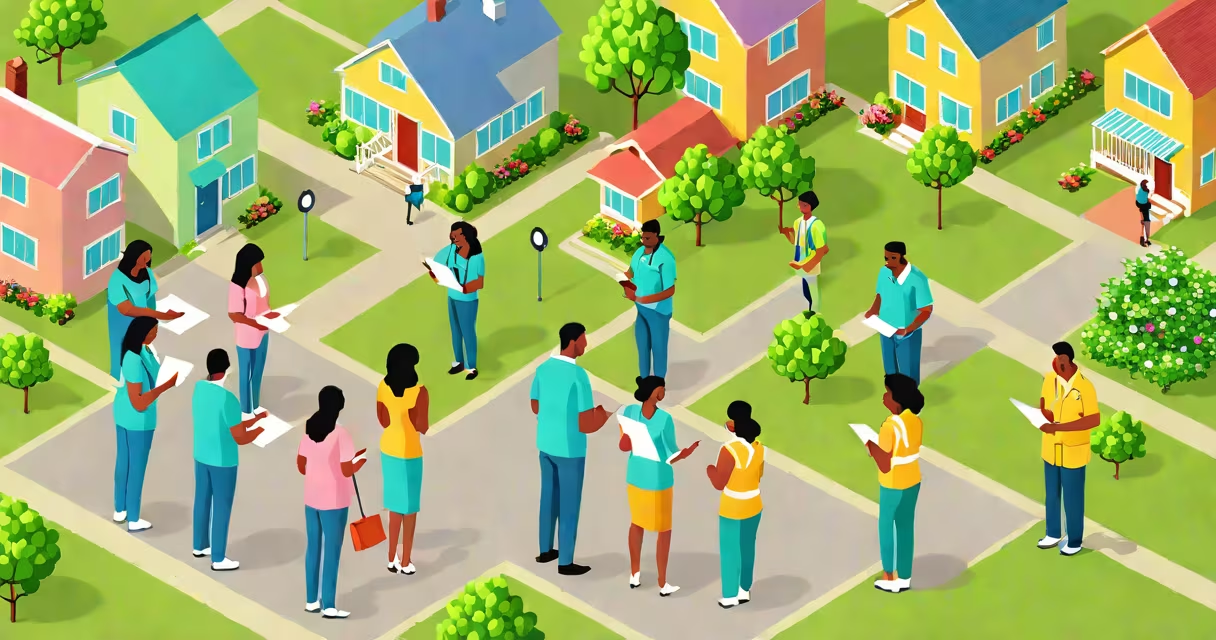
Public health prevents disease, prolongs life, and promotes health through organized efforts focused on populations rather than individuals. It uses science, policy, and community action to address health risks across cities, regions, and nations.
Public health operates beyond hospitals and clinics. It investigates outbreaks, designs vaccination campaigns, enforces food safety standards, and shapes laws that reduce smoking rates or mandate seatbelt use. These actions aim to protect people before illness occurs.
The Centers for Disease Control and Prevention (CDC) and the World Health Organization (WHO) are key institutions in public health. The CDC tracks infectious diseases in real time, while WHO coordinates global responses to pandemics. Their work exemplifies how public health systems function at scale.
Public health relies on surveillance, analysis, and intervention. Surveillance collects data on health events-like flu cases or cancer rates-across geographic areas. Analysts then identify patterns, such as rising asthma rates in industrial zones.
Once a trend is detected, public health teams develop targeted interventions. For example, when childhood lead poisoning rose in Flint, Michigan, public health officials coordinated water testing, distributed filters, and launched education programs for parents. They didn't treat individual children-they changed the system to prevent harm.
Interventions often involve policy. Smoking bans in public spaces, sugar taxes on sodas, and mandatory vaccinations for school entry are all public health tools. These measures reduce risk at scale, even if they're unpopular in the short term.
Public health is not a single job. It includes several specialized fields, each with distinct responsibilities:
| Field | Primary Focus | Example Task |
|---|---|---|
| Epidemiology | Disease tracking and cause analysis | Tracing the spread of a norovirus outbreak in a cruise ship |
| Environmental Health | Controlling pollution and toxins | Inspecting water supplies for arsenic contamination |
| Health Policy | Designing laws and regulations | Advocating for Medicaid expansion in a state legislature |
| Global Health | International disease control and aid | Coordinating Ebola response in West Africa |
| Behavioral Health | Changing health-related behaviors | Running a social media campaign to promote mental health check-ins |
These roles require different training. Epidemiologists use statistics to model disease spread. Environmental health specialists inspect factories and landfills. Health policy analysts study legislation and economic impacts.
A common misconception is that public health is only about emergency response. While it does manage crises-such as the 2020 COVID-19 pandemic-it spends most of its time on routine prevention. Routine tasks include monitoring immunization rates, reviewing nutrition guidelines, and auditing hospital infection control protocols.
Public health agencies exist at local, state, national, and international levels. Local health departments run vaccination drives and food safety inspections. State agencies enforce health codes and report data to federal bodies. National agencies like the CDC set standards and fund research.
Public health improves outcomes by acting early. For example, when tuberculosis rates rose in New York City during the 1990s, public health workers implemented contact tracing and directly observed therapy. This reduced transmission by 70% within five years. The strategy succeeded because it focused on stopping spread-not just treating sick patients.
Another example: the U.S. smoking rate dropped from 42% in 1965 to 11% in 2020. This decline wasn't due to individual willpower alone. It resulted from public health policies-advertising bans, higher tobacco taxes, and smoke-free workplace laws. These changes altered the environment, making unhealthy choices harder.
Public health also addresses disparities. In 2019, Black Americans had a maternal mortality rate nearly three times higher than White Americans. Public health initiatives responded with funding for doulas, improved prenatal care access, and data collection to track outcomes. These efforts aim to close gaps rooted in systemic inequity.
People often confuse public health with clinical medicine. Doctors treat patients after they're sick. Public health prevents illness before it starts. A physician might prescribe insulin for a diabetic patient. A public health worker might advocate for urban green space to reduce diabetes risk by encouraging walking.
Another mistake is thinking public health is only about infectious diseases. While it's central to pandemic response, public health also tackles chronic conditions. Heart disease, stroke, and obesity are leading causes of death in the U.S., and public health strategies-like promoting physical activity in schools-are critical to reducing them.
There's also confusion around authority. Public health doesn't have police power. It influences behavior through evidence-based recommendations, partnerships, and regulation. When a city mandates mask-wearing during a pandemic, it's based on scientific consensus, not arbitrary rule-making.
I once observed a public health team in rural Oregon conduct a door-to-door survey on pesticide exposure among farmworkers. They collected urine samples, mapped exposure hotspots, and presented findings to county officials. Within six months, new safety guidelines were adopted. That project showed how public health turns data into action-without waiting for someone to get sick.
Public health uses quantitative and qualitative methods. Surveys, interviews, and biostatistics help measure health trends. Geographic Information Systems (GIS) map disease clusters. Social network analysis identifies how misinformation spreads during health crises.
One non-obvious fact: public health often works quietly. Most people don't notice when clean water systems prevent cholera or when school lunch programs reduce childhood malnutrition. Success is measured in absence-no outbreak, no hospitalization, no death.
For example, the introduction of fluoride in public water supplies reduced tooth decay by 25% in children under 14, according to the CDC. This benefit occurred silently over decades. Few people realize they're protected daily by a public health intervention they never see.
Technology also plays a role. Digital tools like e-health viewers allow patients and providers to access health records securely. These systems support public health by enabling faster reporting of conditions like HIV or syphilis. Early detection improves treatment outcomes and reduces transmission.
Public health is not a single career path. It's a field shaped by collaboration across disciplines-medicine, engineering, sociology, economics, and data science. Its goal remains consistent: keep communities healthy by addressing root causes, not just symptoms.
Understanding what public health do reveals a useful truth: health is not just personal responsibility. It's collective action. When we invest in clean air, safe food, equitable healthcare, and informed policy, we build resilience against disease and suffering.