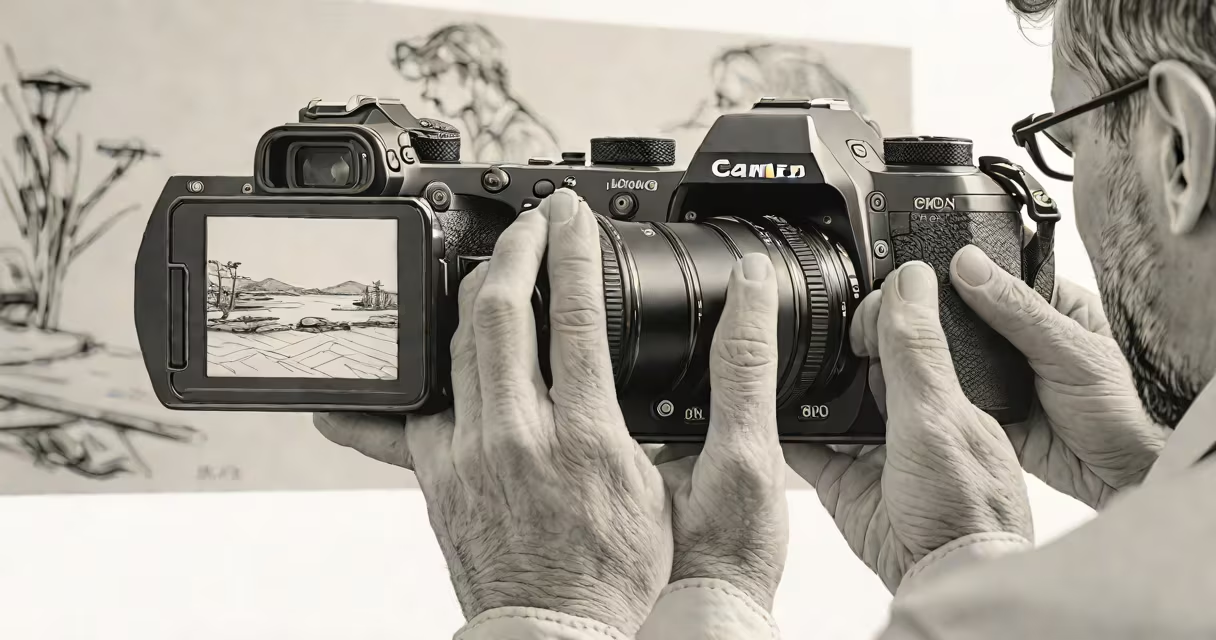
Camera metering is the process by which a camera measures the amount of light in a scene and uses that data to determine the correct exposure settings-aperture, shutter speed, and ISO-for a photograph. It ensures images aren't too dark or too bright.
Modern cameras use built-in light sensors to evaluate brightness across different areas of the frame. The camera's metering system then calculates how much light enters the lens and adjusts the exposure settings accordingly. This happens automatically in most shooting modes, but photographers can manually select specific metering patterns for greater control.
Understanding metering helps avoid blown-out highlights or underexposed shadows. For example, a portrait taken in backlighting may appear too dark unless the camera detects the subject's face and compensates by increasing exposure. Without proper metering, even a perfectly composed shot can fail due to incorrect lighting balance.
When you press the shutter button halfway, the camera activates its metering system. It analyzes light levels using a sensor that samples various parts of the scene. The camera then computes the optimal combination of aperture, shutter speed, and ISO to achieve a balanced exposure.
The process begins with the camera measuring luminance-the intensity of visible light-across the frame. It assigns a brightness value to each pixel or region, compares it to a standard reference (often middle gray at 18% reflectance), and adjusts exposure to match that target. This reference point is critical because it defines what the camera considers "correct" exposure.
For instance, if a scene contains mostly dark elements like a black cat in a dim room, the camera still assumes the average brightness should be middle gray. Without compensation, the photo would look grayish instead of showing the cat properly. That's why metering systems often include exposure compensation features to override default assumptions.
Cameras offer several metering modes, each suited to different lighting conditions and creative goals. The choice affects how the camera interprets light distribution in the frame.
| Metering Mode | How It Works | Best For |
|---|---|---|
| Matrix (Evaluative) | Divides the frame into zones and evaluates light across all areas. Uses complex algorithms and scene recognition. | General photography, mixed lighting, landscapes. |
| Center-Weighted | Focuses on the center of the frame but still considers edge areas. Gives higher priority to central subjects. | Portraits, group shots, situations where the subject is centered. |
| Spot Metering | Measures light from a very small area-typically 1-3% of the frame-usually the center or selected focus point. | High-contrast scenes, backlit subjects, precise exposure control. |
Matrix metering is the default on most DSLRs and mirrorless cameras. It performs well in varied environments by analyzing thousands of data points. Center-weighted mode is useful when the subject occupies the center but the background varies in brightness. Spot metering gives precise control, especially in challenging lighting such as a performer under stage lights with dark surroundings.
A common mistake is assuming spot metering always produces the best results. In reality, it can cause errors if the selected spot is too dark or too bright. For example, pointing spot metering at a white wall in a snowy field causes the camera to reduce exposure, turning snow into gray. Using exposure compensation (+1 or +2 stops) fixes this.
Many photographers confuse metering with autofocus or auto white balance. Metering specifically handles exposure-not focus or color temperature. These are separate systems that work together but serve distinct purposes.
Another misconception is that metering is purely automatic. While many cameras apply metering defaults, manual mode lets photographers override the camera's calculation entirely. You can lock exposure based on a reading from a handheld light meter or use bracketing to capture multiple exposures.
Here's a real-world example: during a wedding ceremony, the bride stands in front of a window with soft natural light. The camera's matrix metering sees the bright background and underexposes the subject. Switching to center-weighted or spot metering on the bride's face corrects this. A test shot confirms the exposure is accurate, avoiding the need for post-processing fixes.
One non-obvious fact: older film cameras used incident metering (measuring light falling on the subject), while digital cameras almost exclusively use reflective metering (measuring light bouncing off the subject). This difference affects accuracy-incident meters are more consistent across different subjects, but reflective meters are better adapted to digital sensors' changing range.
I once photographed a jazz musician performing under a single spotlight. The stage was dark except for the beam. Using matrix metering resulted in a severely underexposed image. Switching to spot metering on the performer's face restored detail. After adjusting exposure compensation by +1.3 stops, the final image captured both skin tones and background depth accurately.
Exposure metering is not about perfect exposure-it's about predictable, consistent results. When lighting changes rapidly, such as moving from indoors to outdoors, relying on metering prevents sudden shifts in brightness between frames.
For beginners, start with matrix metering and learn to adjust exposure compensation. As skills grow, experiment with center-weighted and spot modes. Understanding how each mode responds to light helps anticipate problems before they happen.
Advanced users often combine metering with histogram review. The histogram shows the distribution of brightness values in a photo. A spike on the left indicates underexposure; a spike on the right suggests blown highlights. Using the histogram alongside metering mode improves decision-making.
Camera metering is essential for consistent, well-exposed images. It's not a magic fix-but understanding how it works lets you take control of your camera's decisions.