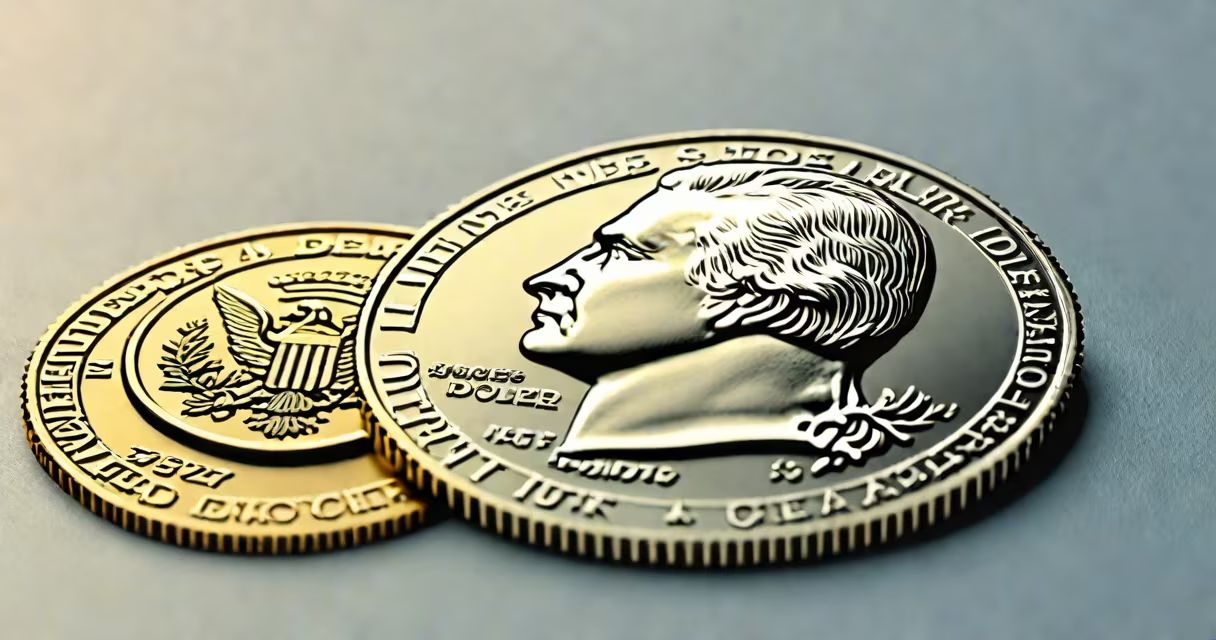
A half dollar is a U.S. coin worth $0.50, composed primarily of copper and nickel in modern circulation versions, while older issues contain 90% silver. The composition changed in 1965 due to rising silver prices.
The current half dollar, minted since 1971, uses a clad structure: 8.33% nickel and 91.67% copper. This layered design prevents wear and reduces production costs. The outer layer is 75% copper and 25% nickel, bonded to a core of pure copper. The coin weighs 11.34 grams and has a diameter of 30.61 mm.
Before 1965, the half dollar was made of 90% silver and 10% copper. These coins were legal tender until 1970 and remain in circulation as collectibles. The last silver half dollar was struck in 1964. The U.S. Mint discontinued silver content due to inflation and rising metal costs, which made the coin's intrinsic value exceed its face value.
Half dollars fall into three distinct categories based on their metal makeup. Each reflects economic conditions and policy shifts during different decades.
| Year Range | Metal Composition | Weight (grams) | Face Value | Notes |
|---|---|---|---|---|
| 1794-1836 | 89.24% silver, 10.76% copper | 13.48 | $0.50 | Early designs included Flowing Hair and Draped Bust |
| 1836-1964 | 90% silver, 10% copper | 11.34 | $0.50 | Includes Seated Liberty, Barber, and Kennedy designs |
| 1971-present | 91.67% copper, 8.33% nickel (clad) | 11.34 | $0.50 | Modern clad coins; no silver content |
Not all half dollars are intended for circulation. The U.S. Mint produces commemorative half dollars annually, often with special finishes like proof or uncirculated. These may feature gold plating or limited mintage, but they still follow the standard clad composition unless otherwise specified.
One lesser-known fact: the 1965-1970 "S"-marked half dollars were produced using the old silver formula, even though the 1965 redesign removed silver. These coins were minted under emergency authority due to a shortage of silver. They are rare and valued by collectors.
Half dollars are rarely seen in everyday transactions. Most U.S. cashiers do not carry them, and vending machines typically reject them. Their primary use is in coin collecting, government bullion programs, and historical preservation.
Despite low circulation, the U.S. Mint continues producing half dollars for collector sets. The American Eagle Silver Half Dollar, issued since 1983, contains 1 troy ounce of .999 fine silver and is sold at a premium. These are not legal tender for purchases but serve as investment vehicles.
For example, a 1964 Kennedy half dollar with no wear can fetch $12 to $15 in circulated condition and $30+ in uncirculated grades. A 1964 proof half dollar, graded MS-65, sold for $240 at a 2022 auction. The value stems entirely from silver content and rarity, not face value.
Many assume all half dollars contain silver. This is false. Only those minted before 1965 have significant silver content. Modern half dollars are entirely clad and contain no silver, despite appearances.
Another misconception is that half dollars are still used in daily commerce. While legally valid, they are functionally obsolete in retail. The Federal Reserve reports that less than 1% of all half dollars produced since 1971 have entered circulation. Most are stored in vaults or sold to collectors.
Some confuse the half dollar with the quarter. Both are 50-cent denominations, but quarters are smaller (24.26 mm diameter) and made of the same copper-nickel clad composition. The half dollar is larger and heavier, making it easier to distinguish by touch.
I once handled a 1964 Kennedy half dollar at a coin show. Its weight felt noticeably heavier than a modern clad version. When I held it near a magnet, it showed no attraction-silver is non-magnetic. That physical difference confirmed the composition shift in my hands.
The U.S. Mint's official specifications confirm the composition of modern half dollars. According to the U.S. Mint Coin Specifications, the clad half dollar has a 75% copper, 25% nickel outer layer and a pure copper core. The composition has remained unchanged since 1971.
The U.S. Bureau of the Mint also tracks silver content in historic coins. The Bureau of the Mint's Precious Metals History states that 90% silver half dollars were withdrawn from circulation after 1965 due to rising silver prices. The average price of silver rose from $1.29 per troy ounce in 1964 to $4.40 in 1965, prompting the switch.
These figures support the claim that the shift from silver to clad was driven by economics, not design preference. The cost of producing a silver half dollar exceeded its face value by 1965, making continued minting unsustainable.
Understanding what a half dollar is made of reveals more than metallurgy-it shows how monetary policy responds to market forces. The coin's composition reflects national decisions about resource use, inflation, and currency stability.