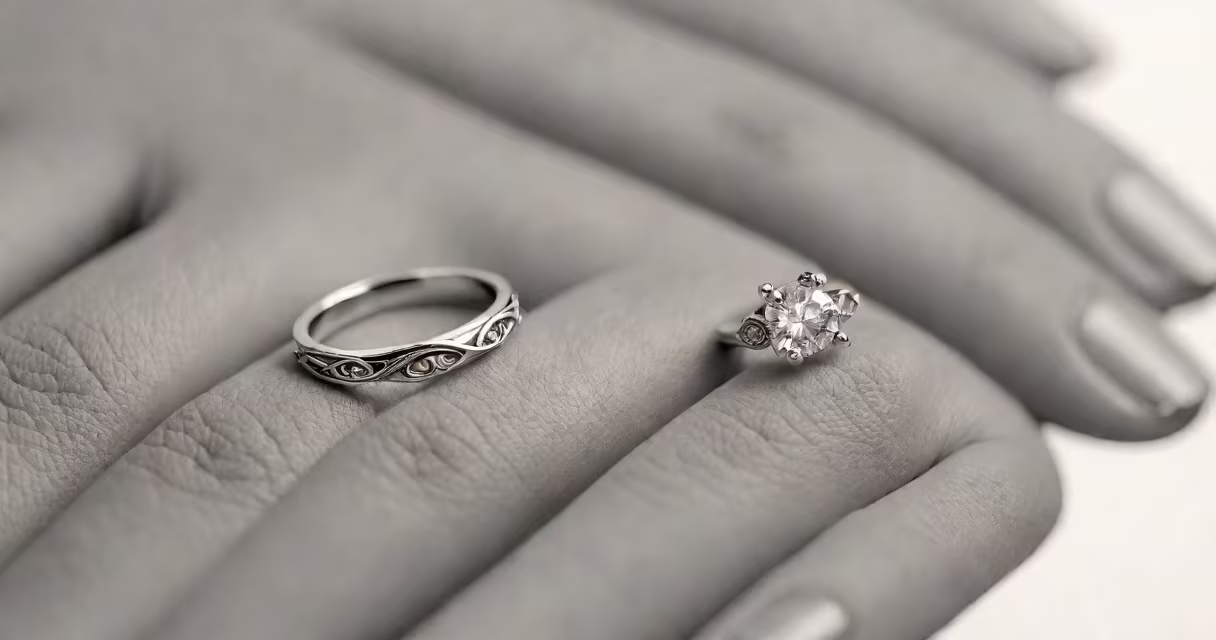
A promise ring typically goes on the ring finger, most often the left hand, though placement varies by culture, relationship context, and personal choice. The ring finger is the traditional site for symbolic jewelry due to its association with love and commitment.
The ring finger-located between the middle and little fingers-is the anatomical site most linked to emotional bonds. This connection stems from ancient beliefs about a vein, the *vena amoris*, running directly from the heart to the finger. While modern anatomy confirms this is a myth, the tradition persists in many cultures.
In Western traditions, the left ring finger is reserved for engagement and wedding rings. Wearing a promise ring on the same finger signals intent toward marriage. However, in other cultures, such as parts of Eastern Europe and South Asia, the right ring finger may carry equal or greater significance. Some couples choose the right hand to avoid confusion with formal engagement status.
Placement communicates intent. A promise ring worn on the left ring finger suggests a formalized commitment, aligning with the path toward engagement. On the right hand, it may indicate a personal vow without immediate plans for marriage.
Some people wear promise rings on the index or middle finger to emphasize different meanings. An index finger ring can symbolize a promise to oneself-such as a pledge to stay sober or pursue a goal. A middle finger ring may represent balance or responsibility, though this usage is rare and not widely recognized.
When worn on the right hand, a promise ring may also serve as a protective token. In some Indigenous communities, wearing symbolic jewelry on the right side signifies strength and connection to ancestral values. These practices show that finger choice is not arbitrary-it reflects lived belief systems.
Promises vary in form. Some rings are exchanged between partners, others are self-given. The intended message shapes where they're worn.
| Type | Common Placement | Symbolic Meaning |
|---|---|---|
| Partner-to-partner | Left ring finger | Commitment leading to engagement |
| Self-promise (e.g., sobriety) | Right ring finger | Personal accountability |
| Cultural/religious vow | Either hand, depending on tradition | Devotion to faith or family |
| Friendship promise | Index or middle finger | Unity, loyalty, or shared goals |
For example, a couple in New York City who met while volunteering at a food pantry wore their promise rings on the left ring finger. They later married, and the ring transitioned into their wedding band. This mirrors a pattern documented by the American Psychological Association: people who wear symbolic rings on the left ring finger report higher perceived relationship stability.
Many assume the ring finger is universally the correct place. That's false. Cultural context matters. In Japan, the right hand is preferred for symbolic rings. In some African nations, the thumb or pinky holds spiritual weight. Ignoring this leads to misinterpretation.
One overlooked fact: the ring finger is also the most common site for nerve compression. Carpal tunnel syndrome often presents as numbness in the ring finger. If someone wears a tight ring and experiences tingling, it's not symbolic-it's medical. According to the Mayo Clinic, persistent numbness in the right ring finger may signal median nerve pressure, requiring evaluation.
I once attended a friend's vow renewal ceremony where she wore her original promise ring on her right ring finger. She explained it was a reminder of promises made during recovery from addiction. The ring wasn't meant to imply romantic intent-it was a daily anchor. When asked why not the left hand, she said, "I don't want to confuse anyone. My life isn't about marriage." Her choice reflected autonomy, not tradition.
This moment confirmed that symbolic jewelry doesn't need to follow rigid rules. Meaning is personal. The ring finger is a convention, not a law.
While the ring finger-especially the left-is the most common location for a promise ring, the decision should reflect your values, relationship stage, and cultural background. There is no single correct answer. What matters is intention, not conformity.
When choosing a finger, consider whether the ring represents a public vow or private commitment. If it's a public sign of love, the left ring finger remains standard. If it's a personal milestone, the right hand or even another finger may be more meaningful.
The question "what finger does a promise ring go in" has no universal answer. The ring finger is a tradition, not a rule. Wear it where it feels true to you.