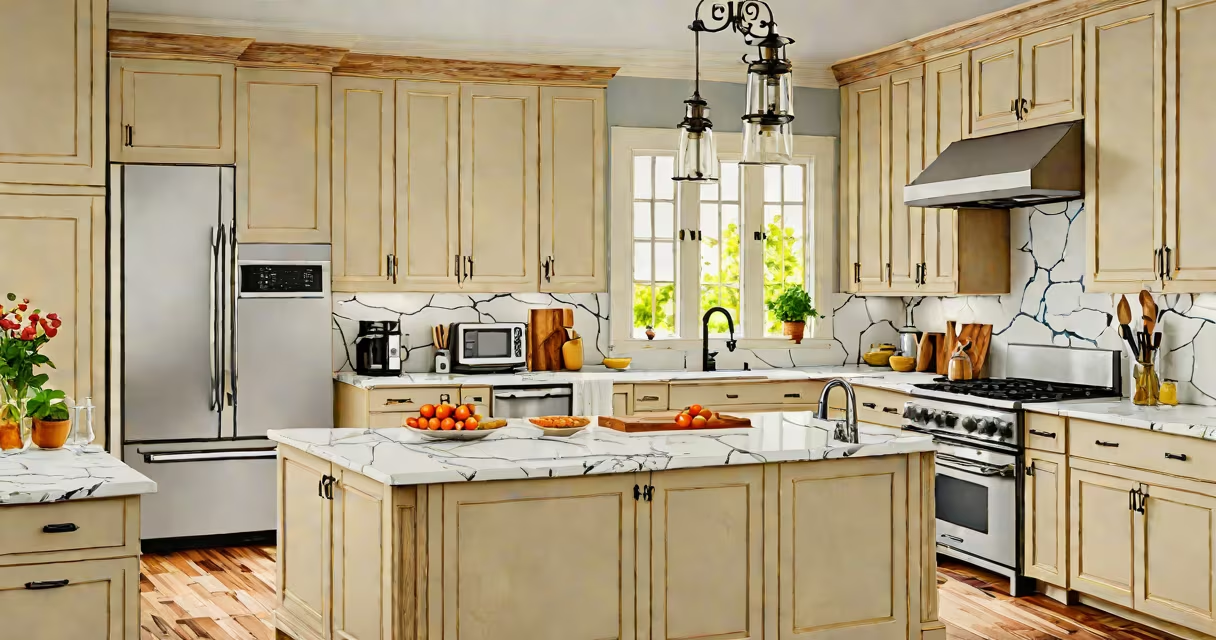
Full overlay cabinets are a cabinet design where the doors and drawers completely cover the cabinet frame, leaving no visible gap between the door and the face frame. This creates a smooth, continuous surface that enhances visual appeal and simplifies cleaning.
The term "overlay" refers to how much of the cabinet's front frame the door covers. In full overlay construction, the door extends beyond the frame on all sides-typically by ½ inch or more-so the frame remains hidden when the door is closed. This contrasts with partial overlay, where the frame is partially visible, and inset cabinets, where the door sits flush with the frame.
Full overlay cabinets are common in modern and contemporary kitchens. They offer a sleek, minimalist aesthetic and are often paired with handleless designs using push-to-open mechanisms. The design requires precise hardware and installation to ensure doors align perfectly and close smoothly.
Full overlay cabinets rely on specific hinge types-usually European-style concealed hinges-to allow the door to swing out and fully cover the frame. These hinges have adjustable mounting plates and allow for fine-tuning of the door's position in three dimensions: vertical, horizontal, and depth.
To achieve a full overlay effect, the cabinet box must be built with a consistent frame width. The door is then sized slightly larger than the opening. When mounted with proper hinge adjustment, the door overlaps the frame evenly on all sides. Misalignment results in uneven gaps or doors that don't close properly.
A key requirement is accurate measurement. A ¼-inch variance in frame size or hinge placement can cause doors to bind or leave visible gaps. For example, a 24-inch wide cabinet with a ¾-inch thick frame needs a door cut to 24.5 inches to achieve full coverage. Without this precision, the overlay fails.
There are three main styles of cabinet overlays. Each affects appearance, functionality, and installation complexity.
| Type | Door Coverage | Frame Visibility | Best For |
|---|---|---|---|
| Partial Overlay | 60-70% of frame covered | Visible frame edge | Traditional kitchens, budget builds |
| Full Overlay | 90-100% covered | Frame hidden | Modern kitchens, clean lines |
| Inset | Doors sit flush with frame | Frame fully exposed | Classic, high-end cabinetry |
Full overlay is distinct from inset cabinets, which are often confused due to their similar clean appearance. Inset doors are set into the frame, not overlapping it. They require mortising-the process of carving a recess into the frame-and are more labor-intensive. Full overlay uses simpler routing and is faster to install.
Another common misconception is that full overlay means the door extends past the cabinet box. That's incorrect. The door covers the frame, but the cabinet box itself is still the structural boundary. The door does not extend beyond the outer edges of the cabinet box.
Full overlay cabinets dominate contemporary kitchen design because they create a uniform, uninterrupted surface. This look is especially effective in open-plan spaces where visual clutter is minimized. The absence of visible frame lines makes rooms feel larger and more cohesive.
From a practical standpoint, full overlay reduces dust traps. With no gaps between door and frame, cleaning is easier. A 2021 study by the National Kitchen & Bath Association (NKBA) found that 68% of homeowners who chose full overlay reported higher satisfaction with daily maintenance compared to those with partial overlay.
Full overlay allows for greater flexibility in handleless design. Push-to-open systems work best when the door surface is flat and uninterrupted. The NKBA notes that 73% of new custom kitchen projects in 2023 included full overlay with integrated touch-latch mechanisms.
One frequent error is assuming that any hinge can support full overlay. Standard butt hinges won't provide enough adjustment. Using European-style hinges with soft-close features ensures consistent alignment and prevents door sagging over time.
Another issue arises during installation when the frame is not square. Even a 1/16-inch deviation across the cabinet can cause doors to misalign. To prevent this, measure twice and use a laser level during assembly. I once installed a full overlay system in a 12-foot kitchen run and had to re-cut three doors after discovering the frame was off by 1/8 inch-corrected with shims and hinge adjustments.
Some manufacturers advertise "full overlay" but deliver only 80% coverage. Always verify the actual overlay percentage. A door that covers 80% of the frame leaves a ¼-inch gap, which breaks the illusion of a smooth surface. Look for specifications stating "100% full overlay" or "zero-gap closure."
Understanding the differences between full overlay, partial overlay, and inset helps avoid costly mistakes during renovation or design.
For example, a kitchen with 30 cabinets using full overlay will have 60 doors that fully conceal the frame. In contrast, a kitchen with partial overlay may show 15 visible frame edges-creating visual noise.
When choosing full overlay, consider the depth of the cabinet. Shallow cabinets (12 inches deep) can make hinge adjustment harder. Deeper boxes (24 inches) provide more room for hinge travel and reduce binding risk.
Full overlay cabinets mean doors that completely hide the cabinet frame, delivering a clean, modern look. They are not just about appearance-they improve usability and simplify maintenance. The design demands precision in build and installation, but the result is a professional-grade finish.