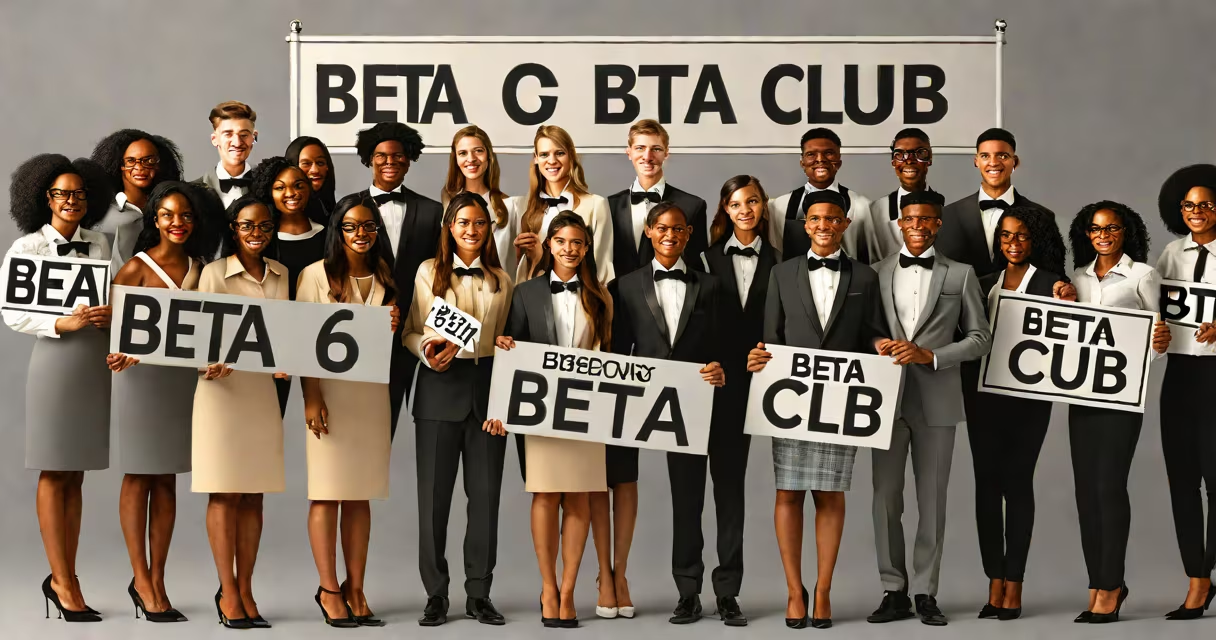
Beta Club is a national academic honor society for middle and high school students that promotes scholastic achievement, leadership, and community service. It supports students through recognition, scholarships, and structured programs designed to build character and prepare for college and careers.
Founded in 1934 by educators, Beta Club operates under the National Association of Secondary School Principals (NASSP) and serves over 1 million students annually across U.S. schools. Its mission centers on developing well-rounded individuals who excel academically and contribute positively to their communities.
Each chapter functions locally but follows a standardized structure. Students qualify based on GPA thresholds-typically 3.0 or higher-and participate in monthly meetings focused on goal setting, civic engagement, and personal growth. The organization emphasizes integrity, responsibility, and perseverance as core values.
Local chapters are run by faculty advisors and elected student officers. Meetings usually occur once a month during school hours and include announcements, planning sessions, and guest speakers. Activities are coordinated through a central online portal used by chapters nationwide.
Students earn points toward recognition by completing service hours, maintaining academic standards, and participating in events. For example, organizing a food drive or tutoring younger students counts toward community service requirements. These records are tracked in the official Beta Club dashboard.
At the end of each academic year, chapters submit reports to the national office. Top-performing chapters receive awards such as the National Honor Chapter designation and travel grants for attending the annual National Beta Convention in Washington, D.C.
Beta Club offers three primary program tracks: Academic Excellence, Leadership Development, and Community Service. Each track includes specific benchmarks and resources.
| Program Type | Key Focus Areas | Examples of Activities |
|---|---|---|
| Academic Excellence | GPA maintenance, study groups, test preparation | Hosting SAT prep workshops, creating peer tutoring schedules |
| Leadership Development | Team building, public speaking, event planning | Leading school-wide campaigns, moderating student forums |
| Community Service | Volunteerism, social awareness, outreach | Organizing a school recycling initiative, collecting donations for shelters |
Chapters often combine multiple tracks. A single project-like a fundraiser for local veterans-can fulfill goals in all three areas simultaneously. This integration strengthens student engagement and demonstrates real-world application of skills.
Beta Club is active in over 14,000 schools across 50 states. It's most common in public and private secondary schools with established academic programs. Schools in urban districts like Chicago and Atlanta report higher participation rates due to strong advisor support and district funding.
Participation correlates with improved graduation rates and college acceptance. According to NASSP data from 2022, Beta Club members were 22% more likely to enroll in four-year colleges than non-members. The organization also partners with 200+ universities offering automatic admission consideration for qualifying seniors.
Some schools use Beta Club as a pipeline for advanced placement (AP) and honors course enrollment. Advisors recommend membership to students showing early signs of academic promise. The club acts as both a reward and a developmental tool.
Beta Club is not a social club or a party group. It does not host dances or informal gatherings. While members may form lasting friendships, the focus remains on structured learning and service. Some confuse it with honor societies like National Honor Society (NHS), but NHS requires a broader set of criteria including demonstrated leadership and service beyond academic performance.
A frequent misunderstanding is that Beta Club only benefits high achievers. In reality, the organization actively recruits students from underrepresented backgrounds. Over 40% of chapters report increasing diversity in membership since 2018, thanks to targeted outreach and inclusive selection processes.
Another misconception is that Beta Club is exclusively for high schoolers. Middle school chapters exist and are growing rapidly. In 2023, 37% of new chapters were established at grades 6-8. These early entries help solidify habits of responsibility and diligence before high school pressures intensify.
In 2023, the Beta Club chapter at Westside High School in San Antonio, Texas, launched a literacy campaign targeting elementary students in nearby low-income neighborhoods. They collected 1,247 books over six weeks and trained 32 high school volunteers to lead weekly reading sessions.
The project earned them the National Beta Chapter Award for Community Impact. As part of the prize, the chapter received $1,500 in grant funding and was invited to present at the national convention. One member, Maria Lopez, later secured a full-tuition scholarship to the University of Texas at Austin after citing the project in her application.
This example shows how Beta Club translates classroom values into tangible outcomes. The experience wasn't just about service-it built research, communication, and organizational skills essential for college and career readiness.
I served as an advisor for a Beta Club chapter in suburban Detroit for three years. During that time, I witnessed students who struggled with confidence grow into confident leaders. One student, Jamal, joined with a 2.9 GPA and initially avoided speaking in meetings. After leading a school supply drive for refugee families, he became president of the chapter and earned a full scholarship to Michigan State University.
That transformation wasn't accidental. The structure of the club-clear expectations, consistent feedback, and visible milestones-created a safe environment for growth. It wasn't about perfection. It was about progress.
Beta Club does not provide financial aid directly. It does not offer internships or job placements. It is not affiliated with any political or religious organization. The organization maintains neutrality on social issues while promoting universal values like honesty, respect, and accountability.
It also differs from extracurriculars like debate teams or robotics clubs. While those focus on specialized skills, Beta Club emphasizes complete development. Its success is measured not by trophies, but by student growth over time.
Beta Club does more than recognize academic success-it builds the foundation for lifelong achievement. Through structured service, leadership training, and continuous goal tracking, it prepares students for college, careers, and civic life. What does Beta Club do? It empowers young people to lead with purpose and serve with intention.