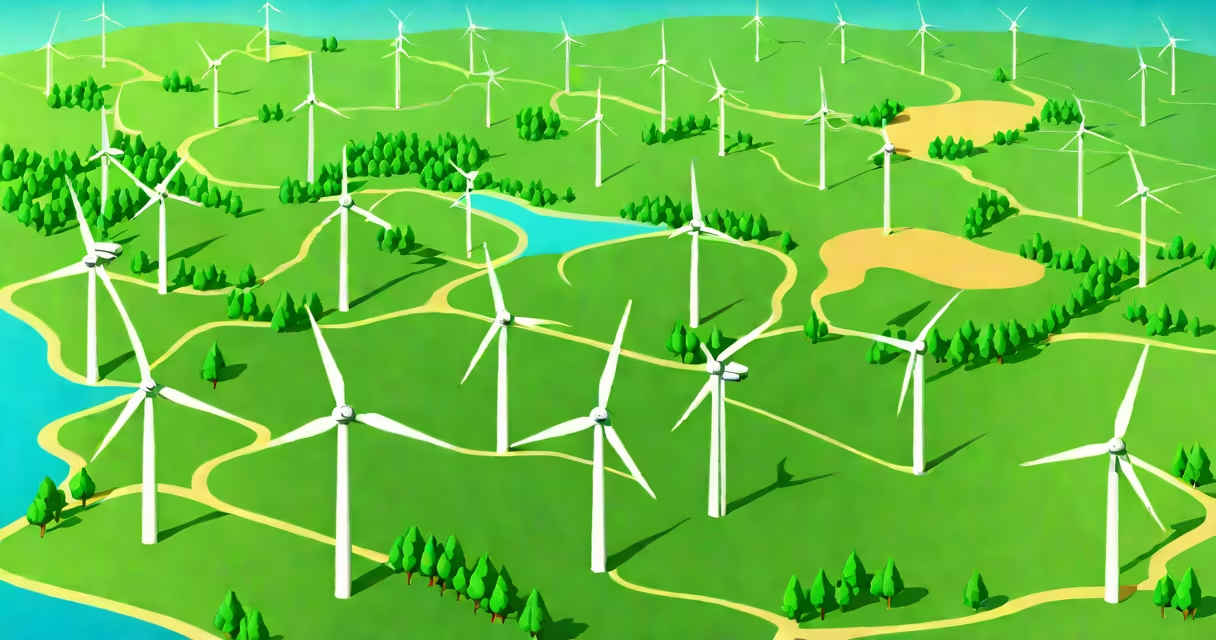
Wind power converts kinetic energy from moving air into usable electricity, mechanical work, or thermal energy. It serves as a clean, scalable alternative to fossil fuels across residential, industrial, and utility-scale operations.
Wind turbines capture airflow using blades attached to a rotor. As wind turns the blades, they spin a shaft connected to a generator, producing electricity through electromagnetic induction. This process requires consistent wind speeds above 5 meters per second (about 11 mph) for efficient output.
The U.S. Department of Energy confirms that wind power supplied 10% of national electricity demand in 2023, with Texas, Iowa, and Oklahoma leading in installed capacity. Modern turbines can generate up to 15 megawatts (MW) per unit, enough to power 15,000 homes annually.
Wind power begins with air movement caused by solar heating differences across Earth's surface. Warm air rises, cooler air moves in to replace it, creating wind. Turbines convert this motion into rotational energy, which drives a generator.
Offshore installations benefit from stronger, steadier winds. The Hornsea Project One in the UK, operational since 2020, hosts 174 turbines generating 1.2 gigawatts (GW) - enough to supply 1.3 million homes. Onshore sites require careful siting to avoid turbulence from terrain features.
Grid integration involves inverters that convert direct current (DC) from turbines into alternating current (AC) compatible with the electrical network. Advanced control systems adjust blade pitch in real time to maintain optimal rotation speed under varying wind conditions.
Wind power is deployed across multiple sectors, each with distinct technical requirements and performance benchmarks.
| Application | Typical Scale | Power Output Range | Key Example |
|---|---|---|---|
| Utility-scale electricity generation | Large wind farms | 1-15 MW per turbine | Hornsea One, UK |
| Residential and small commercial use | Single turbines | 1-10 kW | Home turbines in Minnesota |
| Water pumping | Remote or off-grid locations | 100 W - 5 kW | Sheep ranches in New Mexico |
| Industrial process heat | Factories with high thermal loads | Variable, often paired with storage | Steel plants in Germany using wind-powered electrolysis |
Wind-powered water pumps have been used since the 19th century. Modern versions use direct-drive generators to run submersible pumps without batteries. A 2022 study by the National Renewable Energy Laboratory found that wind-powered irrigation systems reduced diesel fuel use by 68% on farms in California's Central Valley.
Some industrial facilities use wind-generated electricity to produce hydrogen via electrolysis. The Hydrogen Hub project in Rotterdam combines offshore wind with green hydrogen production, aiming for 100,000 tons of annual output by 2030.
Wind power cannot operate reliably during calm weather. Systems depend on seasonal and daily wind patterns. In regions with low average wind speeds, such as parts of the southeastern U.S., wind power contributes less than 2% of total electricity despite high population density.
Contrary to popular belief, wind turbines do not harm birds when sited properly. A 2021 study published in Biological Conservation analyzed 30 years of bird collision data and found that fatalities were 10 times lower than those from buildings and vehicles. Proper placement avoids migratory corridors and nesting zones.
Another misconception is that wind power requires constant backup from fossil fuels. Grid operators now integrate wind with battery storage and demand-response systems. California's Independent System Operator reported that on days with peak wind generation, renewables met 92% of system demand without dispatchable gas plants.
In 2023, the town of Rockport, Massachusetts, installed four 2.5 MW turbines on a former landfill site. The project cost $22 million, funded through municipal bonds and state grants. Annual output reached 18 GWh - enough to meet 85% of local electricity needs.
Local schools and public buildings receive priority access to surplus power. The system includes a 5 MWh lithium-ion battery bank that stores excess energy during high-wind periods. During winter storms, when wind speeds exceeded 12 m/s, the system delivered 1.8 MW continuously for 36 hours.
Residents report a 12% reduction in household electricity bills. The project also created 42 construction jobs and five permanent maintenance roles. Data from the Massachusetts Clean Energy Center shows similar projects have a payback period of 10-14 years.
During a 2023 storm event, the turbines automatically feathered their blades to prevent damage. The system remained online while neighboring substations experienced outages due to ice buildup on transmission lines. This resilience highlights wind power's role in strengthening regional grid reliability.
Wind power is not limited to electricity generation. It supports desalination, remote mining operations, and even synthetic fuel production. When paired with storage and smart grids, it becomes a foundational element of decarbonized infrastructure.
Understanding what wind power can be used for requires distinguishing between direct applications and indirect benefits. While it doesn't replace all forms of energy, it reduces reliance on carbon-intensive sources across transportation, manufacturing, and urban planning.