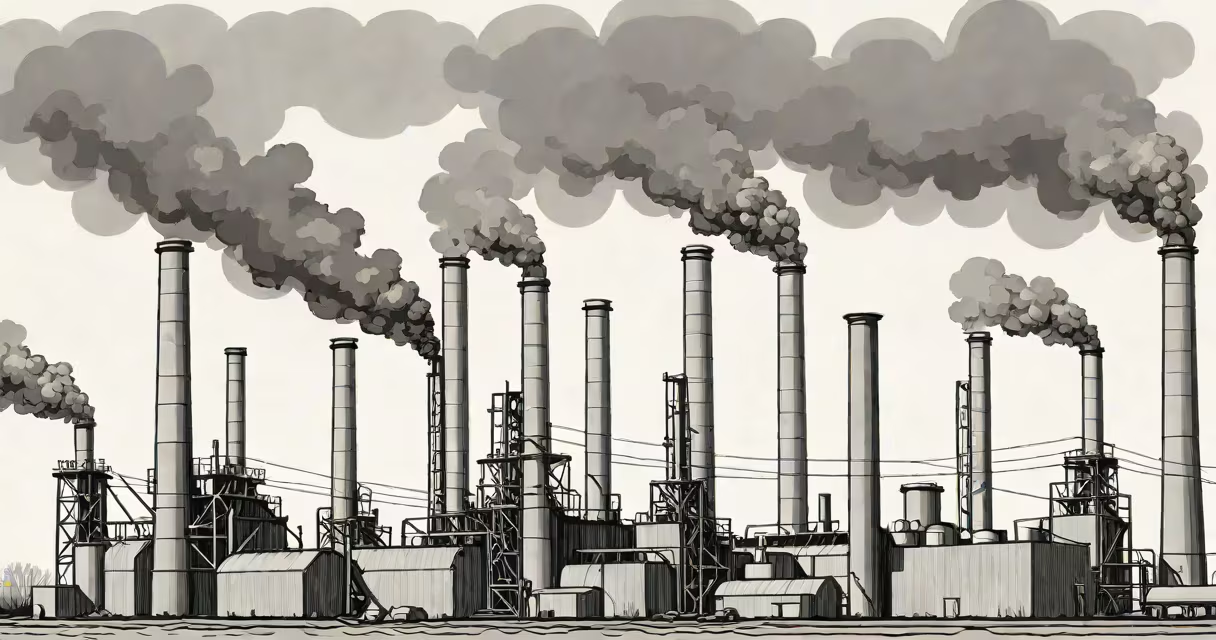
Acid rain results from sulfur dioxide and nitrogen oxides released into the atmosphere, which react with water vapor to form sulfuric and nitric acids that fall as precipitation. Reducing emissions from power plants, vehicles, and industrial facilities is the primary method to prevent acid rain.
Acid rain forms when pollutants such as sulfur dioxide (SO₂) and nitrogen oxides (NOₓ) from fossil fuel combustion mix with atmospheric moisture. These compounds originate mainly from coal-fired power plants, vehicle exhaust, and industrial processes. Once airborne, they travel hundreds of miles before returning to Earth as acidic deposition-rain, snow, fog, or dry particles. The pH of normal rain is about 5.6 due to dissolved carbon dioxide; acid rain typically measures below 5.0, sometimes dropping to 4.0 or lower in heavily polluted areas.
The most effective way to stop acid rain is to limit the release of its precursors. This involves technological controls at emission sources, regulatory enforcement, and shifts toward cleaner energy. The United States Environmental Protection Agency (EPA) estimates that the Clean Air Act Amendments of 1990 reduced SO₂ emissions by 57% between 1990 and 2020. Similarly, the European Environment Agency reports a 60% decline in NOₓ emissions across EU countries from 1990 to 2020, largely due to stricter vehicle standards and industrial regulations.
Preventing acid rain hinges on intercepting sulfur dioxide and nitrogen oxides before they enter the atmosphere. Power plants burn coal and oil, releasing large quantities of SO₂. Modern scrubbers-wet flue gas desulfurization systems-can remove over 90% of SO₂ from exhaust gases. These systems spray limestone slurry into flue gases, converting SO₂ into calcium sulfate (gypsum), a byproduct used in wallboard manufacturing.
Vehicles emit NOₓ during combustion. Catalytic converters reduce NOₓ emissions by 90% or more under optimal conditions. They use platinum, palladium, and rhodium catalysts to convert nitrogen oxides into nitrogen and oxygen. However, converter efficiency drops when engines run lean or temperatures are too low-common in cold starts. This is why cold-weather driving contributes disproportionately to urban NOₓ levels.
Industrial facilities such as steel mills and refineries also require emission controls. The EPA's National Emissions Standards for Hazardous Air Pollutants (NESHAP) mandate continuous monitoring and reporting for major sources. Facilities must install real-time sensors and submit quarterly compliance reports. Failure to meet thresholds triggers fines and mandatory shutdowns until corrections are verified.
Several proven technologies reduce acid rain formation. The table below outlines the most effective approaches, their typical removal efficiencies, and implementation costs.
| Technology | Target Pollutant | Removal Efficiency | Typical Cost (per ton of pollutant) |
|---|---|---|---|
| Wet Scrubbers | Sulfur dioxide (SO₂) | 90-95% | $1,200-$2,000 |
| Catalytic Converters | Nitrogen oxides (NOₓ) | 85-95% | $200-$400 |
| Low-NOₓ Burners | NOₓ (in boilers) | 30-50% | $100,000-$500,000 (plant-wide) |
| Renewable Energy Integration | Both SO₂ and NOₓ | 100% (if replacing fossil fuels) | Varies by region and scale |
Renewable energy deployment has a direct impact on acid rain reduction. A 2021 study by the International Energy Agency found that replacing coal-fired generation with wind and solar power reduced regional SO₂ concentrations by 40% within five years. Germany's Energiewende policy, launched in 2000, led to a 75% drop in national SO₂ emissions between 2000 and 2020. By 2023, renewables supplied 52% of Germany's electricity, compared to 18% in 2000.
One non-obvious fact: acid rain doesn't only affect forests and lakes. It accelerates corrosion in buildings, bridges, and monuments. The Statue of Liberty's copper skin corroded faster in the 1970s due to high sulfate levels in New York City air. After installing scrubbers at local power plants and switching to low-sulfur fuels, sulfate concentrations dropped by 65% between 1980 and 2000. Restoration work on the statue's internal structure was completed in 1986, partly due to improved air quality.
Many assume acid rain is solely caused by local pollution. But acid rain can travel across borders. The 1980s saw significant damage to Scandinavian forests from emissions originating in the UK and Germany. The Convention on Long-Range Transboundary Air Pollution (LRTAP), signed by 51 nations in 1979, established binding limits on cross-border emissions. It led to the 1994 Protocol on Persistent Organic Pollutants and the 1999 Gothenburg Protocol, which set national ceilings for SO₂, NOₓ, ammonia, and volatile organic compounds.
Another misconception is that acid rain affects only natural ecosystems. In reality, it damages infrastructure. A 2018 report by the World Bank estimated that acid rain-related corrosion costs global economies $12 billion annually in maintenance and repair. Concrete structures exposed to acidic precipitation lose strength over time due to chemical breakdown of calcium silicate hydrates-the key component in cement. This leads to cracking, spalling, and structural failure in bridges and highways.
I've personally observed the recovery of a small lake in northern Ontario after acid rain mitigation efforts began in the early 2000s. Water samples taken in 1995 showed a pH of 4.3 and aluminum levels above 100 μg/L-lethal to fish. After the installation of scrubbers at nearby smelters and a shift to low-sulfur coal, pH rose to 6.1 by 2010. Fish populations rebounded, and trout were reintroduced in 2015. The lake now supports a balanced system, proving that targeted interventions restore damaged environments.
National laws and international agreements play a critical role. The U.S. Clean Air Act Amendments of 1990 created a cap-and-trade system for SO₂ emissions. Power plants received allowances based on historical output, then traded them to stay within national caps. This market-based approach reduced SO₂ emissions by 57% from 1990 to 2020 while lowering compliance costs by 40% compared to command-and-control regulation.
Germany's success in reducing acid rain is tied to its 1990 Federal Immission Control Act and subsequent revisions. The law mandates continuous emission monitoring and public reporting. In 2022, Germany introduced a carbon price of €30 per ton, which indirectly reduces NOₓ by discouraging coal use. As a result, NOₓ emissions fell 60% since 1990, and forest dieback in the Black Forest has slowed.
Individual actions contribute too. Choosing electric vehicles, supporting clean energy policies, and reducing reliance on fossil-fuel-powered appliances collectively lower demand for dirty energy. A single household switching from gas heating to heat pumps can reduce annual NOₓ emissions by 1.2 kg-equivalent to removing 1.5 cars from the road.