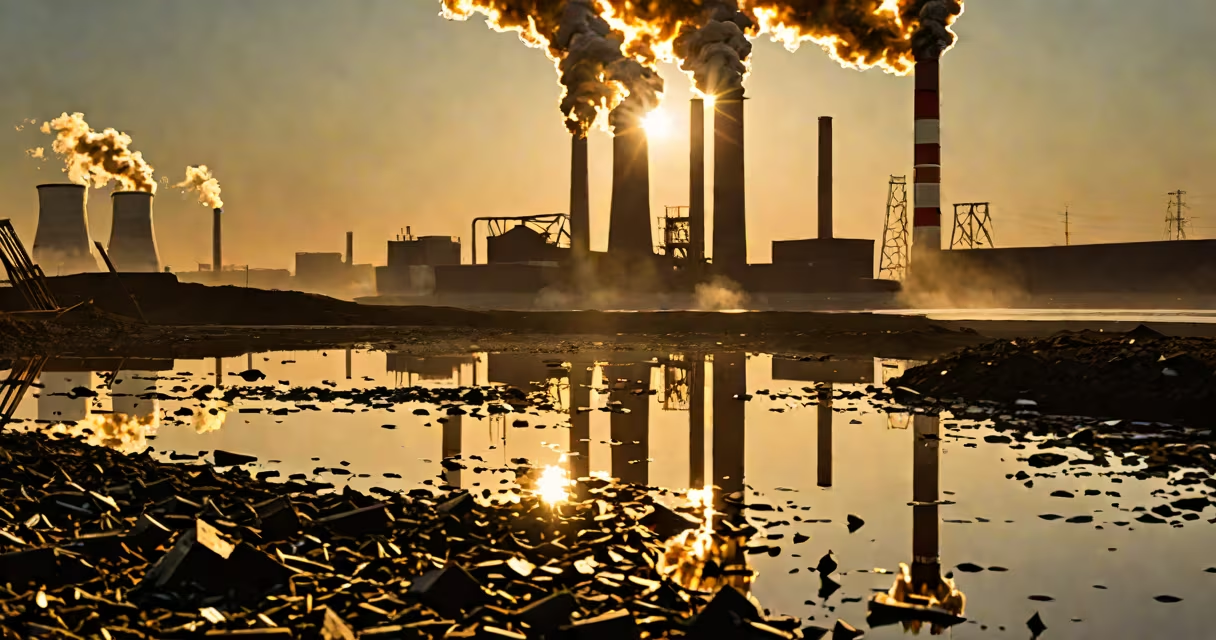
Pollution occurs when harmful substances contaminate air, water, or soil, disrupting natural systems and threatening human and ecological health. Common examples include industrial emissions, plastic waste in marine environments, and vehicle exhaust. These contaminants degrade ecosystems, reduce biodiversity, and contribute to climate change.
Environmental pollution arises from both natural and human-made sources. Human activities such as manufacturing, transportation, agriculture, and energy production release pollutants into the environment. The most persistent forms come from fossil fuel combustion, improper waste disposal, and chemical runoff. According to the World Health Organization, 9 out of 10 people globally breathe air containing high levels of pollutants, leading to 7 million premature deaths annually.
Pollution is categorized by medium: air, water, soil, noise, and light. Air pollution includes particulate matter (PM2.5), nitrogen oxides (NOx), sulfur dioxide (SO₂), and volatile organic compounds (VOCs). Water pollution involves sewage, agricultural runoff, heavy metals, and microplastics. Soil pollution results from pesticides, industrial waste, and landfills. Each type affects living organisms differently and requires targeted mitigation strategies.
Understanding pollution begins with identifying its primary forms. The following table outlines key types, their sources, and documented impacts.
| Type | Primary Sources | Documented Impact |
|---|---|---|
| Air | Vehicle exhaust, power plants, factories | Respiratory diseases; acid rain; global warming |
| Water | Industrial discharge, untreated sewage, agricultural runoff | Algal blooms; fish kills; contaminated drinking water |
| Soil | Pesticides, mining waste, landfill leachate | Loss of arable land; bioaccumulation in food chains |
| Noise | Urban traffic, construction, aircraft | Hearing loss; stress-related disorders; sleep disruption |
| Light | Streetlights, billboards, urban development | Disruption of wildlife migration; sleep cycle interference |
Each form of pollution alters ecosystems in measurable ways. For example, the 2010 Deepwater Horizon oil spill released approximately 4.9 million barrels of crude oil into the Gulf of Mexico. This event caused widespread marine life mortality, including dolphins, sea turtles, and fish populations. Long-term monitoring by NOAA showed that some species have yet to recover fully, even over a decade later.
Another well-documented case is the 1984 Bhopal disaster in India, where a gas leak from a Union Carbide pesticide plant released methyl isocyanate into the atmosphere. Over 5,000 people died within days, and tens of thousands suffered long-term respiratory and neurological damage. This incident remains one of the worst industrial accidents in history and led to stricter international regulations on hazardous chemical storage.
Many assume pollution only affects visible waste like litter or smog. However, invisible pollutants such as microplastics and airborne fine particles pose greater long-term risks. Microplastics-tiny plastic fragments under 5mm-have been detected in 94% of tap water samples tested in the U.S., according to a 2018 study by Orb Media. These particles enter the food chain and may accumulate in human tissues, though health effects are still being studied.
Another misconception is that pollution is solely a problem in developing nations. While industrialized regions historically produced more emissions, current data shows that low-income countries often bear disproportionate exposure due to weaker environmental enforcement. A 2021 report by the United Nations Environment Programme (UNEP) found that 91% of global waste is generated in high-income countries, yet 79% of it ends up in low- and middle-income nations through illegal dumping.
People often confuse pollution with contamination. Pollution refers to the introduction of harmful substances into the environment. Contamination describes the presence of unwanted material, which may not always be toxic. For example, a lake with high sediment levels may be contaminated but not polluted unless those sediments carry chemicals like lead or mercury.
Consider the case of Lake Erie in North America. In the 1960s, excessive phosphorus runoff from fertilizers and sewage led to massive algal blooms. By 1969, the lake was so degraded that it was reported to have caught fire due to flammable gases produced by decomposing algae. This event sparked national attention and contributed to the passage of the Clean Water Act in 1972.
Today, the lake still faces challenges. In 2014, a toxic algal bloom caused Toledo, Ohio, to shut down its water supply for three days. Over 400,000 residents were advised not to drink or cook with tap water. The bloom was linked to agricultural runoff from farms in the Maumee River watershed, which drains into Lake Erie. This event illustrates how pollution can disrupt essential services and demand immediate policy responses.
Another example is the Great Pacific Garbage Patch-a vast accumulation of floating plastic debris in the North Pacific Ocean. Estimates from the Ocean Cleanup project place the mass at over 1.8 trillion pieces weighing 80,000 tons. Plastic breaks down into microplastics, which are ingested by marine animals. A 2020 study published in *Science* found that 90% of seabirds had plastic in their stomachs, with fatal consequences in many cases.
One overlooked fact is that not all pollution is anthropogenic. Volcanic eruptions emit sulfur dioxide and ash, contributing to air pollution. The 1991 eruption of Mount Pinatubo in the Philippines ejected 20 million tons of sulfur dioxide into the stratosphere, causing global temperatures to drop by 0.5°C for two years. Natural events like wildfires also release significant amounts of carbon monoxide and particulates.
However, human-caused pollution differs in scale and persistence. While natural sources are episodic, industrial pollution accumulates over time. For instance, lead contamination from gasoline additives persisted in soils for decades after bans were enacted. Studies show lead levels in urban soils remain elevated in cities like Detroit and Baltimore, posing ongoing health risks to children.
I once observed a community garden in Brooklyn where soil testing revealed lead concentrations 12 times above EPA safety thresholds. Despite no nearby factories, the contamination stemmed from historical use of leaded gasoline and paint. This example underscores that pollution legacy can outlive its source.
When evaluating pollution, focus on source, concentration, and duration. A single oil spill is a discrete event. Continuous emissions from a coal-fired power plant represent chronic exposure. Both require different regulatory approaches and cleanup methods.
Understanding what are some examples of pollution enables better decision-making at personal, civic, and policy levels. From reducing single-use plastics to supporting clean energy, informed choices can mitigate environmental harm. Awareness of specific pollutants and their impacts empowers action beyond vague concern.