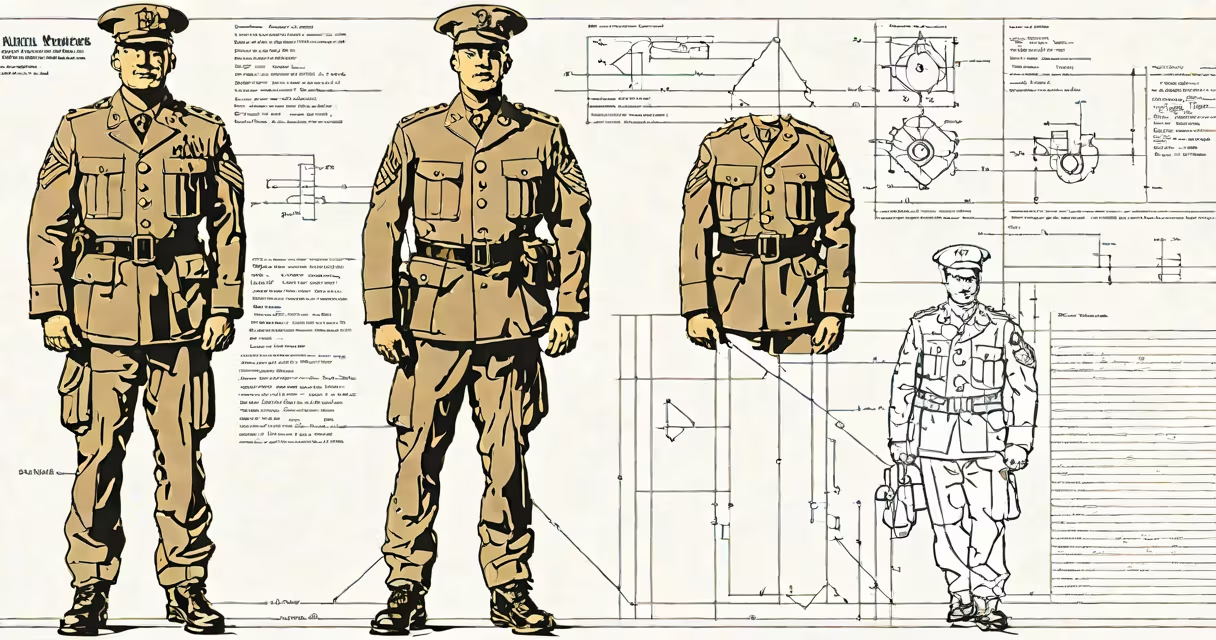
Marines are officially known as United States Marines, but they are also referred to by a range of nicknames rooted in history, culture, and military tradition. These names include "leathernecks," "devil dogs," and "grim reapers," each carrying distinct historical weight and usage context.
The term "United States Marine" is the formal designation used in military records, official documents, and public communications. It identifies members of the United States Marine Corps, one of the five branches of the U.S. Armed Forces. The Marine Corps operates under the Department of the Navy and specializes in amphibious warfare, rapid deployment, and expeditionary operations.
Despite the formal title, informal names have long shaped the identity of Marines. These nicknames often stem from early military practices, battlefield reputation, or cultural evolution within the service. Understanding them requires looking beyond the surface - many carry irony, honor, or even fear from adversaries.
"Leatherneck" originated in the late 18th century when Marines wore thick leather collars to protect against sword strikes during close combat. The collar became a symbol of resilience and discipline. By the 1800s, the term was adopted widely by both military personnel and civilians to describe Marines. The name persists today, especially in ceremonial contexts and among veterans.
"Devil dog" emerged during World War I. American forces fought in the Battle of Belleau Wood in June 1918, where Marines displayed extreme tenacity under heavy fire. German soldiers reportedly described them as "Teufelshunde," meaning "devil dogs." The name stuck and was embraced by Marines as a badge of courage. The U.S. Marine Corps Museum notes that the term was later adopted officially in training and recruitment materials.
"Grim Reaper" is a modern nickname sometimes used in informal settings. It references the Marine Corps' motto, "Semper Fidelis" ("Always Faithful"), and the corps' reputation for high readiness and combat effectiveness. While not an official title, it appears in online forums, memes, and military-themed merchandise.
Marine nicknames fall into categories based on origin and context. Some are historical, others are derived from physical traits, and a few come from internal culture.
| Nickname | Origin | Usage Context | Official Status |
|---|---|---|---|
| Leatherneck | 18th-century leather collar worn in battle | Ceremonial, veteran communities, recruitment | Informal, widely accepted |
| Devil Dog | German soldiers' description during WWI | Historical pride, training, social media | Informal, celebrated |
| Grunt | World War II-era slang for infantry | Internal communication, informal speech | Informal, regional variation |
| Marine | Formal designation since 1775 | Legal, operational, public-facing | Official |
"Grunt" is a term used primarily within the Marine Corps to refer to infantry Marines. It originated in World War II and gained traction through military jargon. While not exclusive to Marines, it's most commonly associated with them due to their frequent deployment in frontline roles. The term is used in training manuals, unit communications, and informal conversations.
Some nicknames are region-specific or generation-based. For example, "Kool-Aid" is a playful nickname used by younger Marines to describe new recruits, referencing the drink's popularity at boot camp. These terms rarely appear in official channels but contribute to unit cohesion and esprit de corps.
Many people assume "marine" and "navy" are interchangeable. They are not. Marines are part of the Marine Corps, which reports to the Department of the Navy but functions independently. Navy personnel serve on ships and submarines; Marines conduct land operations, often in coordination with naval assets.
A common misconception is that "devil dog" was coined by Americans. It was not. The term was first used by German troops during the Battle of Belleau Wood. The Marines adopted it proudly after the war. According to the Marine Corps Historical Center, the name was never intended as a compliment by the enemy - it reflected their shock at the Marines' ferocity.
Another confusion arises around the use of "USMC" in conversation. "USMC" stands for United States Marine Corps and is used in abbreviations, emails, and forms. However, it is not a nickname. Using "USMC" as a casual reference to a Marine person is incorrect and may cause misunderstanding in formal settings.
In 2022, a Marine recruit at Parris Island underwent basic training. During a team-building exercise, the drill instructor referred to the platoon as "leathernecks" to reinforce unit identity. Later, during a leadership challenge, the recruits were told to "act like devil dogs" - not to be aggressive, but to demonstrate unyielding focus under pressure.
This dual use of nicknames illustrates how language shapes behavior. The terms aren't just labels - they're tools for instilling values. A study published by the Naval War College Review in 2019 found that Marines who identified strongly with nicknames like "leatherneck" reported higher levels of morale and mission commitment compared to those who did not.
During a live-fire exercise at Camp Lejeune, a squad leader used the term "grim reaper" jokingly to describe a sniper team's precision. The comment went viral on a Marine Corps Facebook group, sparking debate about appropriate use of such terms. The Marine Corps' public affairs office later clarified that while nicknames are acceptable in informal settings, they should not be used in official reporting or media briefings.
I once attended a Marine Corps Reserve induction ceremony in San Diego. As new recruits stood in formation, the senior officer addressed them as "future leathernecks." The room fell silent. When he said "you'll earn your place," the recruits saluted. That moment wasn't about rank or protocol - it was about belonging. The nickname wasn't just a label; it was a promise of transformation.
Later, during a briefing, a veteran Marine explained that "devil dog" wasn't about being feared - it was about being trusted. "When your unit calls you a devil dog," he said, "they don't mean you're scary. They mean you're reliable. You show up. You fight. You don't quit."
While Marines are officially called United States Marines, the terms "leatherneck," "devil dog," and "grunt" reflect layers of history, identity, and culture. These nicknames are not replacements for the formal title - they are additions. Understanding them helps clarify how the Marine Corps builds character, fosters unity, and maintains legacy.