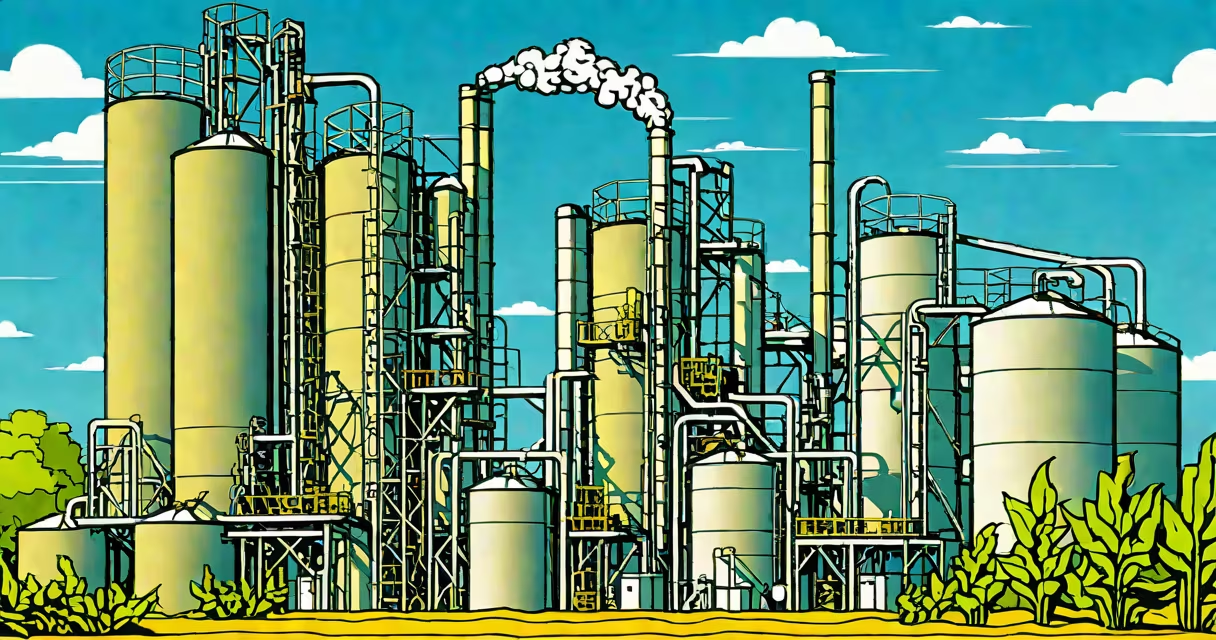
Biofuels are liquid or gaseous fuels derived from organic matter such as plants, algae, or waste materials. They serve as renewable alternatives to petroleum-based fuels in transportation, electricity generation, and industrial heating. Their primary purpose is to reduce greenhouse gas emissions while supporting energy security.
These fuels are produced through biochemical or thermochemical processes. The most common types are bioethanol and biodiesel. Bioethanol, typically made from corn, sugarcane, or wheat, is blended with gasoline to power internal combustion engines. Biodiesel, extracted from vegetable oils or animal fats, runs in diesel engines with little modification. Both are drop-in replacements in existing infrastructure.
According to the U.S. Department of Energy, biofuels accounted for about 5% of total U.S. transportation fuel consumption in 2022. That equates to roughly 16 billion gallons of ethanol and 2.5 billion gallons of biodiesel used annually. These numbers reflect a growing role in reducing dependence on imported oil and lowering emissions from road vehicles.
When bioethanol is blended with gasoline-commonly at 10% (E10) or 15% (E15)-it increases the fuel's oxygen content. This promotes cleaner combustion, reducing carbon monoxide and particulate emissions. Flex-fuel vehicles, designed to run on blends up to E85 (85% ethanol), are available in over 20 U.S. states. In Brazil, where sugarcane ethanol dominates, nearly 40% of new cars sold are flex-fuel models.
Biodiesel functions similarly in diesel engines. It burns hotter and cleaner than petroleum diesel, reducing sulfur oxide and soot output. The Environmental Protection Agency reports that biodiesel reduces lifecycle carbon dioxide emissions by up to 86% compared to conventional diesel. In 2023, the U.S. produced 2.7 billion gallons of biodiesel, mostly from soybean oil and recycled cooking grease.
A real-world example is the city of San Francisco, which powers its municipal bus fleet with B20 biodiesel-20% biodiesel mixed with 80% petroleum diesel. Since 2015, this switch has cut the city's transit-related CO₂ emissions by 14%. The buses operate on standard routes without engine modifications, proving biofuels can integrate into large-scale public transport systems.
Not all biofuels are created equal. They fall into four generations based on feedstock and production method. First-generation biofuels come from food crops like corn and sugar cane. Second-generation fuels use non-food biomass such as wood chips, grasses, and agricultural residues. Third-generation biofuels derive from algae, which grow rapidly and don't compete with farmland. Fourth-generation biofuels combine genetic engineering with direct carbon capture to produce fuels with net-negative emissions.
| Type | Feedstock | Common Use | Emissions Reduction |
|---|---|---|---|
| First-gen | Corn, sugarcane, soybeans | Gasoline blending (E10-E85) | 20-30% |
| Second-gen | Switchgrass, poplar, corn stover | Diesel replacement (B20-B100) | 50-70% |
| Third-gen | Algae, cyanobacteria | Jet fuel, marine diesel | 70-86% |
| Fourth-gen | Engineered microbes, captured CO₂ | Aviation, heavy transport | Net-negative (removes CO₂) |
Despite their promise, second- and third-generation biofuels face scalability challenges. Algae-based biodiesel requires controlled environments and high nutrient inputs. The National Renewable Energy Laboratory notes that commercial algae biofuel production remains limited to pilot projects due to cost and yield issues. However, research at the University of California, Berkeley, has shown genetically modified algae strains producing 10 times more oil per acre than wild types-suggesting future viability.
Many assume biofuels are always environmentally beneficial. That's not true. First-generation biofuels can drive land-use change, leading to deforestation and increased food prices. The Food and Agriculture Organization of the United Nations warns that expanding corn ethanol production in the U.S. contributed to a 20% rise in global corn prices between 2007 and 2012. This phenomenon, known as "food vs. fuel," highlights the trade-offs involved.
Another misconception is that biofuels are interchangeable with electric vehicles. While both reduce emissions, they differ fundamentally. Electric vehicles rely on grid electricity, which may still come from coal. Biofuels offer immediate decarbonization in existing engines without requiring vehicle replacement. A 2023 study by the International Council on Clean Transportation found that using E10 ethanol in a typical passenger car reduces well-to-wheel CO₂ emissions by 34%-equivalent to driving 1,500 miles less per year.
Some confuse biofuels with biogas, which is methane produced from anaerobic digestion of manure or sewage. Biogas is often used for heating or electricity and can be upgraded to biomethane for injection into natural gas grids. Unlike liquid biofuels, biogas is not suitable for long-haul trucking or aviation. Understanding this distinction prevents misapplication in policy and investment decisions.
I visited a biorefinery in Iowa in 2022 that converts corn into ethanol and distillers' dried grains with solubles (DDGS), a high-protein animal feed. The facility processes 100,000 bushels of corn daily, producing 3 million gallons of ethanol annually. The DDGS is shipped to cattle feedlots across the Midwest. This closed-loop system demonstrates how biofuels can co-produce valuable byproducts, improving efficiency.
During the visit, I noticed that the plant's waste heat was captured and reused in nearby greenhouses. This integration reduced the facility's energy demand by 18%. It's a practical example of how biofuel production can align with circular economy principles-something often overlooked in broad discussions.
Biofuels are not a silver bullet, but they play a critical role in decarbonizing sectors where electrification is difficult. Aviation, shipping, and heavy-duty freight remain heavily reliant on liquid fuels. Sustainable aviation fuel (SAF), made from used cooking oil or agricultural waste, is being adopted by airlines like United and Delta. As of 2023, SAF accounts for less than 0.1% of global jet fuel use, but the International Air Transport Association expects it to reach 10% by 2030.
Renewable fuel standards in the U.S., such as the Renewable Fuel Standard (RFS), mandate increasing volumes of biofuels in the national fuel supply. The RFS requires 36 billion gallons of renewable fuel annually by 2022-of which 21 billion were met through bioethanol and biodiesel. These regulations ensure sustained market demand and encourage innovation.
For context, the European Union's Renewable Energy Directive sets binding targets for biofuels in transport, aiming for 14% renewable energy share by 2030. Countries like Sweden and Finland have already achieved over 25% biofuel use in their transport fleets. These policies show that biofuels are viable components of national energy strategies.
Understanding what are biofuels used for reveals their function beyond simple substitution. They enable low-carbon mobility, support rural economies, and provide energy resilience. When paired with advanced feedstocks and efficient conversion technologies, they contribute meaningfully to climate goals. The key lies in avoiding first-generation expansion without oversight and investing in second- and third-generation solutions.