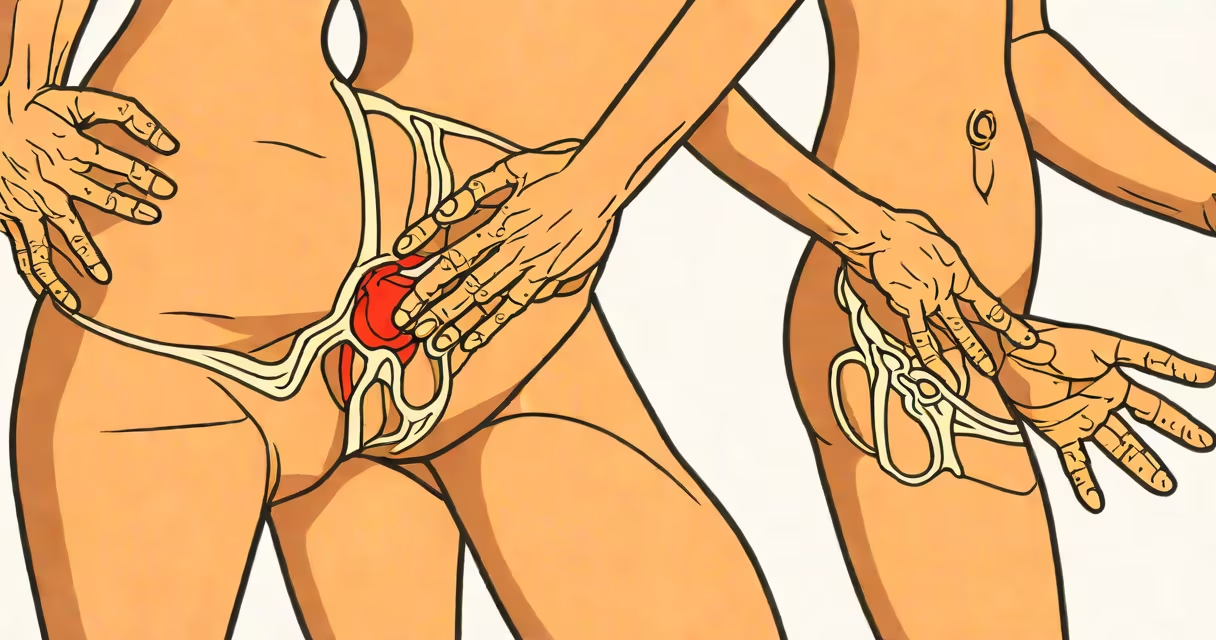
Pain in lower right side near hip refers to discomfort localized to the right lower quadrant of the abdomen, specifically around the area where the hip bone meets the pelvis. This region includes the appendix, part of the large intestine, right kidney, reproductive organs in women, and the right hip joint. The sensation can range from dull and persistent to sharp and sudden, depending on the underlying cause.
This pain often arises from internal organs such as the appendix or cecum, or from musculoskeletal structures like the hip joint, iliac crest, or surrounding muscles. It's distinct from general back pain or groin discomfort, though overlapping symptoms can occur. Identifying whether the pain originates from the abdomen, pelvis, or musculoskeletal system is critical for accurate diagnosis and treatment.
Common triggers include infection, inflammation, trauma, or referred pain from nearby nerves. A single episode may resolve quickly, but recurring or worsening pain demands clinical evaluation. Early recognition of warning signs improves outcomes, especially when conditions like appendicitis are involved.
The lower right side near the hip is anatomically complex. Structures in this area include the appendix, ascending colon, right ureter, right ovary and fallopian tube (in women), the right hip joint, and the right psoas muscle. Pain can originate from any of these components, either directly or through nerve referral.
For example, acute appendicitis typically begins with vague, central abdominal pain that migrates to the right lower quadrant within 6-12 hours. As the inflamed appendix presses on surrounding tissues, the pain becomes sharp and localized. By the time it reaches the right lower quadrant, it often worsens with movement, coughing, or pressure.
Nerve pathways also contribute. The iliohypogastric and ilioinguinal nerves run along the lower abdominal wall and can refer pain to the hip region. A pinched nerve due to hernia, spinal misalignment, or muscle strain may mimic abdominal pain but actually stems from the nervous system.
Causes of pain in lower right side near hip fall into three categories: gastrointestinal, genitourinary, and musculoskeletal. Each has distinct patterns and associated symptoms.
| Type | Common Causes | Key Symptoms | When to Seek Care |
|---|---|---|---|
| Gastrointestinal | Appendicitis, Crohn's disease, diverticulitis | Sharp pain that worsens with movement, fever, nausea, loss of appetite | Severe pain lasting more than 4 hours, vomiting, inability to stand straight |
| Genitourinary | Kidney stones, ovarian cysts, pelvic inflammatory disease | Flank pain radiating to groin, blood in urine, menstrual irregularity | Pain with urination, visible blood in urine, sudden onset of severe pain |
| Musculoskeletal | Hip arthritis, labral tear, piriformis syndrome, muscle strain | Pain with walking, sitting, or twisting; stiffness in hip joint | Pain persists beyond 1-2 weeks despite rest, worsens with weight-bearing |
Appendicitis accounts for about 7% of emergency department visits for abdominal pain, according to the American College of Surgeons. It affects both sexes equally and peaks between ages 10 and 30. Early symptoms often include loss of appetite, low-grade fever, and mild nausea before the pain localizes.
For women, ovarian cysts can cause sharp, intermittent pain in the right lower abdomen. These fluid-filled sacs form on the ovary and may rupture or twist, leading to sudden pain. A 2021 study in Obstetrics & Gynecology found that 1 in 10 women experience symptomatic ovarian cysts annually, with most resolving without surgery.
Pain in lower right side near hip is frequently mistaken for muscle strain or sciatica. However, sciatica typically follows a dermatomal pattern-burning or tingling that runs down the back of the leg, not isolated to the hip area. True sciatic pain usually involves the buttock and posterior thigh, not the front or side of the hip.
Another common confusion is mistaking right-sided abdominal pain for constipation. While bloating and cramping can occur with bowel obstruction, they rarely cause localized, sharp pain in the right lower quadrant. Constipation-related pain tends to be diffuse and improve with bowel movements.
A non-obvious distinction: hip joint pain often worsens with weight-bearing or prolonged standing. If you feel pain when rising from a chair or walking uphill, it likely stems from the joint itself. In contrast, visceral pain from the appendix or colon tends to be constant and may improve slightly when lying still.
In 2022, a 22-year-old college student reported pain that began near the navel and moved to the right lower abdomen over 12 hours. He described the pain as sharp and worsening with walking. He had no diarrhea but experienced mild nausea and a temperature of 37.8°C (100°F).
On physical exam, the doctor noted rebound tenderness at McBurney's point-the spot one-third of the way from the anterior superior iliac spine to the umbilicus. Blood tests showed elevated white blood cell count (14.2 × 10⁹/L). An ultrasound confirmed a swollen appendix measuring 7 mm in diameter with surrounding fluid.
He underwent laparoscopic appendectomy the next day. Recovery took five days, including antibiotics and limited activity. This case illustrates how early symptoms can be subtle but progress rapidly. Delayed treatment increases risk of perforation, which occurs in 15-20% of untreated cases, according to the National Institute of Diabetes and Digestive and Kidney Diseases.
Red flag symptoms demand prompt evaluation. These include:
I once observed a patient who delayed seeking care for three days with worsening right lower quadrant pain. He eventually presented with a ruptured appendix and required intensive care. His recovery took six weeks, compared to the typical 10-day recovery for timely intervention.
For less urgent cases, initial self-assessment can help. Track pain location, intensity (scale 1-10), timing, and associated symptoms. If pain persists beyond 48 hours or worsens, consult a healthcare provider. Imaging such as CT scan or ultrasound may be needed to rule out serious conditions.