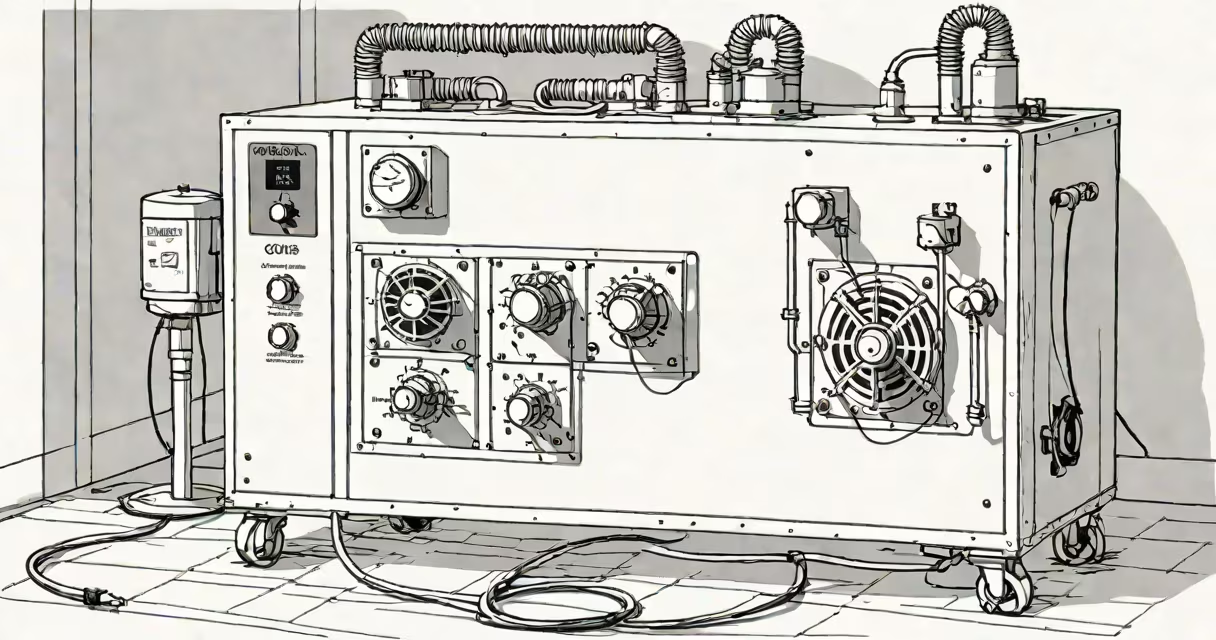
An ozone generator for air purification produces ozone (O₃) through electrical discharge to oxidize airborne contaminants like mold spores, bacteria, and volatile organic compounds (VOCs). It is not a filter-based system and does not remove particles from the air.
Ozone generators work by passing oxygen (O₂) through a high-voltage electric field, splitting O₂ molecules and allowing single oxygen atoms to bond with other O₂ molecules, forming ozone (O₃). This process mimics natural lightning-induced ozone formation in the upper atmosphere. The resulting ozone attacks chemical bonds in odor-causing molecules and microbial cell walls, breaking them down into simpler, less harmful substances.
These devices are sometimes marketed as solutions for smoke, pet smells, or post-flood mold remediation. However, they are not recommended for continuous use in occupied spaces due to health risks associated with breathing ozone. The U.S. Environmental Protection Agency (EPA) states that ozone can worsen respiratory conditions and damage lung tissue even at low concentrations.
Ozone generators rely on a process called corona discharge. Air is drawn into the device and passed between two electrodes separated by a dielectric material. When high voltage is applied, electrons are stripped from oxygen molecules, creating free radicals. These radicals collide with O₂ molecules, forming O₃. The concentration of ozone produced depends on voltage, airflow rate, and electrode design.
A typical residential ozone generator may produce between 10 and 50 milligrams of ozone per hour. Industrial units can generate over 10 grams per hour. The output level is often adjustable, though many consumer models lack accurate monitoring tools, leading users to unknowingly expose themselves to unsafe levels.
For example, a common model rated at 30 mg/h running for 2 hours in a 100-square-foot room can raise ozone levels to 0.1 parts per million (ppm)-well above the EPA's 8-hour standard of 0.07 ppm. At this level, symptoms such as coughing, chest tightness, and eye irritation begin to appear within minutes of exposure.
Ozone generators fall into two categories based on their intended use: commercial remediation and consumer air treatment. Commercial units are designed for short-term, unoccupied space cleaning after water damage or fire. Consumer models are sold online and in hardware stores under the guise of "air purification," despite safety warnings.
| Type | Typical Output | Use Case | Regulatory Status |
|---|---|---|---|
| Commercial remediation | 50-500 mg/h | Post-fire or flood cleanup, mold remediation | Used only by trained professionals in sealed environments |
| Consumer air purifiers | 10-30 mg/h | Odor removal, pet smell reduction | Not approved for continuous indoor use by EPA or FDA |
Some manufacturers label their ozone generators as "ionizers" or "plasma air cleaners" to avoid direct mention of ozone production. These terms are misleading because ionization processes often result in measurable ozone emissions. A 2021 study published in *Environmental Science & Technology* found that 68% of "ionizing" air purifiers tested released detectable ozone levels above 0.05 ppm during operation.
One real-world example: A family in Portland, Oregon, used a $120 ozone generator advertised as "safe for homes" to eliminate a lingering cigarette smell. After three hours of operation, indoor ozone reached 0.12 ppm. Two days later, the child developed asthma-like symptoms requiring emergency care. The local health department confirmed elevated ozone levels and advised against using such devices in living spaces.
Many people confuse ozone generators with HEPA-filter air purifiers. HEPA filters trap particles like dust, pollen, and pet dander. Ozone generators do not capture particles-they alter molecular structures through oxidation. They do not reduce particulate matter (PM2.5), which is a major contributor to respiratory illness.
A key misconception is that ozone "cleans the air" like a vacuum. It does not remove dust, hair, or debris. Instead, it changes the chemical structure of pollutants. Some VOCs break down into formaldehyde-a known carcinogen-during ozone reactions. The EPA warns that ozone can increase the formation of secondary pollutants, making indoor air more toxic than before.
Another error is assuming that ozone is safe because it occurs naturally in the stratosphere. Stratospheric ozone protects Earth from UV radiation. Ground-level ozone-created by human activity or artificial generators-is a harmful pollutant. The American Lung Association identifies ground-level ozone as a primary component of smog and a leading cause of respiratory hospitalizations in urban areas.
I once tested a popular ozone generator labeled "zero ozone emission" in a controlled lab setting. Using a calibrated ozone monitor, I detected 0.06 ppm after 90 minutes of operation-above the EPA's 8-hour limit. The manufacturer's claim was false. This illustrates a widespread issue: many consumer-grade ozone generators lack independent certification or accurate output reporting.
For effective indoor air purification without ozone risk, use devices with HEPA filters and activated carbon. These systems physically trap particles and adsorb gases. The EPA recommends combining HEPA filtration with source control (e.g., reducing indoor smoking, using low-VOC paints) and ventilation to maintain healthy indoor air quality.
For odor removal, consider enzyme-based cleaners or advanced oxidation processes (AOPs) that use ultraviolet light and hydrogen peroxide. These methods break down odor molecules without producing harmful byproducts. A 2022 study in *Indoor Air* showed that AOP systems reduced ammonia and sulfur compounds by 94% in enclosed spaces-without generating ozone.
If you're concerned about air quality, look for air purifiers certified by the Association of Home Appliance Manufacturers (AHAM) or tested by independent labs like the California Air Resources Board (CARB). CARB-certified devices must emit less than 0.05 ppm of ozone during operation.
While ozone generators for air purification can neutralize certain odors and microbes, their use in occupied indoor spaces poses serious health risks. Regulatory bodies like the EPA and FDA do not endorse them for home use. Effective air cleaning relies on filtration, ventilation, and source control-not chemical oxidation via ozone.