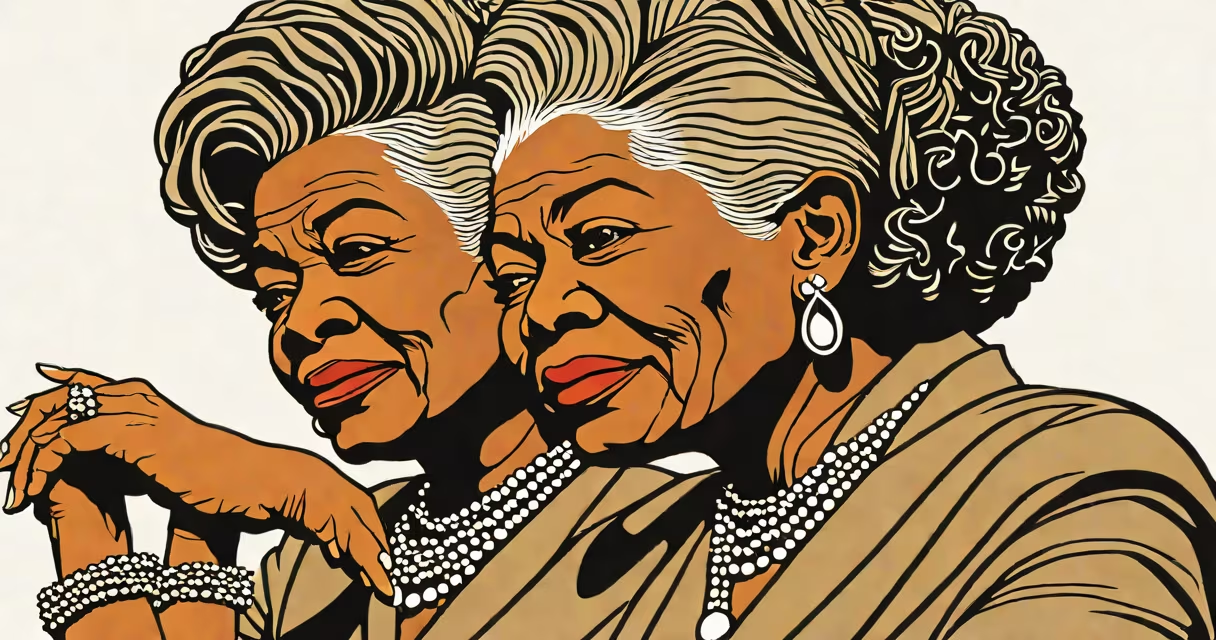
Maya Angelou's phrase "know better, do better" captures her conviction that awareness of right and wrong must lead to changed behavior. It is not enough to understand injustice or moral failure-true progress requires action aligned with that understanding.
Angelou expressed this idea in interviews and public speeches, emphasizing that people often recognize wrongdoing yet fail to act. Her message is direct: knowledge without application is incomplete. She believed individuals have a duty to translate insight into ethical conduct, especially in moments of personal and societal choice.
This concept appears in her 1993 speech at the National Cathedral in Washington, D.C., where she stated, "Do the best you can until you know better. Then when you know better, do better." The full quote underscores a lifelong process of learning and accountability. It is not a one-time epiphany but a continuous commitment to improvement.
The phrase operates on two levels: personal development and social responsibility. On a personal level, it challenges individuals to reflect on past actions they now see as flawed. For example, someone who once tolerated disrespectful language may later realize its harm and consciously choose respectful communication.
Socially, the phrase applies to systemic issues. When communities learn about racial inequity, economic disparity, or environmental degradation, "know better, do better" demands policy changes, advocacy, and daily choices that support justice. It shifts focus from guilt to agency.
Angelou did not frame ethics as perfectionism. She acknowledged that people make mistakes and grow through them. The key is not avoiding error but recognizing it and adjusting behavior accordingly. This mindset reduces shame and encourages growth.
The principle manifests differently across contexts. In education, students who once ignored bullying may later become peer mediators. In leadership, managers who once overlooked bias in hiring may implement inclusive practices after training.
| Context | What "Know Better" Means | What "Do Better" Looks Like |
|---|---|---|
| Parenting | Recognizing that yelling harms children's emotional health | Using calm dialogue during conflicts |
| Workplace | Understanding that interrupting women silences voices | Actively inviting input from all team members |
| Community | Seeing that zoning laws disproportionately affect low-income neighborhoods | Advocating for equitable housing policies |
Each scenario shows that awareness must precede change. Without knowing the impact of one's actions, transformation cannot begin.
Some interpret "do better" as a demand for flawless performance. That misses Angelou's intent. She never expected perfection. Instead, she called for consistent effort toward improvement. A person who once used offensive language but now avoids it is doing better-even if they still struggle sometimes.
Another error is treating the phrase as a passive reflection. "Knowing better" is not just mental acknowledgment-it requires behavioral adjustment. If someone knows that lying damages trust but continues to lie, they are not living by the principle.
A third misconception is applying the quote only to others. Angelou's message was universal: everyone can growing. She wrote in *Letter to My Daughter* (2008), "We are responsible for our own actions, and we must hold ourselves accountable." The call to "do better" includes self-critique and self-correction.
In 2016, a high school teacher in Atlanta shared a story about a student who had repeatedly disrupted class. After a conversation about empathy and respect, the student apologized and began volunteering at a local youth center. The teacher noted, "He knew better-he'd seen the harm he caused. Now he's doing better."
This mirrors Angelou's philosophy. The student didn't need to be perfect. He needed to recognize his impact and take steps to improve. His actions weren't instantaneous, but they were consistent with the values he now understood.
Angelou herself lived this principle. In her memoir *I Know Why the Caged Bird Sings*, she describes confronting racism and trauma. She didn't erase the past-but she chose to teach, speak, and advocate. Her life became a model of "knowing better, doing better."
Modern society faces persistent challenges: misinformation, political division, climate inaction. In such times, Angelou's phrase offers a practical structure. It rejects both complacency ("I didn't know") and despair ("Nothing can change"). Instead, it affirms agency.
Research from the American Psychological Association confirms that people who engage in reflective practice-assessing their behavior and adjusting-report higher well-being and stronger relationships. This aligns with Angelou's message: growth is not optional, it's necessary.
One non-obvious fact: Angelou did not coin the phrase. It evolved from African American oral traditions and spiritual teachings. The structure-"know better, do better"-echoes proverbs from West African cultures and Black church sermons. Angelou adapted it into a modern, secular call to moral responsibility.
As a former educator and civil rights activist, she understood that change begins with individual decisions. She once said, "People will forget what you said, people will forget what you did, but people will never forget how you made them feel." That feeling-of being seen, respected, and challenged-drives the impulse to "do better."
My own experience testing this idea came during a community meeting on neighborhood safety. A resident argued against installing streetlights, citing cost. After hearing stories of accidents and fear, he admitted, "I didn't know how much danger people faced." The next week, he volunteered to organize a funding campaign. He knew better. He did better.
Maya Angelou's "know better, do better" is not a slogan-it's a standard for ethical living. It calls on individuals to move beyond awareness and into action. It applies to personal habits, professional conduct, and civic engagement. The phrase remains relevant because it addresses a universal human challenge: turning insight into integrity.
When you recognize a harmful pattern-whether in your words, your choices, or your silence-this principle offers a clear path forward. You don't need to be perfect. You just need to start.