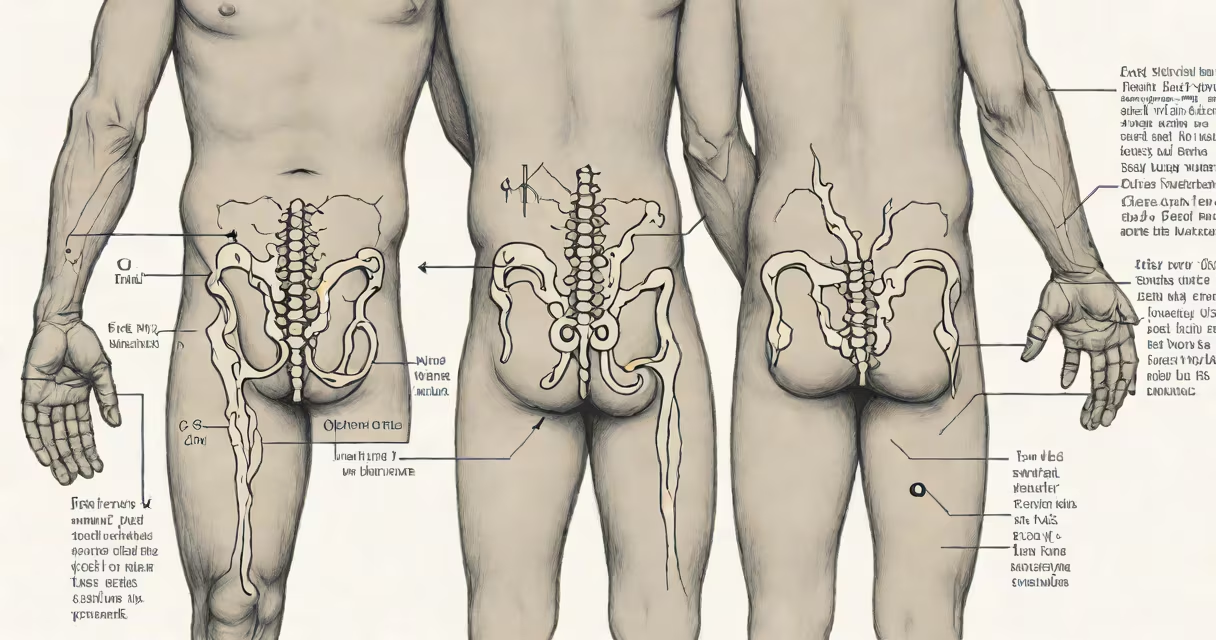
Left pelvic pain in men refers to persistent or recurring discomfort in the lower abdominal region on the left side, often involving the groin, hip, or lower back. It may result from musculoskeletal strain, nerve compression, urinary tract issues, or reproductive system disorders. This condition is not a diagnosis but a symptom requiring evaluation to determine underlying causes.
Men experiencing left pelvic pain may describe it as dull, sharp, aching, or burning. The sensation can worsen with movement, sitting, or sexual activity. While occasional mild pain may resolve on its own, ongoing or severe pain demands clinical assessment to rule out serious conditions such as hernias, infections, or referred pain from internal organs.
The International Continence Society defines chronic pelvic pain as pain lasting more than three months. In men, left-sided pelvic pain occurs in approximately 12% of cases reported in urology clinics, according to a 2021 study published in European Urology Focus. This highlights that while less common than bilateral or right-sided pain, left pelvic pain is a recognized clinical entity requiring targeted investigation.
Pain in the left pelvic area arises when nerves, muscles, bones, or internal organs in the region are irritated, inflamed, or damaged. The pelvis houses the bladder, rectum, prostate, and parts of the reproductive system. Structures like the inguinal canal and ilioinguinal nerve also contribute to sensory input in this area.
Nerve entrapment is a frequent mechanism. The ilioinguinal nerve runs through the lower abdominal wall and can become compressed due to repetitive strain, trauma, or surgical scarring. Compression leads to neuropathic pain that radiates from the lower abdomen into the groin and scrotum. A 2019 study in Neurology Clinical Practice found that 28% of men with chronic unilateral pelvic pain had signs of nerve entrapment confirmed via ultrasound-guided nerve blocks.
Referred pain from internal organs can mimic primary pelvic pain. For example, a left-sided kidney stone may cause pain that radiates to the lower abdomen and groin. Similarly, diverticulitis affecting the sigmoid colon can produce left lower quadrant pain that feels like pelvic discomfort. These conditions often present with additional symptoms-fever, nausea, changes in bowel habits-that help differentiate them from musculoskeletal causes.
Conditions causing left pelvic pain in men fall into several categories: musculoskeletal, neurological, urological, gastrointestinal, and reproductive. Not all are equally likely, and misdiagnosis is common when symptoms are vague.
| Type | Examples | Key Features |
|---|---|---|
| Musculoskeletal | Strained abdominal muscles, hip joint dysfunction | Pain worsens with movement or twisting; localized tenderness |
| Neurological | Ilioinguinal nerve entrapment, pudendal neuralgia | Burning or electric-like pain; may follow a dermatomal pattern |
| Urological | Prostatitis, left-sided epididymitis, ureteral stones | Often includes urinary frequency, urgency, or blood in urine |
| Gastrointestinal | Diverticulitis, constipation-related spasm | Pain linked to bowel movements; possible bloating or altered stool |
| Reproductive | Varicocele, testicular torsion (rare on one side) | Swelling, heaviness, or sudden onset of severe pain |
A key distinction is between acute and chronic pain. Acute pain lasts less than three months and often signals injury or infection. Chronic pain persists beyond that threshold and may involve central sensitization-where the nervous system amplifies pain signals even after tissue healing.
One non-obvious fact: men with left pelvic pain are frequently misdiagnosed with psychosomatic conditions. A 2020 review in JAMA Internal Medicine found that 37% of men with chronic pelvic pain initially received psychiatric referrals before a physical cause was identified. This delay underscores the need for systematic evaluation rather than assuming psychological origin.
Red flags warrant immediate attention. These include fever, inability to urinate, visible swelling in the scrotum, or sudden severe pain. Such signs may indicate testicular torsion-a surgical emergency-or a ruptured appendix mimicking pelvic pain.
For persistent pain, a stepwise diagnostic approach is recommended. Start with a physical exam focusing on the abdomen, groin, and genitalia. Imaging such as ultrasound or CT scan may be ordered if structural abnormalities are suspected. Urinalysis checks for infection or hematuria. Nerve conduction studies or MRI may be used if neuropathy is suspected.
As a clinician, I've seen patients delay care for months due to embarrassment about discussing genital or bowel symptoms. One man, 42, experienced left pelvic pain for 10 months before seeking help. He had a small inguinal hernia missed on initial exams. After surgery, his pain resolved completely. This case illustrates how easily treatable causes are overlooked without proper evaluation.
Left pelvic pain is often confused with pain under the left nipple or in the left sternum. While both can be musculoskeletal, they originate from different anatomical regions. Pain under the left nipple may stem from costochondritis or muscle strain near the rib cage. Pain in the left sternum typically involves the upper chest and may relate to heart or lung issues.
These conditions share no direct connection to the pelvic cavity. However, referred pain patterns can create confusion. For example, a man with a large left-sided abdominal hernia may report pain that radiates upward, leading him to believe the issue is in the chest. Accurate localization during history-taking is essential.
Left pelvic pain in men is a symptom with multiple potential origins, ranging from nerve entrapment to urological or gastrointestinal disorders. It is not a standalone diagnosis. Accurate identification requires a detailed history, physical examination, and appropriate imaging or lab tests. Early evaluation prevents complications and improves outcomes. Ignoring persistent left pelvic pain increases the risk of delayed treatment for serious conditions.