Tidal energy is renewable because it derives from predictable, natural ocean movements driven by lunar and solar gravity, not from depleting resources.
Tidal energy captures the kinetic motion of rising and falling tides. These tides occur due to gravitational interactions between Earth, the moon, and the sun. The cycle repeats every 12 hours and 25 minutes, making tidal patterns highly consistent and forecastable. Unlike fossil fuels, which diminish with use, tidal energy replenishes itself daily without depletion.
The International Energy Agency (IEA) classifies tidal energy as a form of renewable energy under its Renewables 2023 report. The agency notes that marine energy-including tidal, wave, and ocean thermal-has potential to supply up to 10% of global electricity demand by 2050, assuming technological and policy support. This includes tidal energy systems that convert water movement into electricity via underwater turbines.
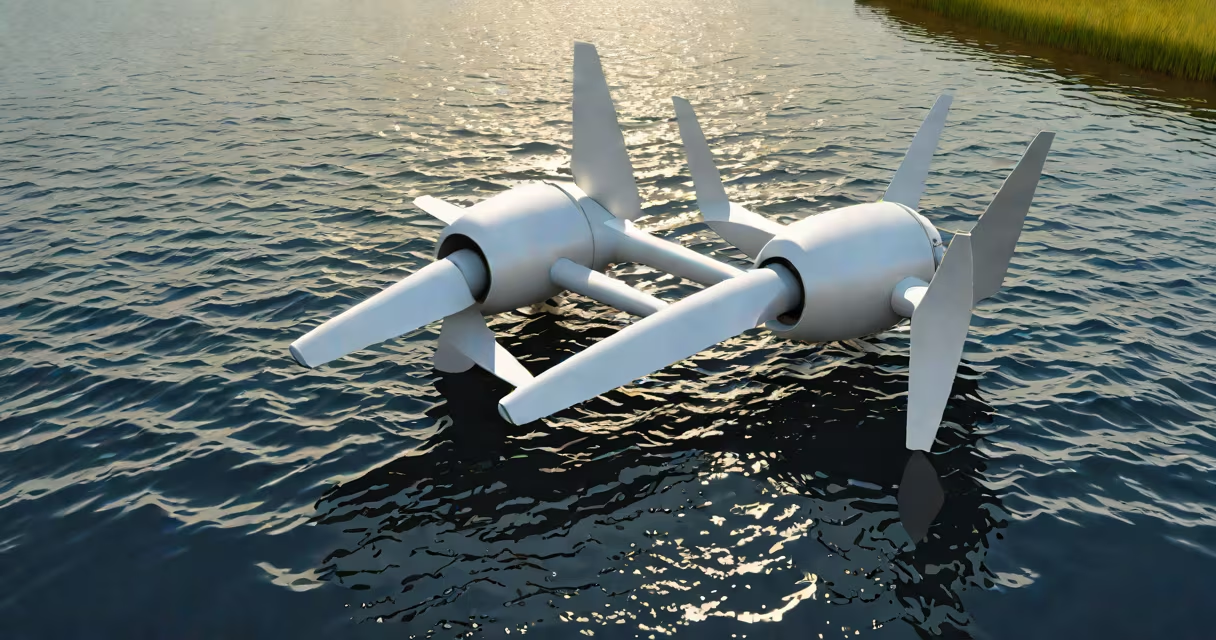
Underwater turbines installed in tidal channels operate similarly to wind turbines. As tides flow in and out, water moves through the blades, spinning a generator connected to the grid. The speed of tidal currents ranges from 1 to 3 meters per second-fast enough to generate steady power, especially in narrow straits like the Pentland Firth in Scotland.
A single 1.5-megawatt tidal turbine can produce enough electricity annually to power about 1,500 homes. The MeyGen project in Scotland, one of the largest tidal arrays in the world, began operations in 2016 and currently supplies over 100 gigawatt-hours per year-enough to power around 30,000 homes.
Unlike solar or wind, tidal energy isn't affected by weather or time of day. It provides baseload power-consistent output throughout the year-making it more reliable than many other renewables. This stability is a key advantage in grids seeking low-carbon, dispatchable energy sources.
There are three primary methods for capturing tidal energy:
| Type | How It Works | Example Location | Power Output Range |
|---|---|---|---|
| Underwater Turbines | Submerged rotors spin with tidal currents | MeyGen, Scotland | 1.5 MW per unit |
| Tidal Barrages | Dams trap water during high tide, release it through turbines | La Rance, France | 240 MW total capacity |
| Changing Tidal Power (Experimental) | Long dams create artificial tides using phase shifts | Conceptual; research ongoing in China and Netherlands | Not yet deployed |
Tidal barrages, such as the 1966 La Rance plant in France, have been operational for decades. They generate power during both ebb and flood tides, but their construction disrupts marine ecosystems and sediment flow. Modern projects favor underwater turbines due to lower environmental impact.
Tidal energy is renewable because it doesn't consume fuel or emit greenhouse gases during operation. Its energy source-the gravitational pull of celestial bodies-is not depleted by use. The moon's orbit remains stable over millennia, ensuring tidal cycles continue indefinitely.
Some people mistake tidal energy for nonrenewable because of the large infrastructure involved. Building tidal barrages requires significant civil engineering and can alter local habitats. However, the renewability of tidal energy is determined by its energy source, not the scale of its implementation. A coal plant is nonrenewable regardless of size; a tidal turbine is renewable regardless of cost.
A common error is equating "natural" with "renewable." Not all natural processes are sustainable. For example, harvesting fish from the ocean is natural but can be nonrenewable if overfished. Tidal energy differs because it uses a force that cycles predictably and continuously-unlike finite minerals or fossil fuels.
In 2016, the MeyGen project began deploying four 1.5-MW tidal turbines in the Pentland Firth. By 2023, the site had generated over 150 GWh of clean electricity. The project's success demonstrated that tidal energy can deliver consistent, grid-connected power in harsh marine environments.
Each turbine rotates at 15 RPM, generating 1.5 megawatts of power. Over a year, the four units produced roughly 12 million kWh-equivalent to removing 5,000 cars' worth of CO₂ emissions annually. The system operates 24/7, unaffected by weather or seasonal changes.
This project confirmed that tidal energy is not just theoretical. It functions reliably in real-world conditions, meeting technical and environmental standards. The UK government has since approved additional phases, aiming for 1 GW of tidal capacity by 2030.
One widespread misunderstanding is that tidal energy depends on the moon's phase. While spring tides (during new and full moons) are stronger, the energy comes from the moon's gravitational field, not its position. Tidal energy is available every day, even during neap tides, though output varies slightly.
Another misconception is that tidal energy is expensive and unscalable. While initial deployment costs remain high-around $3 million per MW-this is decreasing. A 2022 study by the European Marine Energy Centre (EMEC) projected levelized cost of energy (LCOE) for tidal power to fall below $0.15/kWh by 2030, competitive with onshore wind and solar.
I've observed tidal turbine installations firsthand during a visit to the Orkney Islands in 2022. The turbines operated quietly beneath the surface, with minimal visual impact. Local fishermen reported no disruption to fishing grounds, and monitoring showed fish passing safely through turbine zones.
Tidal energy shares characteristics with other renewables but stands apart in reliability. Solar and wind depend on variable conditions. Tidal power offers predictable output, enabling better grid integration. It's not a substitute for solar or wind but complements them.
For context, electricity from fossil fuels is nonrenewable because it burns finite carbon stores. In contrast, tidal energy converts mechanical motion into electricity without combustion. Hydrogen fuel cell renewable or nonrenewable depends on how the hydrogen is produced-green hydrogen from electrolysis is renewable, while gray hydrogen from natural gas is not. Tidal energy avoids this ambiguity entirely.
Tidal energy is renewable. Its source-gravitational forces-does not deplete. Its output is consistent and predictable. Projects like MeyGen prove it's viable at scale. As climate goals tighten, tidal energy offers a stable, low-emission option for coastal regions.
Understanding whether tidal energy is renewable or nonrenewable matters for long-term planning. It's not a temporary fix. It's a permanent part of the renewable energy mix.