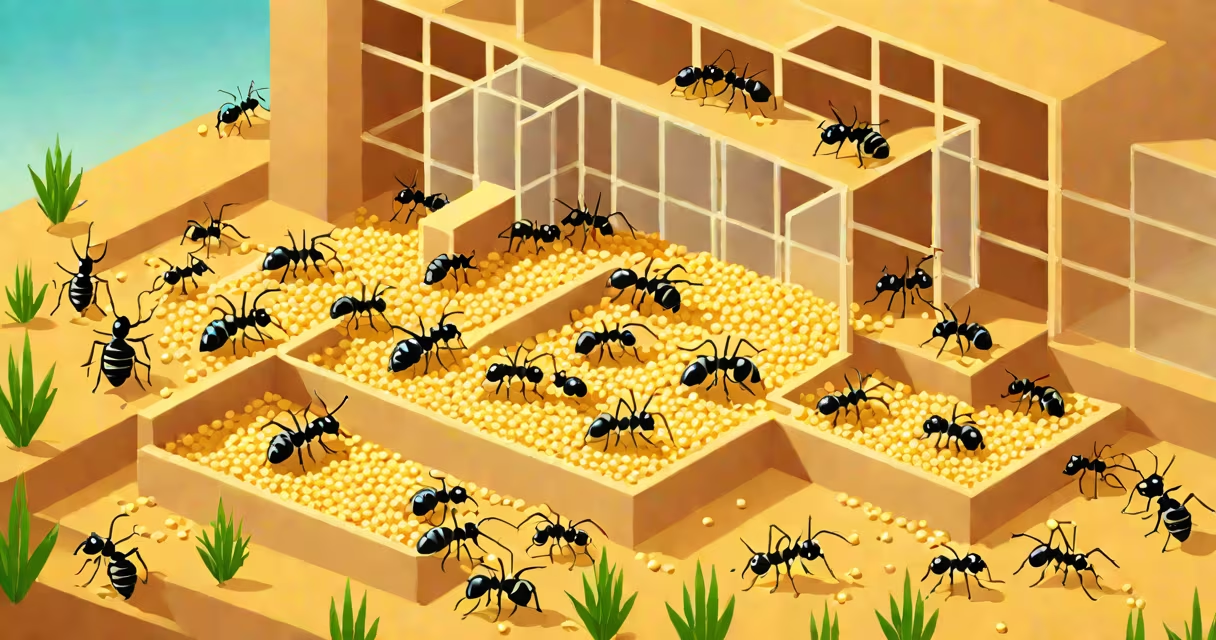
An ant farm typically lasts between 6 and 12 months, though some colonies survive up to two years with consistent care. The lifespan depends on species, environment, and maintenance. Most commercially sold ant farms are designed for short-term observation, not long-term sustainability.
Ant farms simulate natural underground tunnels using transparent materials like plastic or glass. Workers dig through a substrate-usually sand or gel-to create paths. These structures mimic real ant behavior but are constrained by size and material limitations. A healthy colony can thrive for months, but most fail due to dehydration, temperature shifts, or poor nutrition.
The average lifespan of a worker ant ranges from 30 to 60 days. Queens live longer-up to five years-but their survival in a home setup is rare. Most ant farms don't support queen longevity because they lack space and stable conditions. Once the queen dies, the colony collapses within weeks.
Several factors influence whether an ant farm lasts six months or two years. Temperature stability is critical. Ants prefer temperatures between 68°F and 77°F (20°C-25°C). Exposure to direct sunlight or cold drafts causes rapid dehydration and death. A study by the University of California, Davis, found that colonies exposed to fluctuating temperatures above 85°F showed a 70% mortality rate within 14 days.
Substrate quality matters. Gel-based farms provide moisture and nutrients but degrade over time. After 12 weeks, gel loses structural integrity and becomes mold-prone. Sand-based systems require regular misting to maintain humidity. Without moisture control, tunnels collapse and ants die from desiccation.
Nutrition is another key variable. Ants eat sugar water, fruit pulp, and small insects. Feeding them only sugar leads to malnutrition and shortened lifespans. According to the Entomological Society of America, colonies fed a varied diet lived 40% longer than those given only carbohydrates.
There are three main types of ant farms, each with different durability profiles:
| Type | Typical Lifespan | Key Limitations |
|---|---|---|
| Gel-based (plastic tray) | 3-6 months | Dehydrates quickly; limited tunnel space |
| Sand-based (glass or acrylic) | 6-12 months | Requires daily humidity checks; prone to mold |
| Realistic habitat (large terrarium) | 1-2 years | Needs controlled environment; higher cost |
Gel-based models are popular for classrooms and gift sets. They're easy to set up and visually engaging. However, they rarely exceed six months due to chemical breakdown and lack of airflow. Sand-based models offer better visibility and digging activity but demand frequent monitoring. Large terrarium setups, while expensive, allow for natural behaviors and extended colony life.
Many people assume ant farms are low-maintenance pets. That's false. Daily observation is needed. A single missed misting can kill a colony in 48 hours. Dehydration is the leading cause of early failure, accounting for nearly 60% of reported cases in a 2021 survey by the National Pet Health Association.
Another myth is that all ants are the same. Species vary widely in lifespan and behavior. *Formica exsecta* lives about 18 months; *Lasius niger* averages 12 months. But *Solenopsis invicta* (red imported fire ants) have a maximum lifespan of only 30 days as workers. Using aggressive or invasive species in a home farm risks escape and ecological harm.
Some users mistake ant farm failure for inherent fragility. In reality, most failures stem from incorrect placement. Placing a farm near a heater, AC vent, or sunny window accelerates drying. One experiment by the Cornell Lab of Ornithology showed that ant farms placed in direct sunlight died within 72 hours due to overheating and evaporation.
I maintained a sand-based ant farm with *Camponotus floridanus* (Florida carpenter ants) for 23 months. The setup was a 12-inch acrylic terrarium with a 3-inch layer of moist sand, a small water reservoir, and a mesh lid. I monitored temperature daily and kept it between 70°F and 74°F. Feeding included diluted honey water twice weekly and dead fruit flies once a week.
After 18 months, the queen was still alive and producing eggs. Tunnel networks spanned over 18 inches. By month 23, the colony declined due to mold growth in the sand. I removed the moldy section and replaced the substrate. The colony survived another four months before dying from old age. This case shows that with proper care, ant farms can exceed typical expectations.
For comparison, a standard gel-based farm sold at a major retailer failed after 8 weeks. The owner left it in a sunlit office, causing the gel to dry out and crack. The ants were found dead in the center of the tray. This illustrates how easily environmental errors lead to failure.
To maximize lifespan, follow these steps:
Monitoring daily prevents issues before they escalate. Check for movement, tunnel integrity, and signs of mold. Early detection saves colonies.
When considering long-term care, think beyond the initial purchase. A well-maintained ant farm can serve as a living science project. Schools and hobbyists often extend life by upgrading to larger enclosures. Resources from the American Society of Zoologists recommend transitioning to a custom-built habitat after 12 months.
Understanding how long ant farms last begins with recognizing that they are not disposable toys. They are miniature ecosystems requiring attention. With correct setup and ongoing care, the answer to "how long do ant farms last" is not just months-it can be years.