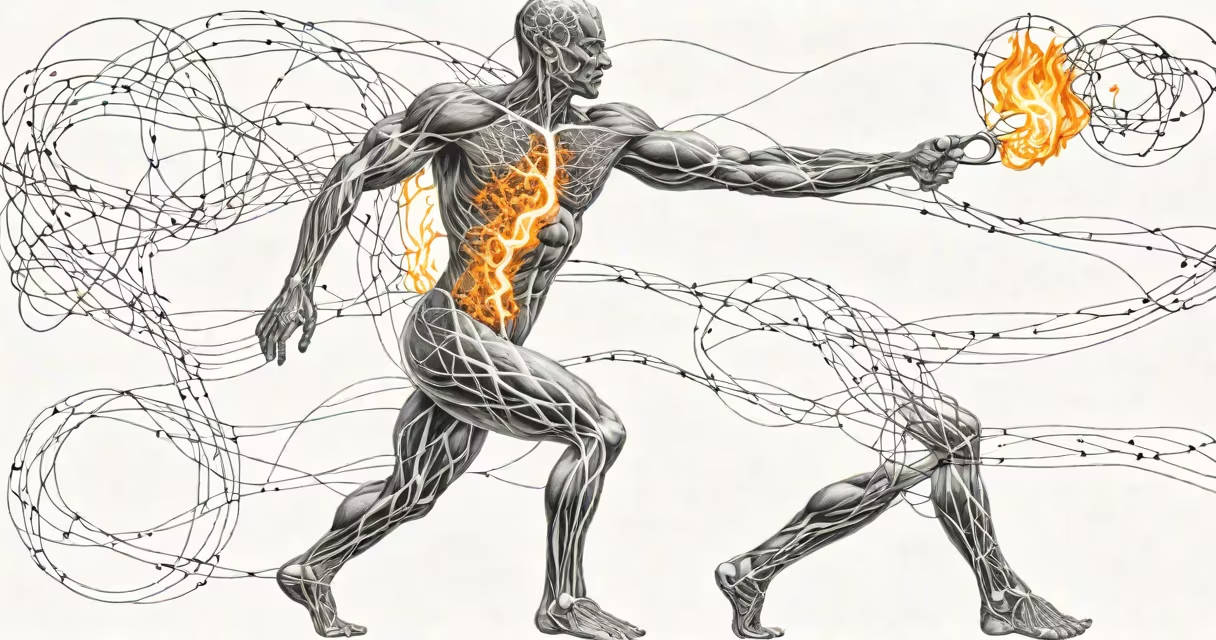
Your body burns calories by converting stored energy-primarily from food- into heat and mechanical work through biochemical reactions. This process occurs continuously, even at rest, and powers everything from breathing to thinking.
Calories are units of energy. When you consume food, your body breaks down carbohydrates, fats, and proteins into usable forms like glucose and fatty acids. These fuels enter cellular mitochondria, where they undergo oxidation to produce ATP-the energy currency of cells. The byproduct of this reaction is heat, which is released during the process.
According to the National Institutes of Health (NIH), approximately 60-70% of daily calorie expenditure comes from basal metabolic rate (BMR)-the energy required to maintain basic physiological functions like circulation, respiration, and cell repair. The remaining 30-40% comes from physical activity and the thermic effect of food (TEF), which is the energy used to digest, absorb, and process nutrients.
When you eat, your digestive system breaks down macronutrients into smaller molecules. Carbohydrates become glucose, fats turn into fatty acids and glycerol, and proteins are split into amino acids. These molecules then enter the bloodstream and are transported to cells throughout the body.
Inside cells, especially in muscle and liver tissue, these nutrients are processed through metabolic pathways. Glucose enters glycolysis, where it's broken down into pyruvate. Pyruvate then moves into the mitochondria and is converted into acetyl-CoA, which feeds into the Krebs cycle. Electrons are stripped from these molecules and passed through the electron transport chain, generating ATP and releasing heat.
A single gram of fat yields 9 kilocalories of energy, while protein and carbohydrates each provide 4 kcal per gram. This difference explains why high-fat diets deliver more energy per unit weight, though not necessarily more efficient fuel utilization.
Calorie burn isn't a single process-it happens through three primary mechanisms:
| Source | Percentage of Daily Burn | Examples |
|---|---|---|
| Basal Metabolic Rate (BMR) | 60-70% | breathing, heartbeats, brain function, organ maintenance |
| Physical Activity | 15-30% | walking, lifting weights, cycling, dancing |
| Thermic Effect of Food (TEF) | 10% | energy spent digesting a meal-higher for protein than carbs or fat |
For a 150-pound adult, BMR averages around 1,400-1,600 kcal/day. Adding 30 minutes of brisk walking increases daily expenditure by about 150-200 kcal. Protein-rich meals can boost TEF by up to 30%, compared to 5-10% for fats.
Non-exercise activity thermogenesis (NEAT)-like fidgeting, standing, or pacing-accounts for 10-15% of daily energy use. A study published in The American Journal of Clinical Nutrition found that NEAT differences between individuals can explain up to 300 kcal/day variation in energy expenditure, independent of exercise.
Many people assume that sweating equals calorie burn. That's false. Sweating is a cooling mechanism, not an energy expenditure indicator. You can sweat heavily during a sauna session without burning significant calories.
Another myth is that certain foods "burn" calories faster. While spicy foods like chili peppers contain capsaicin, which may slightly increase metabolic rate by 5-10% for a few hours, the effect is minimal over a full day. The NIH notes that no food acts as a magic fat burner.
Some confuse calorie burn with fat loss. Burning 500 kcal doesn't automatically mean losing fat. If you're in a caloric deficit, the body draws from fat stores. But if you replace burned calories with food, no net loss occurs. Weight changes depend on long-term energy balance, not isolated burn events.
Consider a 160-pound person jogging at 6 mph. According to the Compendium of Physical Activities, this activity expends roughly 500 kcal per hour. Over 30 minutes, they burn about 250 kcal.
Breakdown: 150 kcal from movement, 75 kcal from increased heart rate and lung effort, and 25 kcal from elevated body temperature. The body uses glucose and glycogen first, then shifts to fat oxidation after 20-30 minutes of sustained effort.
This individual's BMR is ~1,500 kcal/day. After the jog, their total daily expenditure rises to ~1,750 kcal. To lose 1 pound of fat, they'd need a 3,500 kcal deficit-equivalent to five such jogs or a consistent daily deficit of 500 kcal over seven days.
I once tracked my own activity using a wearable device and noticed a 20% discrepancy between estimated and actual calorie burn during low-intensity cycling. The device relied on heart rate and movement patterns, but failed to account for individual metabolic efficiency. This mismatch highlights why relying solely on device estimates can mislead users about true energy expenditure.
Most people think calorie burn is purely about exercise. But resting metabolic rate accounts for most daily energy use. A 2021 review in Metabolism confirmed that BMR varies based on lean body mass-not just weight. Two people weighing 150 pounds can have vastly different BMRs if one has more muscle mass.
Calorie burn isn't linear. As you lose weight, your BMR decreases because less tissue requires energy. This adaptation makes continued weight loss harder over time-a key reason why rapid dieting often fails long-term.
Understanding how your body burns calories helps clarify why sustainable habits matter more than short-term fixes. For example, building muscle through resistance training raises BMR permanently, increasing daily calorie burn even at rest. This effect lasts years, unlike temporary boosts from crash diets.