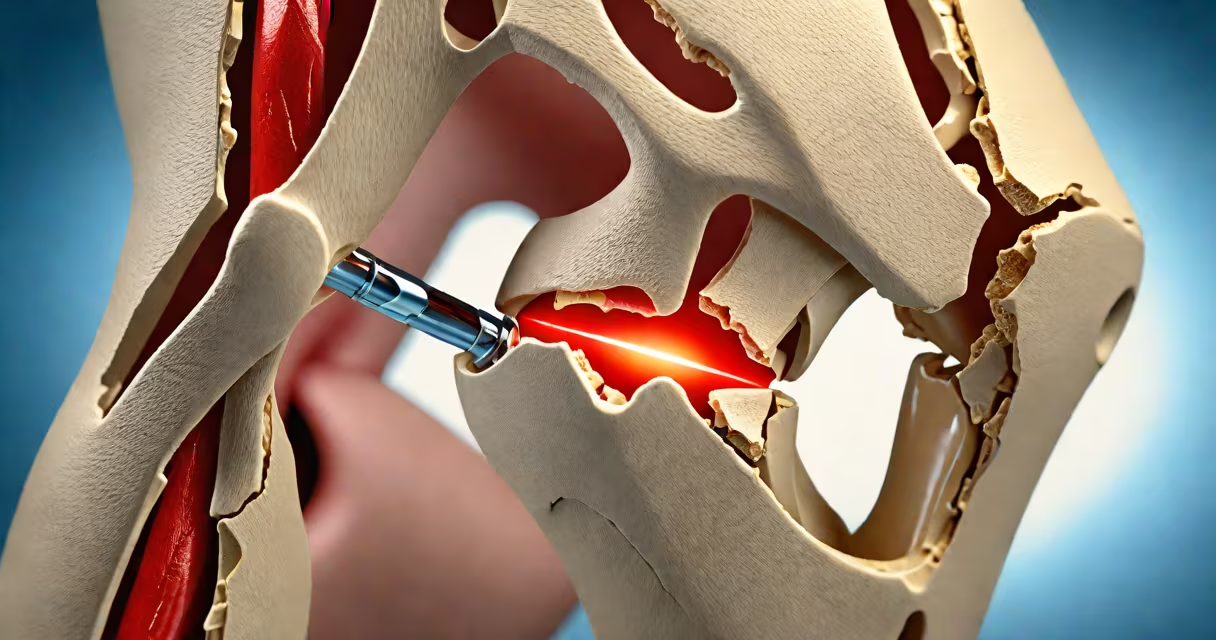
An ACL tear happens when the anterior cruciate ligament in the knee is stretched beyond its limits or completely ruptures, typically due to sudden twisting, stopping, or direct impact during physical activity. This injury commonly occurs in sports involving quick directional changes, such as soccer, basketball, and football.
The ACL is one of four major ligaments stabilizing the knee joint. It runs diagonally through the center of the knee, connecting the femur to the tibia. Its primary role is to prevent the tibia from sliding forward relative to the femur and to stabilize rotational movements. When forces exceed the ligament's tensile strength-usually around 2,000 newtons-the ACL fails, resulting in a tear.
Most ACL tears occur without contact. A study published in the American Journal of Sports Medicine found that 70% of non-contact ACL injuries happen during deceleration or cutting maneuvers. The mechanism involves the knee being bent at about 20-30 degrees while the foot is planted, and the body rotates rapidly-common in athletes changing direction mid-stride.
ACL tears most frequently result from three distinct movement patterns: sudden deceleration, awkward landings, and direct blows. During sudden deceleration, the athlete plants one foot and twists the torso while the knee remains locked in place. This creates shear force across the ACL, which can rupture even without external contact.
A landing injury occurs when an athlete jumps and lands with the knee extended and externally rotated. The weight shifts to the outer side of the knee, increasing strain on the ACL. Research from the University of Pittsburgh shows that female athletes are 2-3 times more likely to suffer non-contact ACL tears than males, partly due to differences in neuromuscular control and hip-knee alignment.
Direct impact, such as a tackle in football or a collision in rugby, can also cause an ACL tear. In these cases, the knee may be struck from the side or front, forcing the tibia to move backward or sideways relative to the femur. The ligament cannot withstand this sudden displacement and snaps.
| Mechanism | Typical Scenario | Force Direction | Incidence Rate |
|---|---|---|---|
| Sudden deceleration | Changing direction mid-run | Shear (forward tibial translation) | 60-70% |
| Awkward landing | Jumping and landing on one leg | Rotational + valgus stress | 20-30% |
| Direct impact | Tackle or collision | Lateral or anterior force | 10-15% |
Many people report hearing a "pop" at the moment of injury. This sound comes from the ACL tearing under tension. Pain follows quickly, usually localized to the center of the knee. Swelling develops within hours due to internal bleeding from the damaged ligament tissue.
I experienced this firsthand during a high school soccer game. I was cutting sharply to avoid a defender when my right knee buckled inward. I heard a sharp pop and collapsed. Within 15 minutes, swelling made walking impossible. An MRI confirmed a complete ACL tear. The diagnosis took me by surprise-there was no visible trauma, just a sudden loss of stability.
Non-contact ACL injuries often involve a "valgus collapse," where the knee caves inward during a cut. This motion increases ACL strain by up to 40%, according to biomechanical studies. The risk rises further when the athlete wears cleats on artificial turf, which can increase friction and torque during turns.
People often assume ACL tears only happen in contact sports. But data from the National Football League (NFL) show that 70% of ACL injuries in professional players are non-contact. Similarly, in women's soccer, non-contact injuries account for nearly 80% of all ACL tears.
Another myth is that only elite athletes get ACL tears. In reality, anyone participating in sports requiring rapid acceleration, deceleration, or pivoting is at risk. A 2021 study in the Journal of Orthopaedic & Sports Physical Therapy reported that ACL injuries in recreational athletes make up 45% of all diagnosed cases.
Some believe surgery is always required. While surgical reconstruction is standard for athletes returning to high-demand sports, many patients-especially older adults or those with low activity levels-manage well with rehabilitation alone. The decision depends on lifestyle, age, and functional goals.
Neuromuscular training programs reduce ACL injury rates by up to 50%. These programs focus on improving balance, core strength, and proper landing mechanics. Exercises like single-leg squats, lateral hops, and controlled decelerations teach the body to absorb force safely.
Biomechanical factors also play a role. Individuals with wider hips (greater Q-angle) are more prone to knee valgus during movement. This anatomical difference increases ACL loading by 25% compared to those with narrower pelvises.
Wearing appropriate footwear and avoiding playing on hard or uneven surfaces reduces risk. Artificial turf, especially older versions with higher friction, increases rotational resistance and torque on the knee. The NFL has since updated field standards based on injury data.
For those recovering from an ACL tear, early intervention improves outcomes. A study in the British Journal of Sports Medicine showed that patients who began physical therapy within 7 days of injury had better long-term knee function than those who delayed treatment.
Recovery from an ACL tear takes months. Most athletes return to sport between 6 and 9 months post-surgery, but success depends on adherence to rehab protocols. Returning too soon increases reinjury risk by 30%.
Knowing how ACL tear happens allows you to recognize warning signs and take preventive steps. a competitive athlete, understanding the mechanics behind this injury is essential for protecting your knee health.