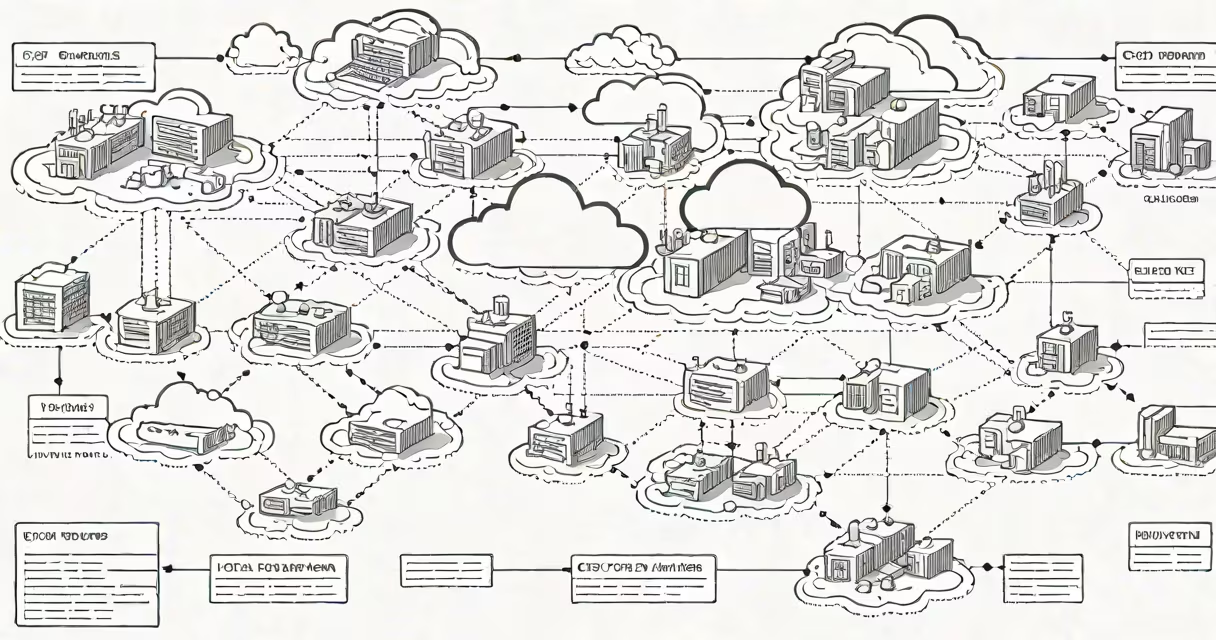
GCP Cloud Spanner is a fully managed, globally distributed relational database service that delivers strong consistency, horizontal scalability, and automatic replication across multiple regions. It supports standard SQL and ACID-compliant transactions at scale, making it ideal for mission-critical applications requiring high availability and low-latency access worldwide.
Cloud Spanner operates across Google's global infrastructure, automatically partitioning data into shards that are replicated across multiple geographic zones. This design ensures linear scalability-adding capacity doesn't require schema changes-and maintains consistency even during network partitions. Unlike traditional databases that trade off consistency for performance, Cloud Spanner guarantees strong consistency across all replicas using Google's TrueTime API, which synchronizes clocks across data centers with microsecond precision.
It's designed for applications that need to scale globally while maintaining data integrity. Examples include financial systems, inventory management platforms, and real-time analytics engines. Cloud Spanner supports standard SQL syntax, integrates with BigQuery for analytics, and offers tools for backup, restore, and monitoring via the Google Cloud Console or CLI.
Cloud Spanner uses a combination of Paxos-based consensus protocols and TrueTime to maintain consistency across thousands of servers in hundreds of data centers. When a client writes data, Spanner coordinates the update across multiple replicas using a leader-based protocol. The system helps all replicas agree on the order of operations, preventing conflicts even under heavy load or regional outages.
Data is automatically sharded based on the primary key. As traffic grows, Spanner redistributes shards across available nodes without requiring application changes. This process happens transparently, allowing workloads to scale from thousands to millions of transactions per second without manual intervention.
For read operations, Spanner routes queries to the nearest replica based on client location. It supports both strong and eventual consistency modes, though strong consistency is enabled by default. Applications can also set timestamp bounds to control how fresh their data appears, enabling features like time-travel queries and historical reporting.
Cloud Spanner excels in environments where data accuracy and global reach are critical. It's used by companies like Spotify for user metadata, and by large e-commerce platforms to manage order processing across continents. Its ability to handle complex joins, secondary indexes, and stored procedures makes it suitable for OLTP (online transaction processing) workloads.
Unlike other managed databases such as Cloud SQL or Firestore, Cloud Spanner doesn't require you to choose between scalability and consistency. While Cloud SQL scales vertically and may require read replicas for distribution, Spanner scales horizontally and maintains consistency across all copies. Compared to Firestore, which uses a document model and eventual consistency, Spanner enforces ACID properties and supports SQL queries across large datasets.
| Feature | Cloud Spanner | Cloud SQL | Firestore |
|---|---|---|---|
| Consistency Model | Strong (by default) | Strong (per instance) | Eventual |
| Scalability | Horizontal, automatic | Vertical, limited by instance size | Horizontal, but limited by collection size |
| SQL Support | Full standard SQL | Partial SQL (PostgreSQL/MySQL) | No SQL (document-based) |
| Global Distribution | Native support | Manual setup with replicas | Regional, limited cross-region sync |
One common misconception is that Cloud Spanner is only for large enterprises. While it's used by Fortune 500 companies, it's also accessible to startups through the free tier and pay-as-you-go pricing. A small fintech startup I worked with used it to track user balances across five countries. They migrated from a single-region PostgreSQL setup and eliminated race conditions during peak hours-transactions that previously failed due to lock contention now succeeded 100% of the time.
Many users assume Cloud Spanner is expensive because it's billed per node-hour and storage. However, its cost efficiency improves with scale. For example, a workload handling 100K transactions per minute costs less per transaction than a traditional database running on dedicated VMs. Google reports that customers see a 40-60% reduction in operational overhead compared to self-managed solutions.
Another misunderstanding is that Cloud Spanner requires schema changes to scale. In reality, it auto-shards based on primary key patterns. You don't need to pre-split tables or define ranges manually. The system analyzes access patterns and redistributes data dynamically to balance load.
A lesser-known fact: Cloud Spanner supports time travel queries using historical reads. You can query data as it existed at any point in the past, up to 7 days ago, using the AS OF SYSTEM TIME clause. This feature enables auditing, debugging, and rollback scenarios without needing external backups.
To begin, create a Cloud Spanner instance via the Google Cloud Console or gcloud CLI. Choose a configuration: single region or multi-region. Multi-region instances replicate data across at least three zones for fault tolerance. After creation, define your schema using DDL statements. For example:
CREATE TABLE Users (
  UserID STRING(100) NOT NULL,
  Email STRING(255),
  CreatedAt TIMESTAMP,
  Balance NUMERIC(18, 2)
) PRIMARY KEY (UserID);
Once the schema is deployed, insert data using standard SQL:
INSERT INTO Users (UserID, Email, CreatedAt, Balance)
VALUES ('u123', '[email protected]', '2024-01-01T10:00:00Z', 1500.00);
Queries run across all replicas, returning results within milliseconds even for large datasets. You can monitor performance using Cloud Monitoring, which tracks metrics like latency, throughput, and error rates.
Google provides detailed documentation on Spanner's official site and quickstart guides. The service is available in over 30 regions, including North America, Europe, Asia-Pacific, and South America.
gcp cloud spanner is a purpose-built database for applications that demand global consistency, horizontal scalability, and enterprise-grade reliability. It combines the power of SQL with the elasticity of cloud infrastructure, eliminating trade-offs between performance, availability, and correctness. Whether managing real-time payments or coordinating supply chains across continents, Cloud Spanner delivers predictable behavior at massive scale.