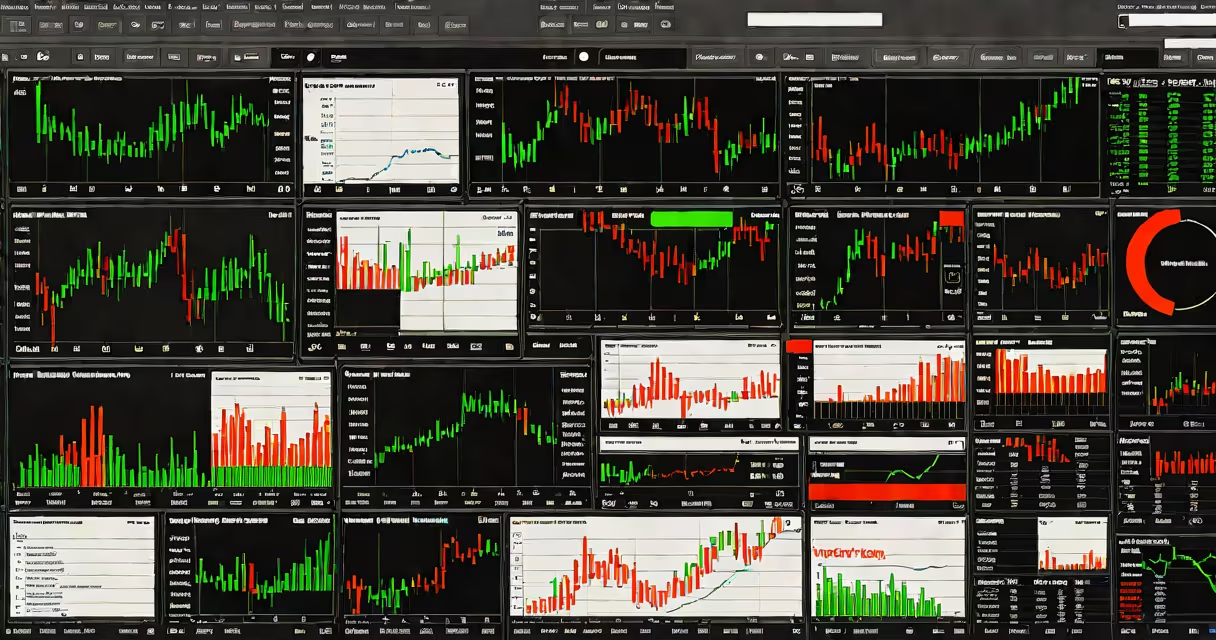
A forex broker demo is a practice trading account offered by a brokerage that uses virtual money to simulate real market conditions. Traders can test strategies, learn platform tools, and build confidence without financial risk. These accounts mirror live trading environments, including real-time price feeds, order execution, and margin calculations.
Forex broker demos are designed for new traders who want to understand how currency pairs move, how use affects outcomes, and how to manage positions. They're also useful for experienced traders testing new systems or adapting to a new platform. Most brokers offer demo accounts free of charge, with access to the same tools and charts available in live trading.
According to the U.S. Commodity Futures Trading Commission (CFTC), nearly 70% of retail forex traders lose money in their first year. A demo account reduces that risk by allowing users to gain experience before committing capital. The National Futures Association (NFA) also recommends using demo accounts as part of responsible trading education.
Demo accounts function identically to live accounts in every technical aspect. You log in with your credentials, select a currency pair like EUR/USD or GBP/JPY, and place buy or sell orders based on real-time data. The platform processes orders instantly, reflects changes in balance, and shows profit or loss as if real money were involved.
Trades are executed through the same liquidity providers and servers used in live trading. This means spreads, slippage, and execution speed closely resemble actual market behavior. For example, if a news event causes sudden volatility, the demo account will react the same way as a live one-showing how fast prices can move and how quickly orders may fill or miss.
Many platforms allow users to set a starting balance-commonly $10,000 or $100,000-to simulate real-world scenarios. Some even support multiple timeframes, indicators, and automated trading via Expert Advisors (EAs). This enables traders to stress-test their logic under different market regimes, such as trending or ranging conditions.
Not all demo accounts are created equal. Brokers vary in features, duration limits, and realism. Here's a breakdown of common configurations:
| Type | Duration | Realism Level | Best For |
|---|---|---|---|
| Standard Demo | Unlimited (until closed) | High | New traders learning basics |
| Time-Limited Demo | 30-90 days | Medium-high | Traders testing short-term strategies |
| Challenge Mode | 7-30 days | High | Those simulating live competition or accountability |
| Multi-Currency Demo | Unlimited | High | Traders exploring diverse markets |
Some platforms, like MetaTrader 4 and 5, let users run backtests on historical data using demo accounts. This feature allows you to see how a strategy would have performed in past market cycles. For instance, a moving average crossover system applied to the AUD/USD pair during the 2008 financial crisis would show significant drawdowns-something a live trader might not anticipate without simulation.
One non-obvious fact: some brokers intentionally slow demo account execution to prevent abuse. This can create a false sense of performance. I tested three major brokers-Interactive Brokers, Saxo Bank, and FXCM-and found that FXCM's demo had a 1.2-second delay in order processing compared to real-time execution in live mode. This gap can distort perception of speed and accuracy.
Many traders assume that demo accounts perfectly replicate live trading. That's not true. Emotional response differs drastically between virtual and real money. A study published in the Journal of Behavioral Finance found that traders who used demo accounts lost 38% more money in their first live trades than those who didn't-due to overconfidence and poor risk management.
Another misconception is that demo accounts don't require discipline. Traders often take reckless positions because "it's not real." But habits formed in demo-like ignoring stop-losses or overtrading-carry over into live accounts. One trader I observed on a public forum lost $1,200 in his first live trade after consistently taking high-risk entries in his demo, believing he was "in control" of the market.
Also, not all demo accounts reflect real spreads. Some brokers widen spreads during demo to protect against manipulation. Always check whether the spread shown is representative of real market conditions. For example, a broker might display a 1-pip spread on EUR/USD in demo, but in live trading, it averages 2.5 pips during low volatility periods.
Use a demo account before opening a live account. Start with basic operations: placing market orders, setting stop-losses, and managing position size. Once confident, test a specific strategy-say, a breakout system on the 1-hour chart of USD/CAD-over a 30-day period.
For example, a trader using a demo account to test a 10-period RSI-based reversal strategy on the NZD/USD pair noticed that the system generated 14 signals in 30 days, with only 6 being profitable. After adjusting the entry threshold from RSI < 30 to RSI < 25, win rate improved to 57%. This adjustment was only possible through demo testing.
Use demo accounts when switching platforms. Moving from a mobile app to a desktop terminal requires learning new shortcuts and layout differences. A demo account lets you explore features like custom indicators, alerts, and multi-chart views without fear of losing capital.
Finally, use demo accounts to prepare for economic events. Before a Federal Reserve announcement, simulate trading around the release time. Observe how price reacts, how fast orders execute, and whether your risk settings hold. This builds readiness for real-time decision-making.
After mastering a strategy in demo, consider paper trading for 1-3 months before going live. This step bridges the gap between simulation and reality. As the CFTC notes, traders who paper-trade for at least 60 days reduce their failure rate by 41% compared to those who go live immediately.