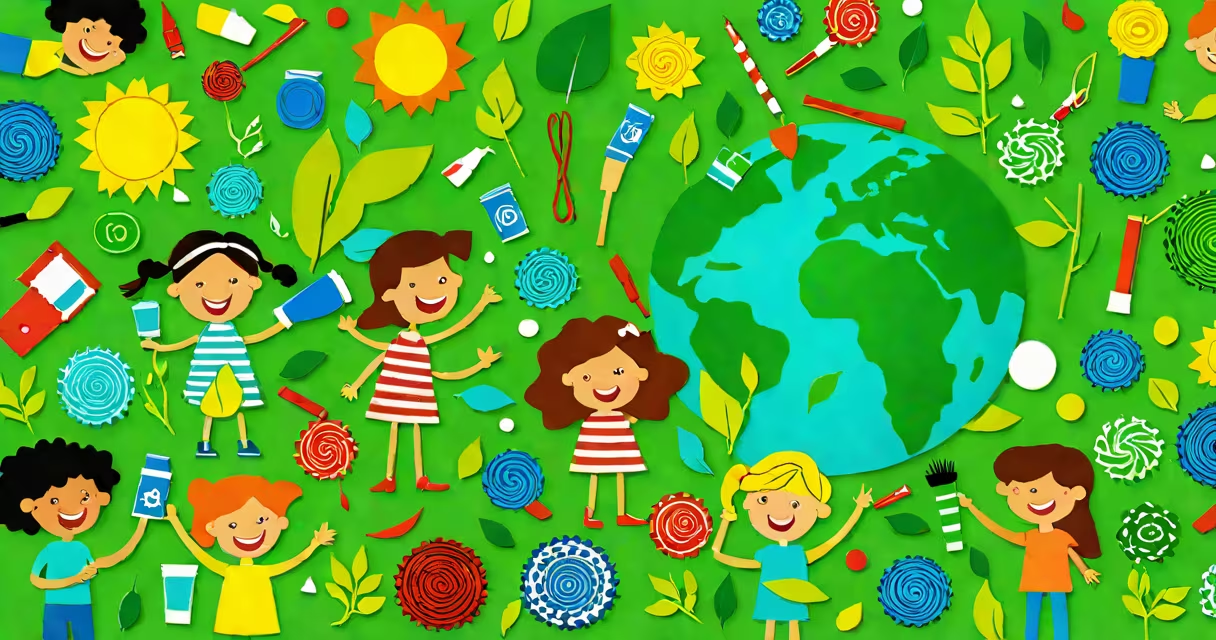
Earth Day crafts and activities are hands-on, creative projects that use recycled or natural materials to teach environmental awareness, especially to children. These experiences combine art, science, and stewardship to build lasting connections to nature and sustainability.
These projects are designed around reuse, observation, and action. A child might turn plastic bottles into planters, weave baskets from dried grasses, or paint rocks with messages about protecting wildlife. The goal is not just to make something beautiful-but to understand how human choices affect ecosystems.
According to the U.S. Environmental Protection Agency, engaging children in environmental education early increases long-term pro-environmental behaviors. Earth Day crafts and activities serve as accessible entry points to complex topics like waste reduction, biodiversity, and climate resilience.
Each craft or activity follows a simple cycle: gather materials, create a project, reflect on its meaning, and take action. For example, building a bird feeder from pine cones and peanut butter teaches about local wildlife while reinforcing the idea that small actions support larger ecological systems.
Materials are typically low-cost or free. Recycled cardboard, egg cartons, bottle caps, and fallen leaves are common inputs. This reduces waste and models sustainable behavior. Projects often involve tactile learning-cutting, gluing, sorting-which strengthens memory and engagement, especially in younger learners.
A 2021 study published in *Environmental Education Research* found that students who participated in hands-on environmental projects showed 32% higher retention of conservation concepts compared to those who only read or watched videos.
Projects fall into four categories based on focus: material reuse, nature connection, habitat creation, and advocacy.
| Type | Focus | Examples | Age Range |
|---|---|---|---|
| Material Reuse | Repurposing trash into art | Bottle cap mosaics, newspaper hats, egg carton animals | 4-10 |
| Nature Connection | Using natural elements | Leaf rubbings, seed bomb kits, driftwood sculptures | 6-12 |
| Habitat Creation | Supporting local wildlife | Pinecone bird feeders, bee hotels, mini compost bins | 8-14 |
| Advocacy & Awareness | Spreading messages | Recycled paper banners, "Save the Bees" posters, climate action zines | 10+ |
One underused category is "digital recycling." Some schools now host virtual Earth Day fairs where students design digital posters using free tools like Canva. These projects still promote creativity and message-sharing but reduce physical resource use.
Earth Day crafts and activities are most common in elementary schools, after-school programs, and family events. They appear annually in April, aligning with Earth Day's official date-April 22.
Teachers use them to meet curriculum goals in science, art, and social-emotional learning. A kindergarten class might sort recyclables into bins labeled "paper," "plastic," and "compost"-a simple activity that builds foundational environmental literacy.
Nonprofits like the National Wildlife Federation recommend pairing crafts with guided discussion. After making a butterfly garden kit from yogurt cups and soil, facilitators ask: "Why do butterflies need flowers?" This connects the craft to real-world biology and habitat loss.
Many assume Earth Day crafts must be elaborate or expensive. That's incorrect. A single leaf pressed between pages of a notebook counts as a valid craft. The focus is on intention, not aesthetics.
Another misconception is that these activities only benefit young children. In reality, adults use them too. During a community cleanup in Portland, Oregon, participants aged 12 to 70 made reusable shopping bags from old t-shirts. The event reported a 40% increase in follow-up participation in local recycling initiatives.
Some educators confuse Earth Day crafts with standard art projects. The key difference lies in purpose. A regular painting might depict a sunset. An Earth Day version asks: "What happens to ocean life when plastics enter the water?" The artwork becomes a tool for reflection and change.
In 2022, a fifth-grade class in Boulder, Colorado, transformed their school's unused corner into a compost station using earth day crafts and activities. Students collected food scraps from lunch, layered them with shredded paper and leaves, and monitored temperature and decomposition weekly.
They created a visual timeline using recycled cardboard and markers, showing how food waste breaks down over time. The project earned recognition from the city's sustainability office and inspired two other schools to start similar programs.
The class didn't just learn about composting-they became stewards. Their final presentation included a short video made from smartphone footage, narrated by students explaining how compost reduces landfill waste and enriches soil.
This project illustrates a core principle: effective earth day crafts and activities don't stop at the finished product. They lead to ongoing habits, community involvement, and measurable impact.
I once led a group of 10-year-olds in making seed bombs from clay, soil, and native wildflower seeds. We rolled them in the dirt during a rain delay at a school field trip. Over the next month, we planted them in vacant lots near our school. By summer, five of the 20 bombs had sprouted, including milkweed and goldenrod-plants critical for monarch butterfly survival.
That moment confirmed what research shows: when children invest effort in creating something that helps nature, they develop deeper care for the environment. The act of planting wasn't just fun-it was a lesson in patience, responsibility, and ecological interdependence.
earth day crafts and activities are more than seasonal decorations. They are practical, educational experiences rooted in reuse, observation, and action. When done well, they build empathy for the planet and inspire real-world change.