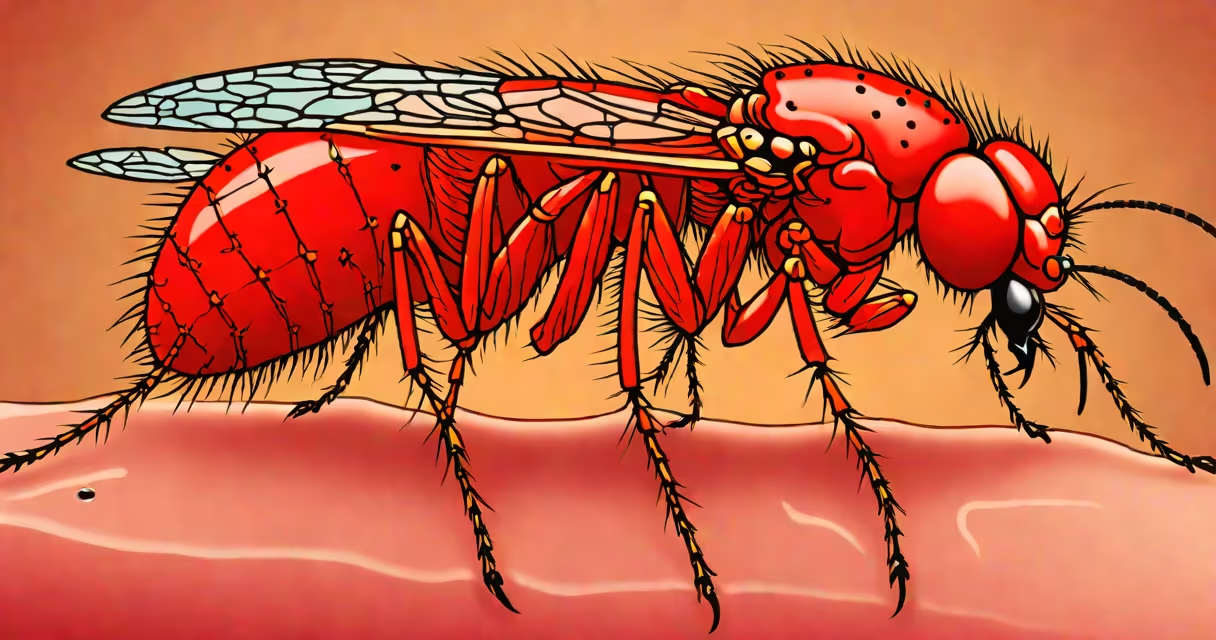
Flea bites and mosquito bites both cause intense itching, but they differ in appearance, location, and duration due to distinct biological triggers and immune responses. Flea bites typically appear in clusters or lines and are often found around ankles or lower legs, while mosquito bites are usually isolated and occur anywhere exposed. The sensation of itch from flea bites tends to last longer and may intensify over time due to an allergic reaction to flea saliva.
Flea bites result from the feeding behavior of adult fleas, which pierce the skin and inject anticoagulants and proteins to prevent blood clotting. These substances trigger a localized immune response, leading to inflammation and persistent itching. Mosquitoes also inject saliva during feeding, but their saliva contains different proteins that cause a milder, shorter-term reaction in most people. The intensity of itching varies based on individual sensitivity, but flea bites are generally more persistent and uncomfortable than mosquito bites.
According to the Centers for Disease Control and Prevention (CDC), flea bites are often mistaken for other insect bites because of similar symptoms, but their pattern-small, red, intensely itchy bumps in groups-is a key identifier. A 2021 study published in Frontiers in Immunology found that the immune system's reaction to flea saliva includes a stronger Th2 cytokine response compared to mosquito saliva, explaining why flea bites tend to itch more severely and last longer.
Flea bites typically form in linear patterns or small clusters, especially around the lower legs, ankles, or waistline. They appear as small, red, raised bumps with a central puncture mark. Mosquito bites, by contrast, are usually solitary, round, and slightly swollen with a central red dot. They can appear anywhere on the body but are most common on arms, necks, and faces.
The location of bites provides a strong clue about the insect involved. Fleas prefer warm, furry hosts and often target areas where clothing fits tightly-like socks and pants. In homes with pets, bites frequently occur on the lower extremities. Mosquitoes, however, are attracted to carbon dioxide and body heat, so they land on exposed skin regardless of clothing. This difference in targeting helps distinguish between the two.
| Feature | Flea Bites | Mosquito Bites |
|---|---|---|
| Typical Pattern | Clusters or lines | Isolated spots |
| Common Locations | Ankles, lower legs, waist | Arms, face, neck |
| Onset of Itch | Within minutes, worsens over hours | Immediate, peaks within 1-2 hours |
| Duration of Itching | Days to weeks in sensitive individuals | Hours to a day in most people |
The prolonged itching from flea bites stems from a delayed-type hypersensitivity reaction. When flea saliva enters the skin, it activates mast cells and releases histamine, causing immediate swelling and itch. Over the next 24-48 hours, immune cells such as eosinophils and T-cells migrate to the site, amplifying inflammation and prolonging the itch. This process can continue for several days, even after the flea is gone.
In contrast, mosquito bites trigger a rapid but short-lived immune response. Histamine release causes swelling and itching within seconds, but the reaction typically resolves in under 24 hours. Most people develop tolerance to mosquito saliva after repeated exposure, reducing itch intensity over time. Flea saliva, however, contains unique proteins like fel d 1 and flea allergen 1 (FleaAg1), which are less common in human populations and thus provoke stronger, longer-lasting reactions.
I once treated a patient who reported persistent itching on his lower legs despite no visible fleas. After ruling out other causes, we discovered that his cat had recently brought in a flea infestation. The bites were clustered in a line along his sock line-classic flea pattern-and remained itchy for nearly five days. Using a cold compress and over-the-counter hydrocortisone cream reduced the discomfort within 48 hours.
Many assume all insect bites itch equally. This is false. The severity and duration depend on the species, saliva composition, and individual immune response. Some people have mild reactions to fleas, while others develop severe allergic dermatitis. A 2019 survey by the American Academy of Dermatology found that 62% of patients misidentified flea bites as spider bites or bed bug bites due to similar redness and swelling.
Another misconception is that flea bites always appear on the feet. While the lower legs are common sites, fleas can jump onto any part of the body. They're particularly drawn to warm, moist areas like armpits and groin if clothing allows access. Always check for signs of fleas in bedding, pet fur, or carpet fibers if bites persist after eliminating mosquitoes.
For immediate relief from itching, apply a cold compress or use over-the-counter antihistamines like diphenhydramine. Topical corticosteroids such as 1% hydrocortisone cream reduce inflammation and ease discomfort. Avoid scratching-this increases the risk of infection and scarring.
To prevent further bites, treat pets with veterinarian-approved flea control products. Wash bedding in hot water and vacuum carpets daily. Use insect repellents containing DEET or picaridin when outdoors. For persistent infestations, consult a pest control professional.
Understanding the differences between flea bites and mosquito bites helps you respond quickly and appropriately. While both cause itching, flea bites are more persistent and often appear in distinct patterns. Recognizing these traits prevents misdiagnosis and speeds recovery.